End-of-year reflection has always felt obligatory. You are here. You should be there. Even when we swear we’ve outgrown it, the calendar still clears its throat in December and asks, So?
When I retired, I made a conscious decision to stop answering that question. I didn’t need goals. I didn’t want purpose in the capital-P sense. I believed I could live in the moment, appreciate each day as it came, unburdened by achievement or obligation. If I no longer had to follow cultural structures in order to make income, I could finally live as if the future didn’t exist. Just this day. This feeling. This moment. It sounded wise and peaceful.
It didn’t work.
Living moment to moment without direction didn’t make me content. It made me restless. My days filled themselves with small decisions. What do I want to eat? Where do I want to go? What do I feel like doing right now? At first, that freedom felt luxurious. Then it started to feel thin.
Eventually, What do I want to do today? turned into I’m bored.
Boredom is persuasive. It offers distractions with built-in goals and rewards. Somewhere along the way, I became deeply invested in digital accomplishments. Video games. Who cared if the house was clean? I had to get through the boss dungeon to unlock the next region. I was busy. I was engaged. I was also avoiding something I didn’t yet know how to name.
The truth was, I needed an objective. Not for money or approval but for meaning.
That realization took a long time because I didn’t want it to be true. I had spent years building beautiful game worlds and complex stories for their characters. I thought the choice was binary: drift freely, or return to something that looked suspiciously like work.
It wasn’t.
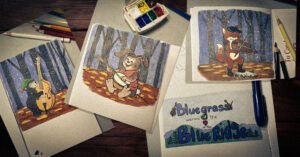
What I actually wanted to do was create. Stories. Pictures. So I started asking different questions. How do I do this? What tools do I need? What happens if I try?
The process of learning quickly became its own distraction. Online classes. Tutorials. Skill platforms. I was always one course away from being “ready.” The objectives were clear: finish the lesson, complete the assignment, move on to the next instructor. It felt productive, but underneath it was the same hollow structure as the games. I was following someone else’s path instead of walking my own.
At one point, I decided I needed a proper curriculum. A personal illustration course. When I finished it, I would be an illustrator. If it worked for the educational system, surely it would work for me.
It didn’t.
Striving for a goal purely for the satisfaction of crossing it off a list turned out to be no more fulfilling than ticking off groceries.
But something else happened. I started practicing.
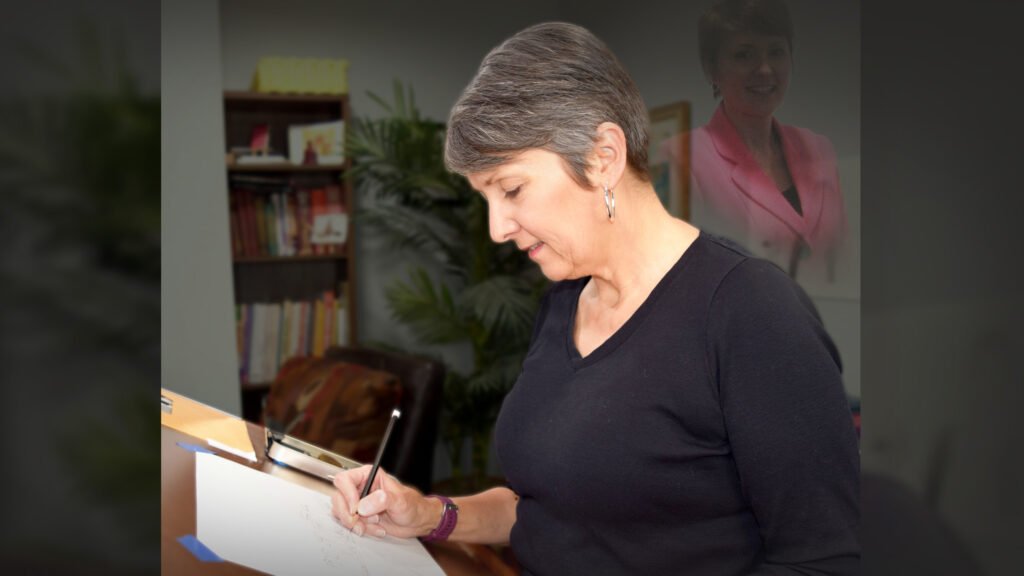
I wanted to fill a sketchbook, and the fastest way to do that was to draw in it a lot. Anything. If I followed tutorials, it took too long. So I stopped trying to make the drawings worthy of existing. I drew whatever came to hand and didn’t worry about how it looked.
When I finished the sketchbook, I noticed something surprising. The drawings had improved. I was proud of them. Not because they matched an example, but because they were unmistakably mine.
That distinction mattered more than I expected.
Then I wrote a novel. Chapter by chapter. Just a draft. No concern for what it would be when it was finished. If I liked it, I could edit it later. I can’t fully describe how satisfying it was to write the last chapter. I knew then that I didn’t need tutorials to make something real.
Projects returned, but this time they weren’t cages. I set long-term objectives and gave myself small, finishable tasks that moved me toward them. Weekly accountability helped. But I still believed I had to choose between writing and illustrating. I worried that splitting my attention meant I’d never be good at either.
And then I discovered something I’d never heard of before: zines.
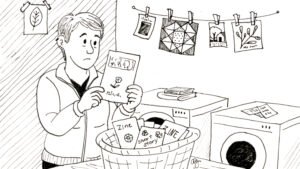
Zines were the missing link. Short enough to finish. Flexible enough to hold any subject. Writing and illustration living together without competing. I made one. Then another. Then ten. Short stories became chapbooks. Stickers appeared. Journals. Journaling games. Each project taught me how to plan, how to break work into steps, how to move forward without burning out.
Somewhere in that process, I learned how to be proactively productive on my own terms. Making, simply because the act of making pleased me.
Looking back on my early retirement years, it’s tempting to frame them as a mistake. Too much drifting. Too many tutorials. Too much time spent in digital worlds. But that wouldn’t be honest. None of it was wasted. It was the path I had to walk to get from being a corporate manager to being a retiree who genuinely loves her life.
And that brings me to this moment, at the edge of a new year.
Retirement didn’t change my nature. It just removed the scaffolding that had been holding it up. I thought I could live as if I had no future to plan for, only moments to experience. But my mind is built to look ahead, to shape things, to work toward something that doesn’t exist yet. When I ignore that, I don’t become peaceful. I become restless.
What I’ve been practicing instead is respect for my real nature. Not forcing myself into an idea of what a retired person should be like. Letting structure serve imagination rather than suppress it. Letting myself want a future again.
I can honestly, and proudly, look back on 2025 as the year I had no burnout. I woke up almost every day excited to get to work. I learned more about myself than I ever had before, and I know there’s still more to learn.
As this year closes, that feels like the most honest reflection I can offer. If there’s an invitation here, it’s to notice what actually sustains you beneath the ideals you’ve inherited. Whatever age you are, whatever season you’re in, the capacity to change isn’t something you grow out of. It’s something you remember how to use.