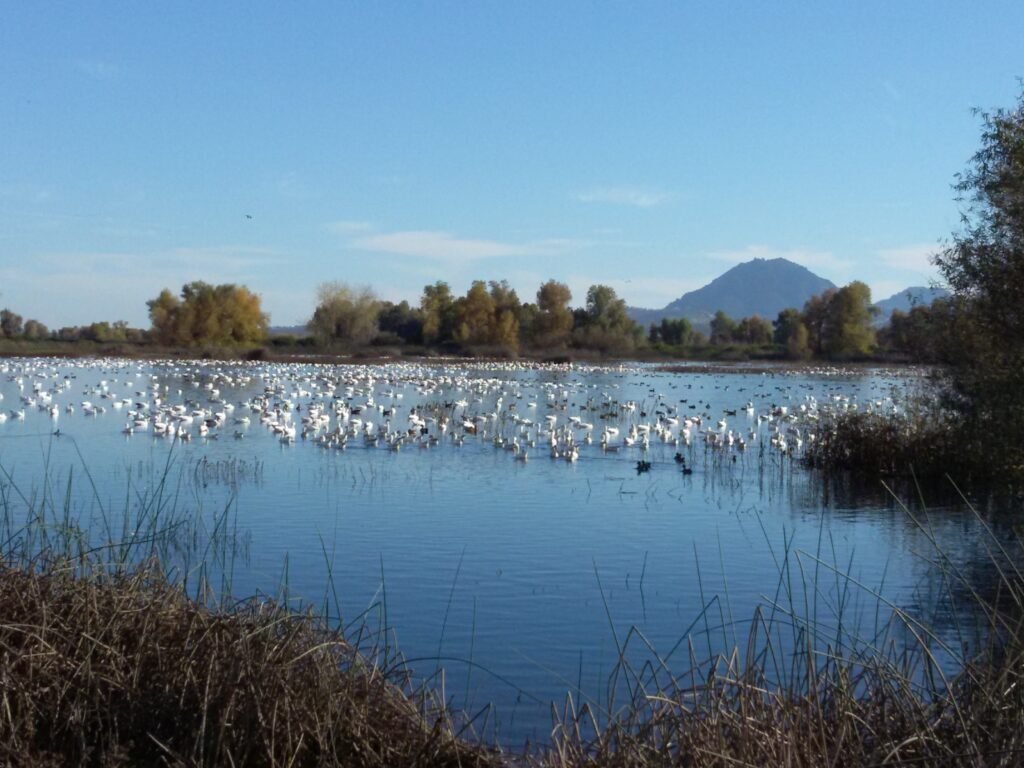
It was a gorgeous day in November when we decided to drive over to the Gray Lodge Wildlife Area near Willows, California for a short hike. Gray Lodge is managed by the California Department of Fish and Game as a wildlife sanctuary for over 300 species of birds and mammals.
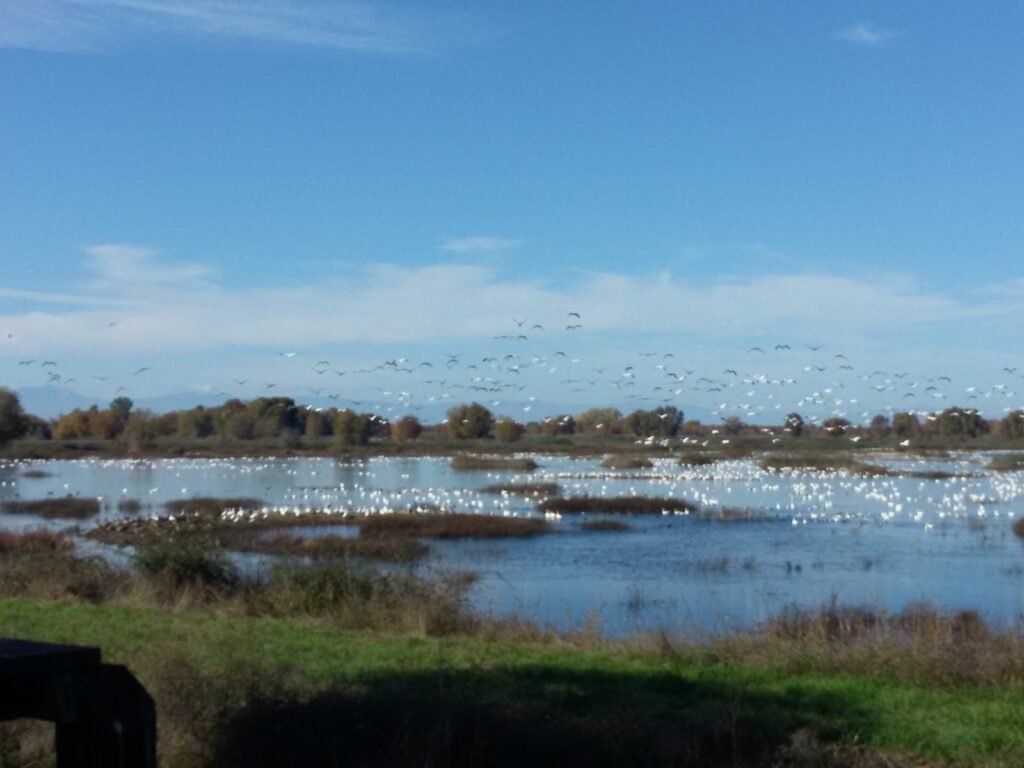
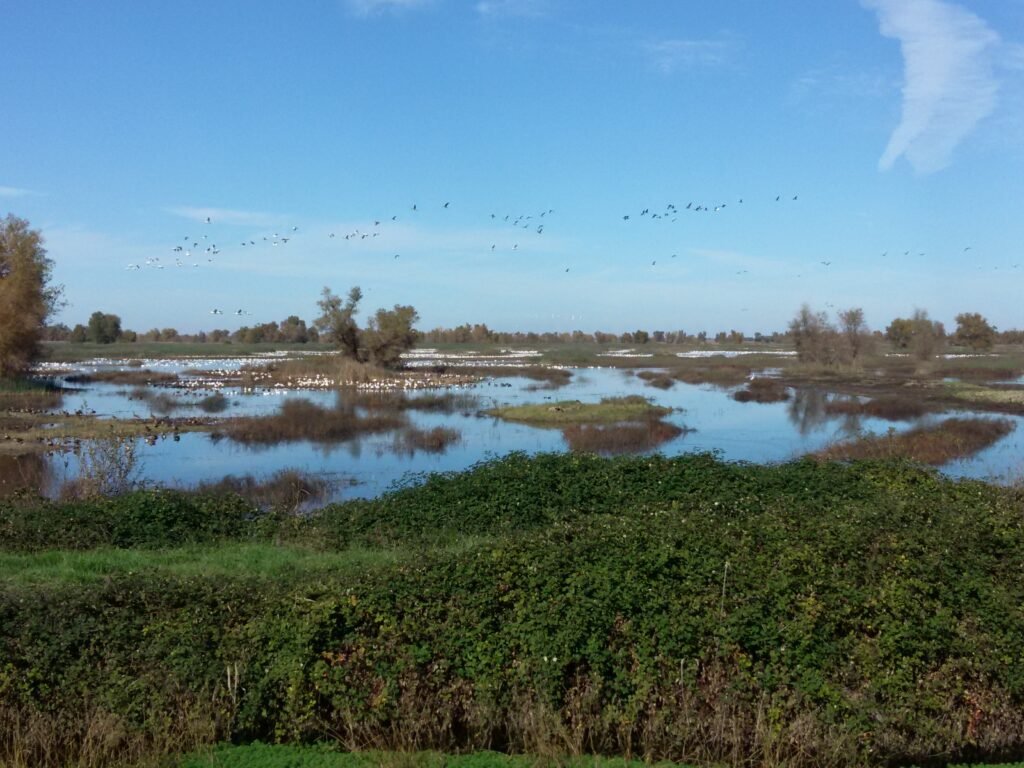
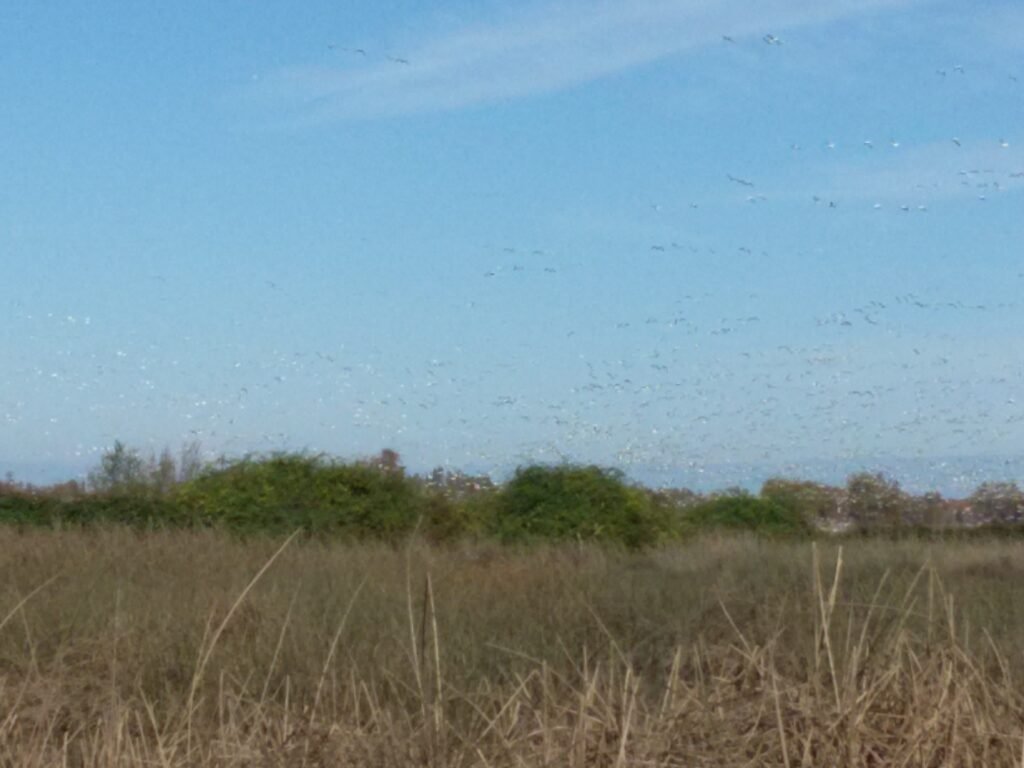
The sky was mostly clear and blue, and the temperature was just right for a noisy picnic. For the birds, I mean. Thousands and thousands of them were chattering across the plain as they fished and foraged. I’m not a birder, so I can’t begin to identify the many types of species that were there. But it doesn’t really matter. The huge numbers of them meant that there was always some activity to watch.
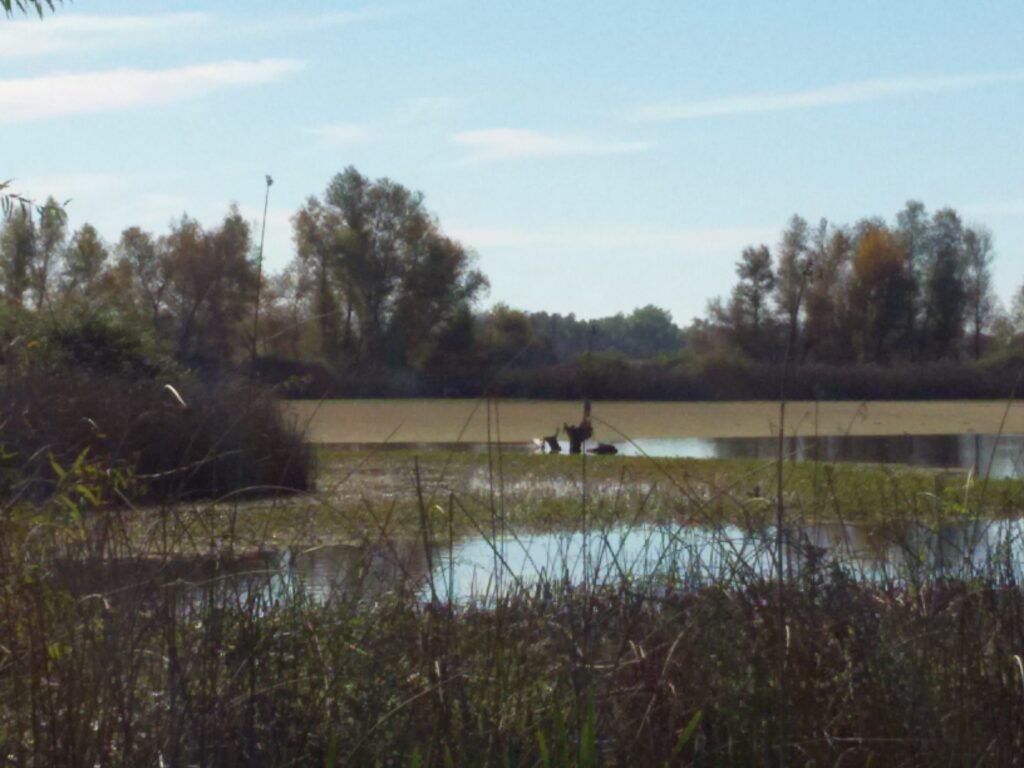
At the start of our hike, we saw a Great Blue Heron perched on a post that rose from the water.
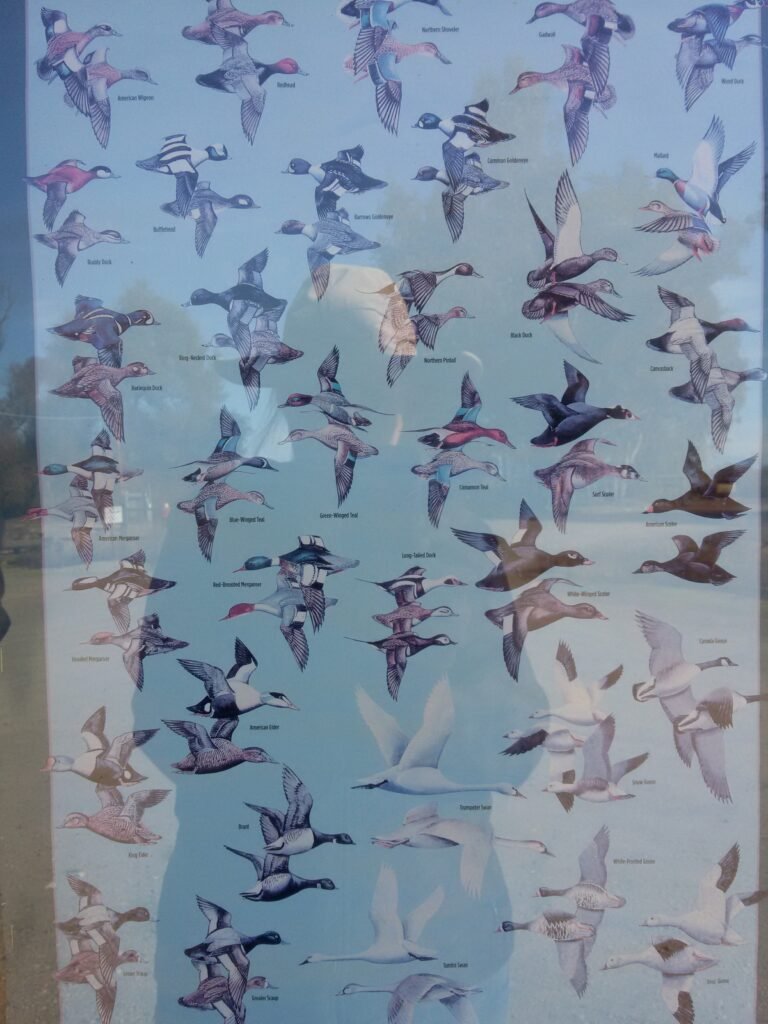
My photo didn’t come out very well, but I also have a picture of a poster that showed all the birds we might see.
We see these often in the winter here, mostly in Upper Bidwell Park around the pond. They seem to be solitary; I’ve never seen more than one at a time in the wild.
At one point during our hike, we paused to record the thousands of bird calls we were hearing.
It was truly an amazing experience.
Gray Lodge consists of nearly 9100 acres. It was originally mostly farmland surrounding a large native marsh. In 1953, it was designated as a wildlife area by the California Fish and Game Commission. It includes 600 acres of riparian woodland for year-round residents, such as garter snakes, ringtails and river otters. Every year the marsh is flooded to provide habitat for the birds traveling the Pacific Flyway.
As we neared the end of our hike, we took some lovely photographs of the birds with the Esto Yamani, aka the Sutter Buttes, in the background.
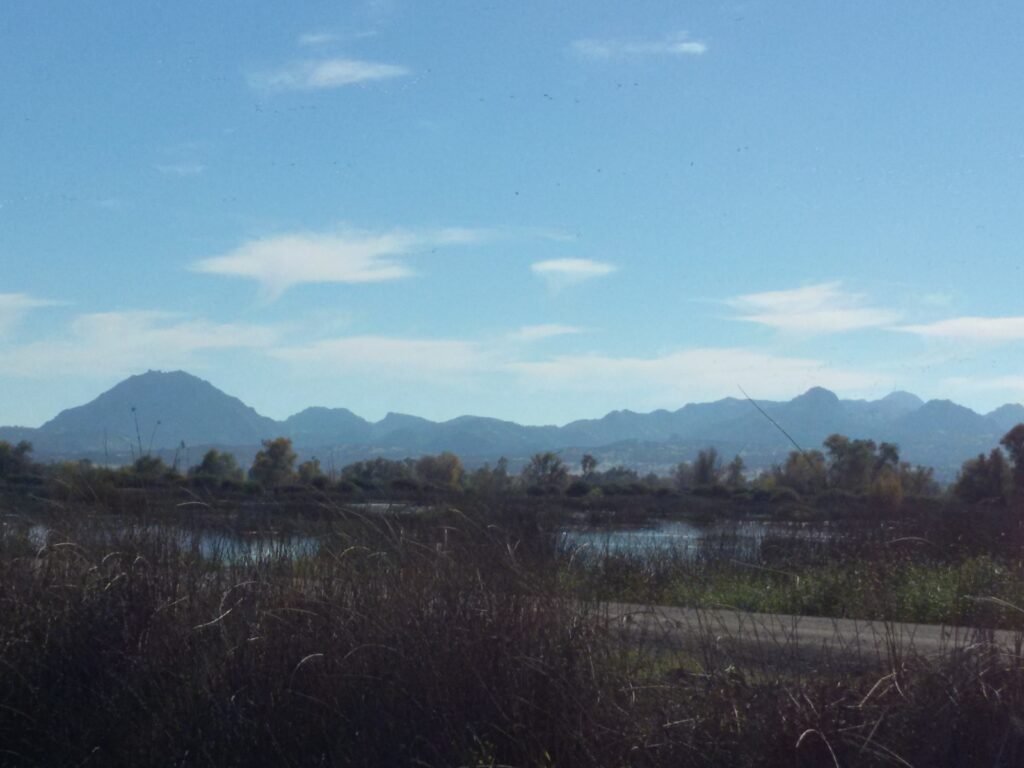
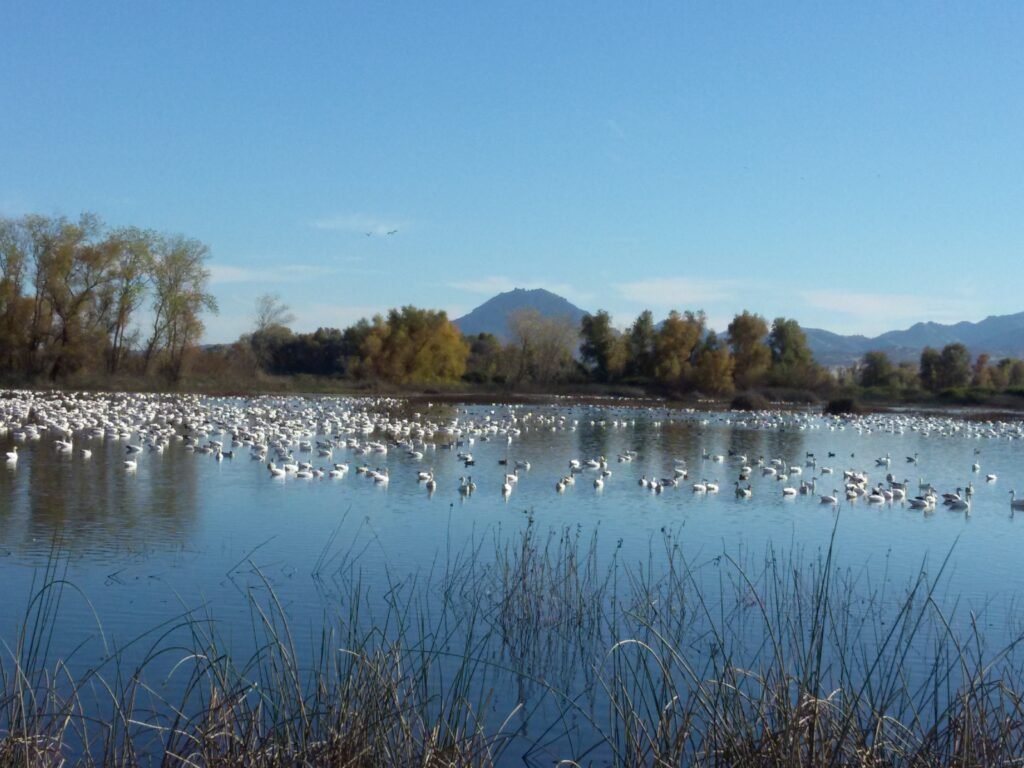
Named by the Maidu who lived here for thousands of years, much longer than anyone of European or Asian descent, they are the shortest mountain chain in the world. “Esto Yamani” means “Middle Mountain”, which is appropriate since they rise in the valley between the Coastal Range and the Sierra Nevada Mountains.
They are remnants of an active volcano that existed from 1.6 to 1.4 million years ago. They were called “Los Tres Picos” in the Mexican Land Grant made to John Sutter, then renamed “The Three Buttes” by John Fremont. During the Gold Rush, they were renamed again to “Marysville Buttes”, and today most people call them the Sutter Buttes.
However you would like to call them, they make a majestic backdrop for the birds. I am so thankful we have the opportunity to experience the fall migration in person and hope you enjoy the photos!
Originally posted at stillroundthecorner.com