Last week my husband and I took our new Tab 400 out for a short camping trip at Shenandoah National Park, just to break it in and make sure everything worked. I’ve always wanted to go there, and it’s only a day’s drive from our house, so if anything unexpected happened we could get home and get it fixed without too much of a hassle.
Before leaving home, I packed enough art supplies to accommodate several possible versions of myself. There was the watercolor landscape painter, the quick travel sketcher, the colored-pencil naturalist, and apparently someone expecting to establish a small branch studio somewhere along Skyline Drive. I brought pencils, pens, waterbrushes, watercolor crayons, colored pencils, two sketchbooks, and two new-to-me watercolor palettes that I wanted to compare. It was a lot.
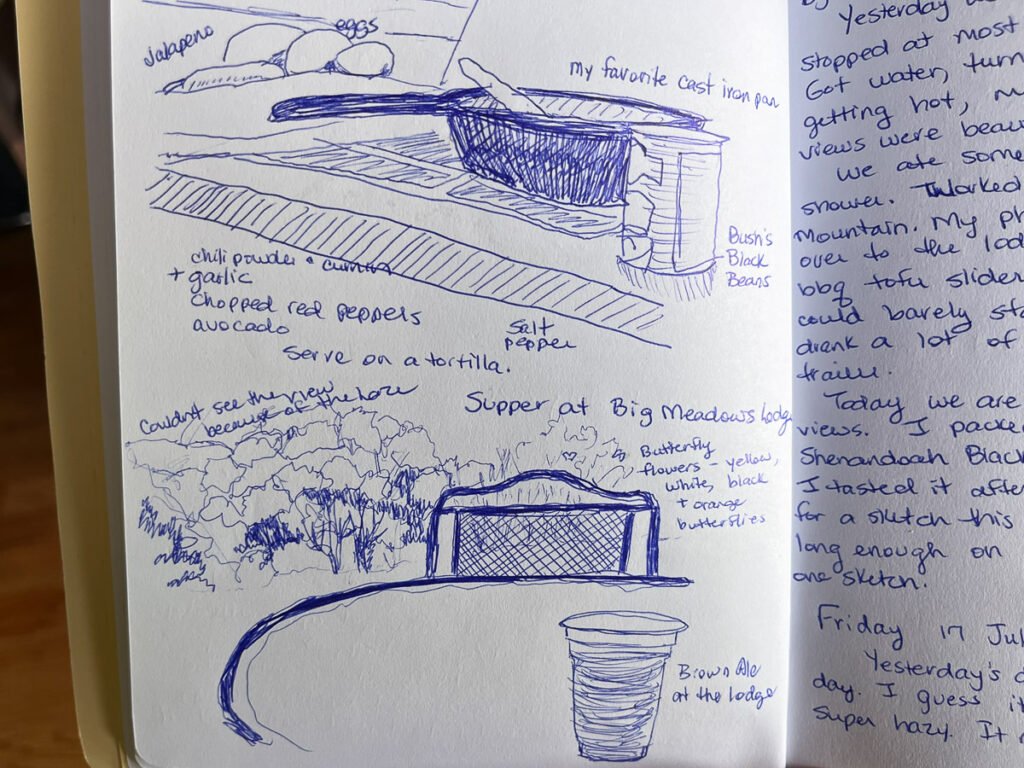
What I actually used most was a sketchbook and a ballpoint pen.
Arriving at Shenandoah
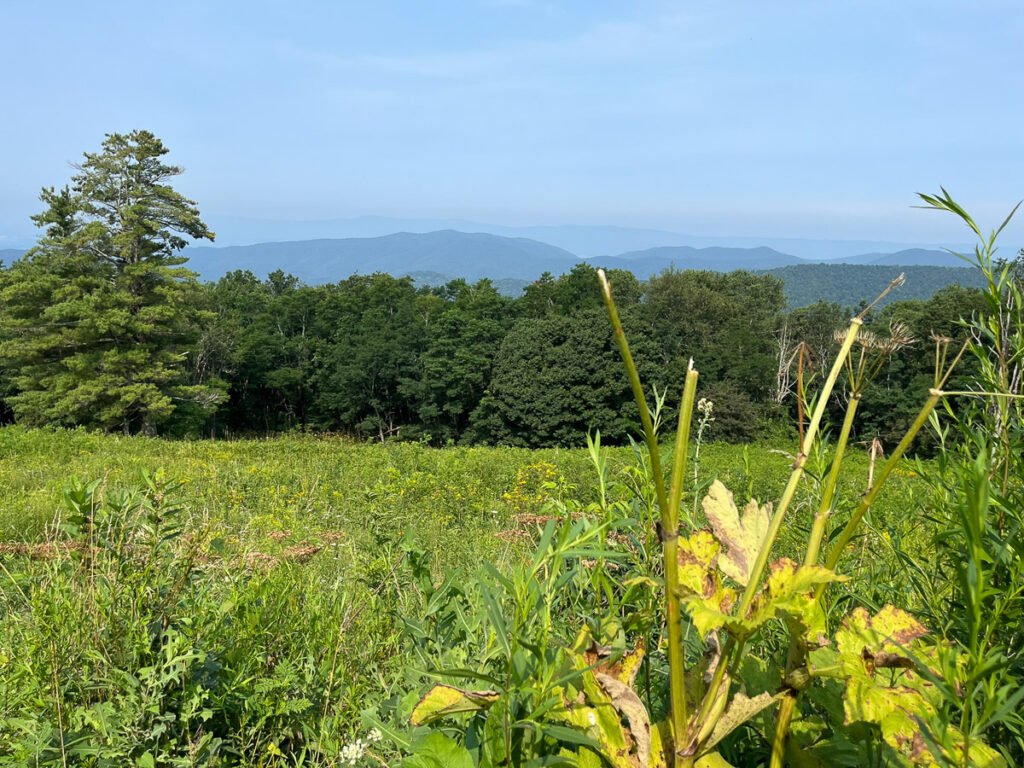
We arrived late Monday afternoon with our new-to-us Tab 400 trailer, Daisy, in tow. Because we were anxious to get the trailer set up before evening, we drove past the scenic overlooks without stopping. I regret that now, because those were probably some of the clearest views we would see during the trip. Even through the truck windows, though, the scenery was thrilling. Green forests rolled away toward layer after layer of ridgelines, with mountains stretching as far as I could see. I immediately wanted to paint all of them, which was perhaps the first warning sign that I had brought expectations too large to fit inside the trailer.
Our campsite at Big Meadows was better than we had hoped.
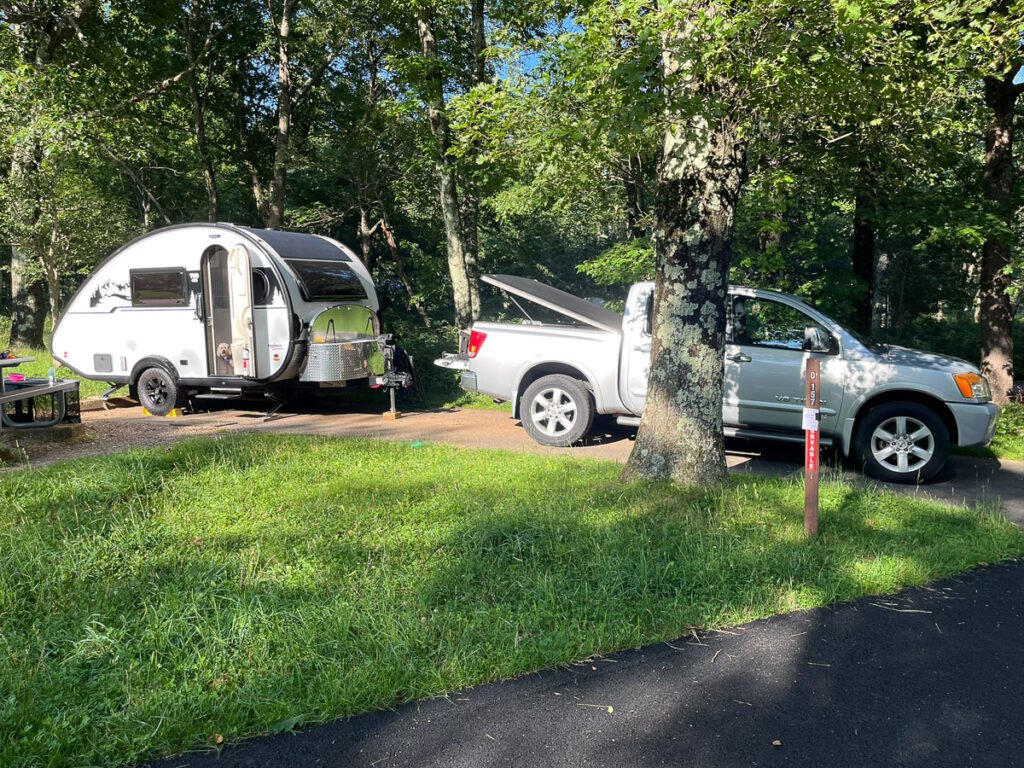
The pad was nearly level, so we did not have to do much to get Daisy unhitched and settled. There were no electric, water, or sewer hookups, which meant there was also very little to connect. We carried water from a campground spigot to fill our fresh-water tank, and Scott later used our new generator to supplement the solar power. We were practically boondocking, but in a campground with bathrooms, potable water, and friendly hosts nearby. It was exactly the sort of shakedown trip we needed.
Nothing broke. Nothing developed a mysterious leak. No appliance attempted to become sentient. As far as Daisy was concerned, the trip went smoothly.
The campsite itself felt private and peaceful, at least at first. Trees and bushes separated us from the occupied sites behind us, while the spaces beside us and across the road remained empty. There was no road noise, no machinery, and very little sound from the other campers. Everywhere I looked was green: grasses, bushes, leaves, shaded branches, sunlit branches, and more greens layered behind them. I needed a paintbox vocabulary for all the varieties.
The air smelled like warm summer. Not freshly mowed grass or anything so specific, just leaves, growing things, sun-warmed earth, and heat. The sun was intense, but Daisy’s awning gave us shade, the bug spray mostly worked, and the lower humidity made eighty-six degrees feel surprisingly comfortable compared with East Tennessee. Sitting there felt open and cozy at the same time. I felt safe.
Deer Radar and Evening Beer
The first deer appeared on our walk to Big Meadows Lodge that evening. A doe stood in a clear picnic area near the campground showers, calmly eating grass while we passed with our two dogs, neither of whom has ever been accused of possessing woodland serenity. The doe watched us, but she did not stop chewing. We were apparently less interesting than dinner.
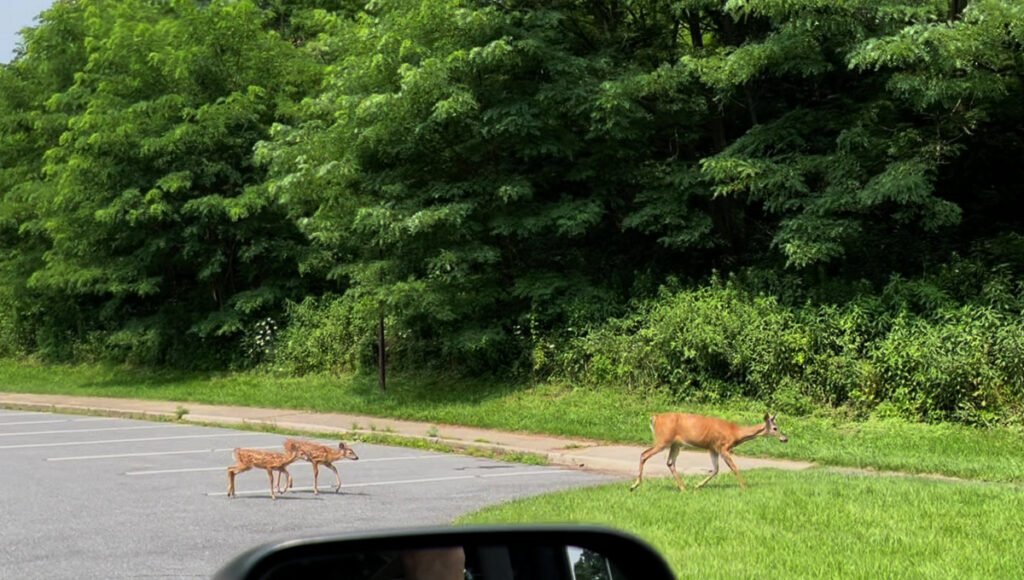
Later, while walking the campground loop, I saw another doe with two spotted fawns. They crossed the road and disappeared into the bushes while dogs barked from a nearby campsite. That was when I began to understand the campground’s informal wildlife-alert system. Somewhere, a dog would begin barking, and shortly afterward the deer would appear.
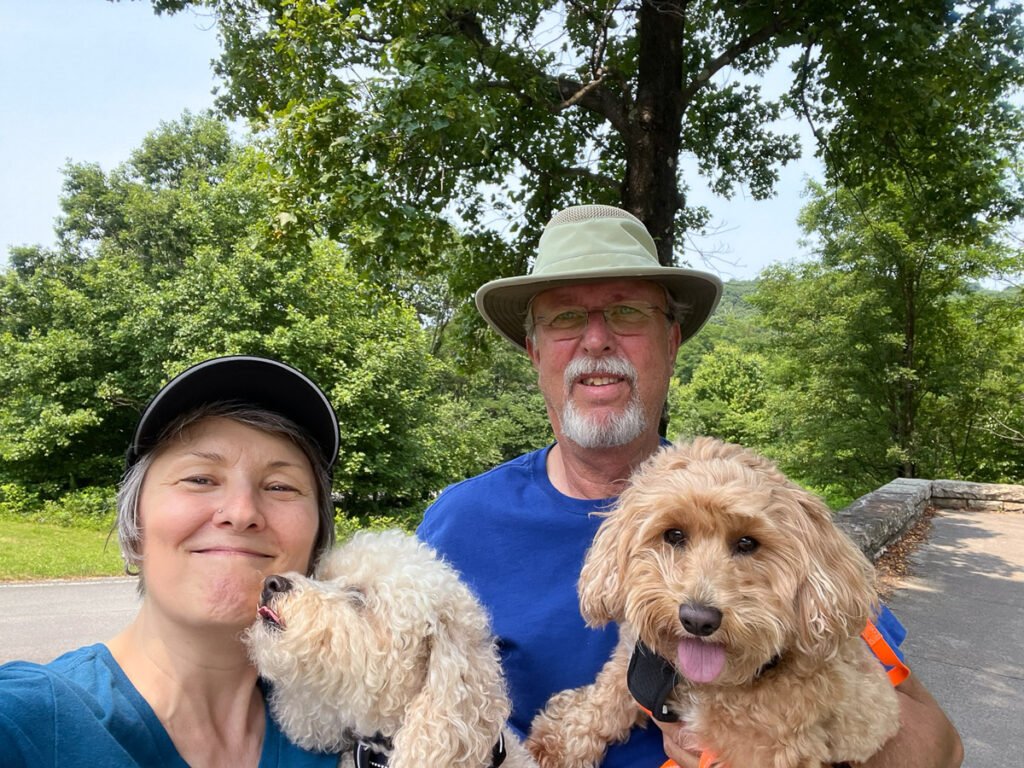
Our dogs contributed enthusiastically. Tuesday night, we left Daisy’s door ajar to create a cross breeze while we slept. Abby appointed herself guardian of the threshold and settled beside it, prepared to defend us from raccoons, bears, burglars, or perhaps a particularly suspicious pinecone. Just after sunrise, she began barking hysterically. We sat up and saw three deer outside the window, munching grass in our campsite and paying no attention whatsoever to her alarm. Once they moved on, the dog at the next campsite began barking. The deer radar was working perfectly.
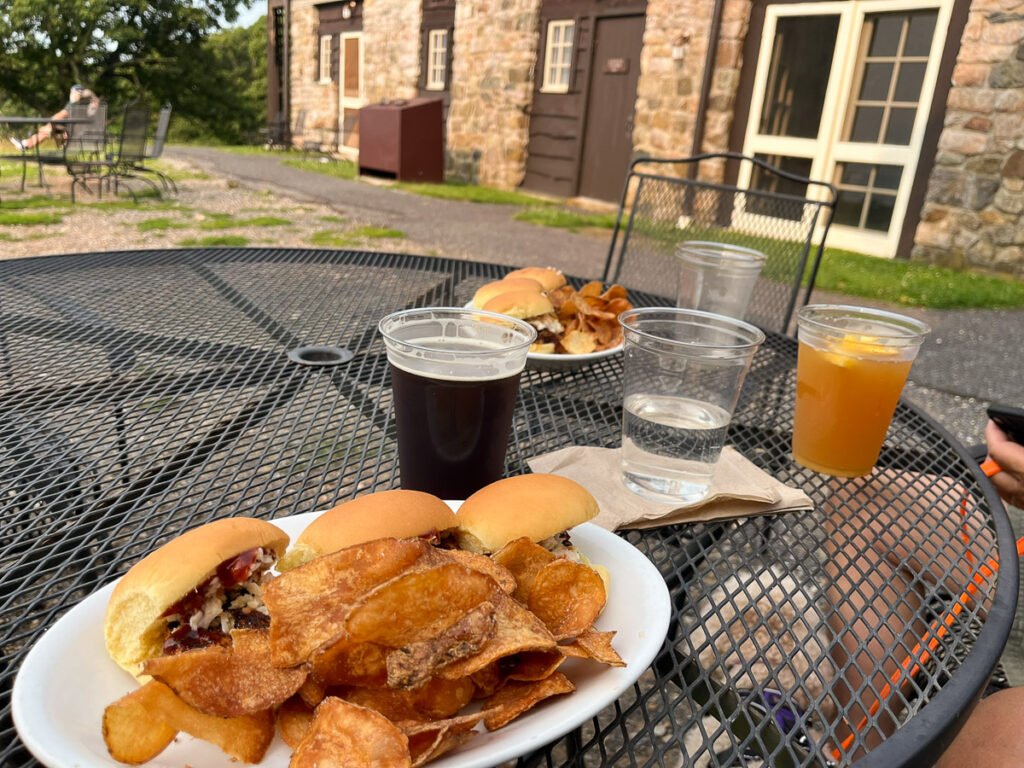
Each evening, we walked about half a mile through the campground and up a short hill to Big Meadows Lodge. By the third night, the dogs knew exactly where we were going and led us straight to the same shaded table behind the lodge. We ordered a couple of beers, which Scott and I drank rather than the dogs, and sat outside because animals were not allowed indoors. I did not mind. Most people chose the air conditioning, which meant the terrace was quieter.
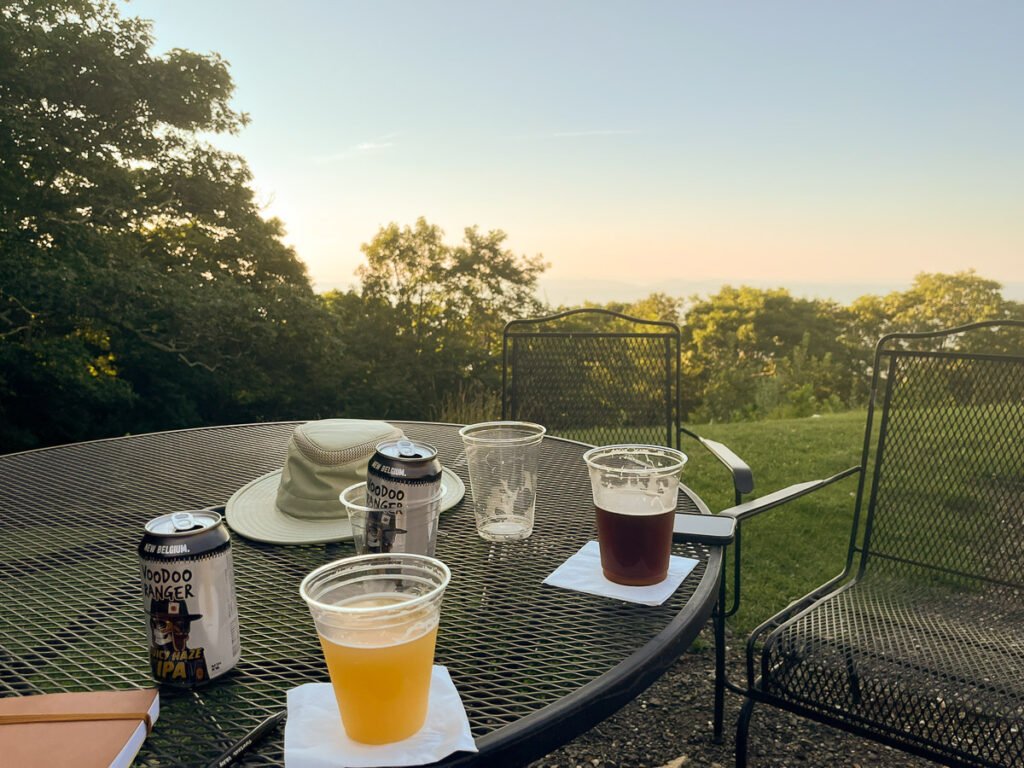
The air smelled of fried food, meadow flowers, and summer heat. The flowers around us appeared to move with butterflies: yellow, orange, black, white, at least four kinds and probably more. The distant view was too hazy to show much beyond the nearest ridge, and the food and beer cost what food and beer always cost when a national park lodge has you geographically cornered. Still, it felt like a treat. We could sit there, watch the butterflies, enjoy a local ale, and spend an hour somewhere beautiful without needing to solve anything.
One evening, we ordered sliders for dinner. Scott had pulled pork, and I had tofu, both served with a large heap of potato chips. It was not the sort of meal I would normally classify as nutritionally strategic, but it tasted excellent after a day of driving and sightseeing.
Sketching the Trip That Actually Happened
Before the trip, I imagined practicing landscapes. I am not particularly confident drawing them, and Skyline Drive seemed like the perfect place to try. I pictured myself stopping at overlooks, pulling out a portable watercolor kit, and calmly translating mountains into paint.
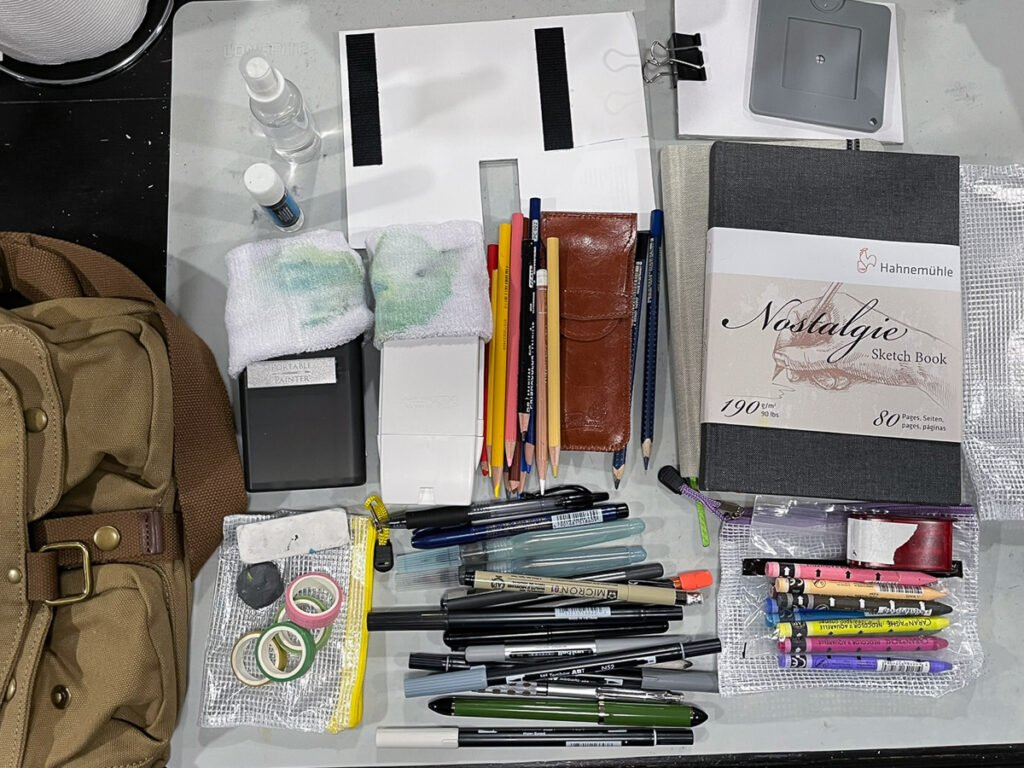
The park had other plans. Remaining in one place for long meant dealing with heat and small flying bugs that wanted to orbit my head, land in my eyes, and conduct reconnaissance inside my nose. Bug spray helped, but it did not make painting outdoors pleasant. Watching artists work en plein air rarely reveals this part of the process. The finished videos always contain a peaceful view, a tasteful palette, and a breeze moving gently through the trees. Just outside the frame, the artist may be sweating through her shirt while a gnat attempts to enter her ear.
I also discovered that while we were driving, I mostly wanted to look. The scenery was new, and I didn’t want to spend the entire trip peering at it through the keyhole of an art project. I took plenty of photographs, knowing I could use them later, and sketched whatever happened to be in front of me when the truck stopped or the day offered a spare five minutes.
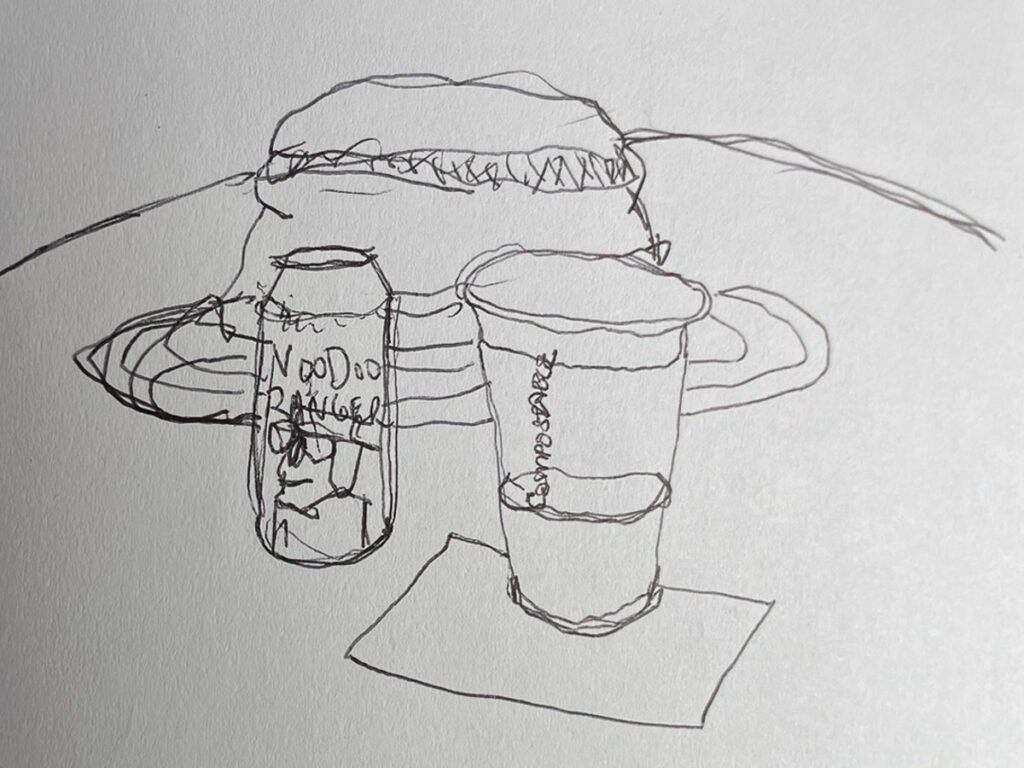
On our first evening at the lodge, I made a quick continuous-line drawing of my beer mug and Scott’s hat. I had already drunk more than half the beer by the time I began, which greatly reduced the complexity of the subject. I drew most of it in a couple of minutes, then added a few details afterward.
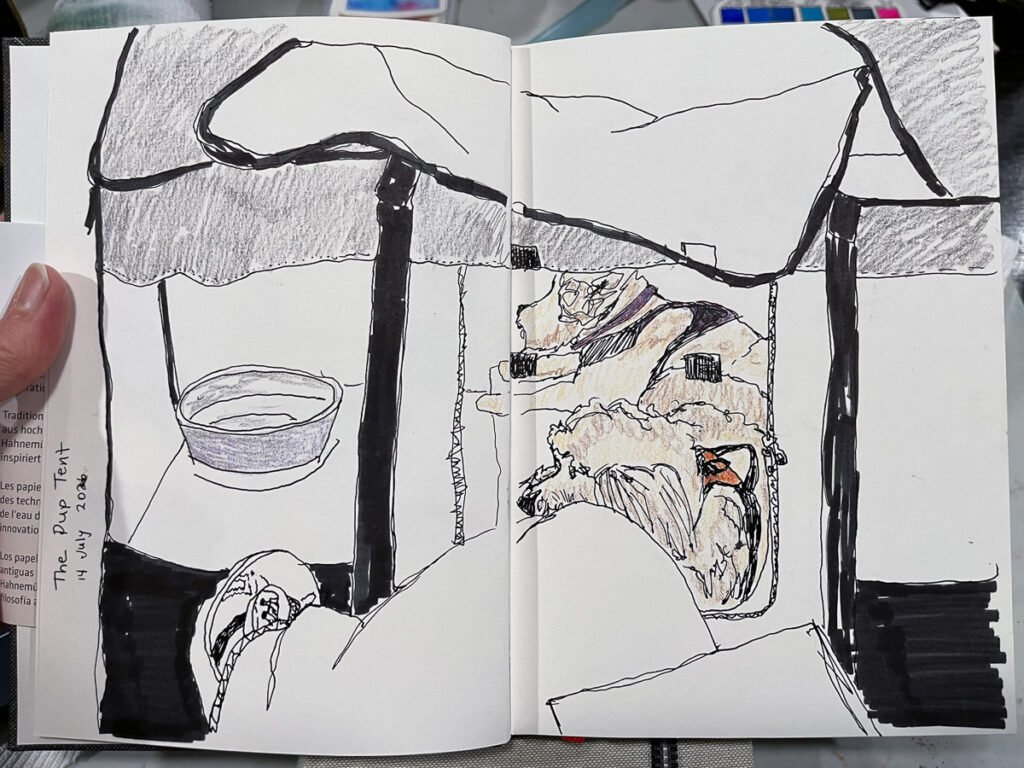
The next day, while waiting for my son to arrive, I sketched the dogs sleeping in their portable pen, which I had nicknamed the Pup Tent. I used a mostly continuous line, then added a little colored pencil to the dogs. They were piled together in the shade, close enough to us to feel included but safely contained while we sat outside Daisy.
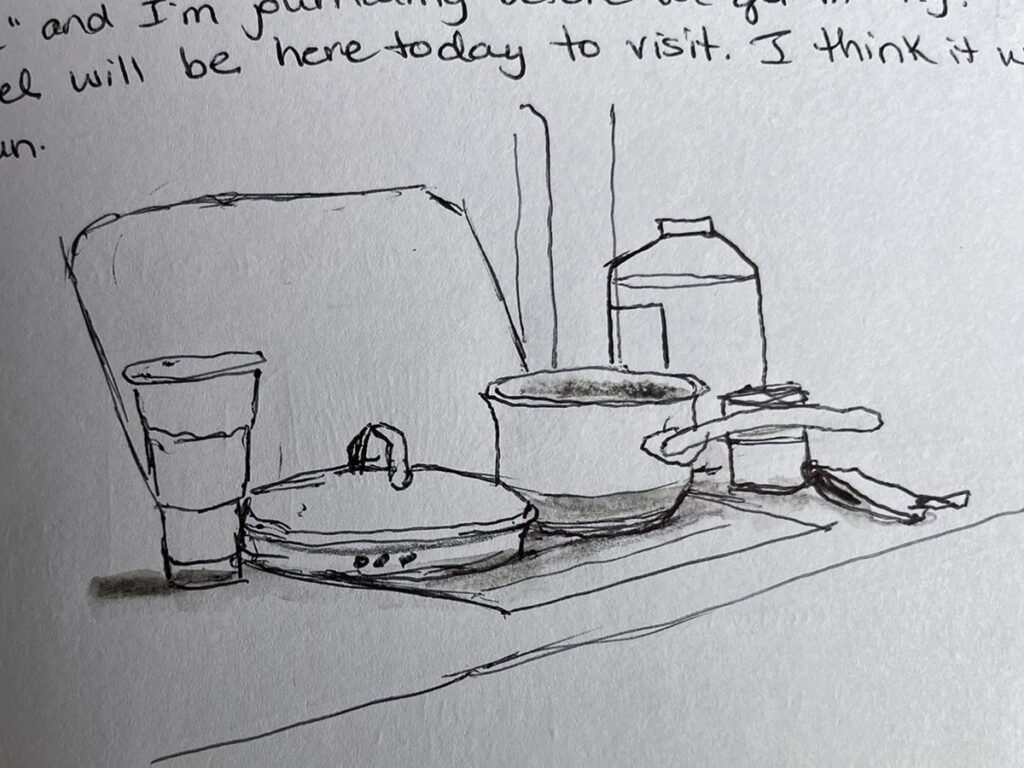
I also sketched the equipment for making cowboy coffee. Without campground electricity, our small coffee maker was useless, so I had to relearn how to make coffee in a pot on the gas stove. The results were drinkable, although perhaps not a triumph of precision engineering. A camping morning does not require elegant coffee. It requires coffee that exists.
On Tuesday, my son visited for a few hours. We went to the Byrd Visitor Center, where I collected stamps for my National Park Passport, then returned to the campsite for a cookout. The following day, we drove back to the visitor center so Scott could exchange a shirt before continuing north on Skyline Drive. While he was inside, I stayed in the truck with the dogs and tried to sketch the building and parked cars through the window. I had perhaps five to eight minutes. I used a continuous line to block in as much as I could, then added some details later.
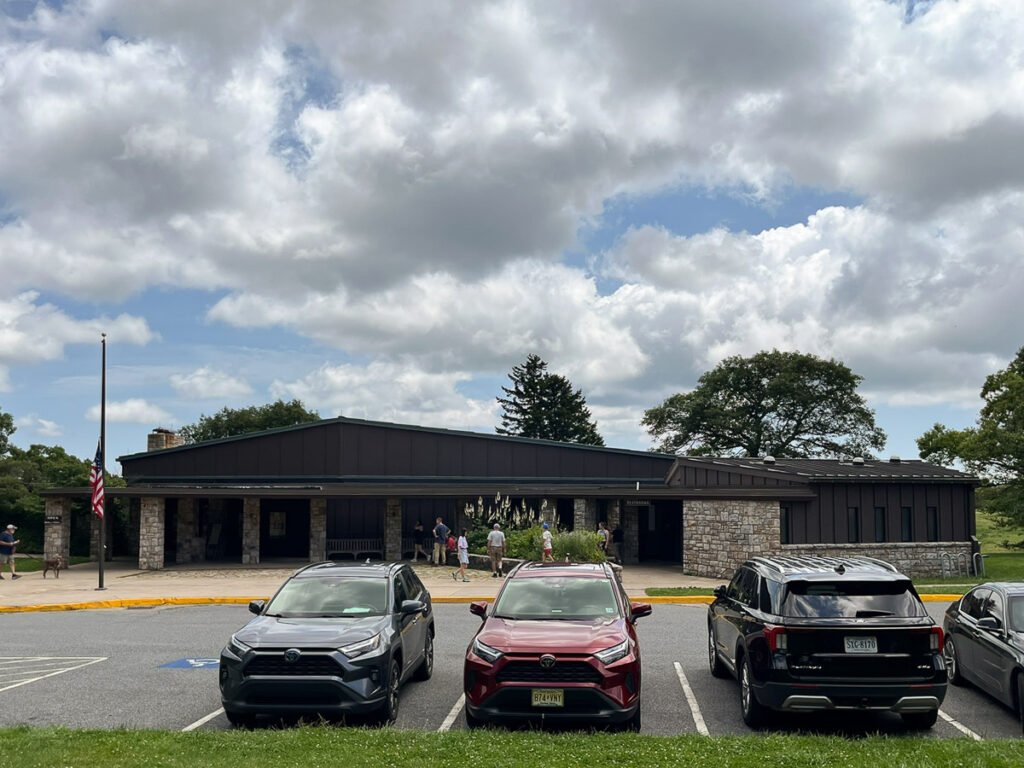
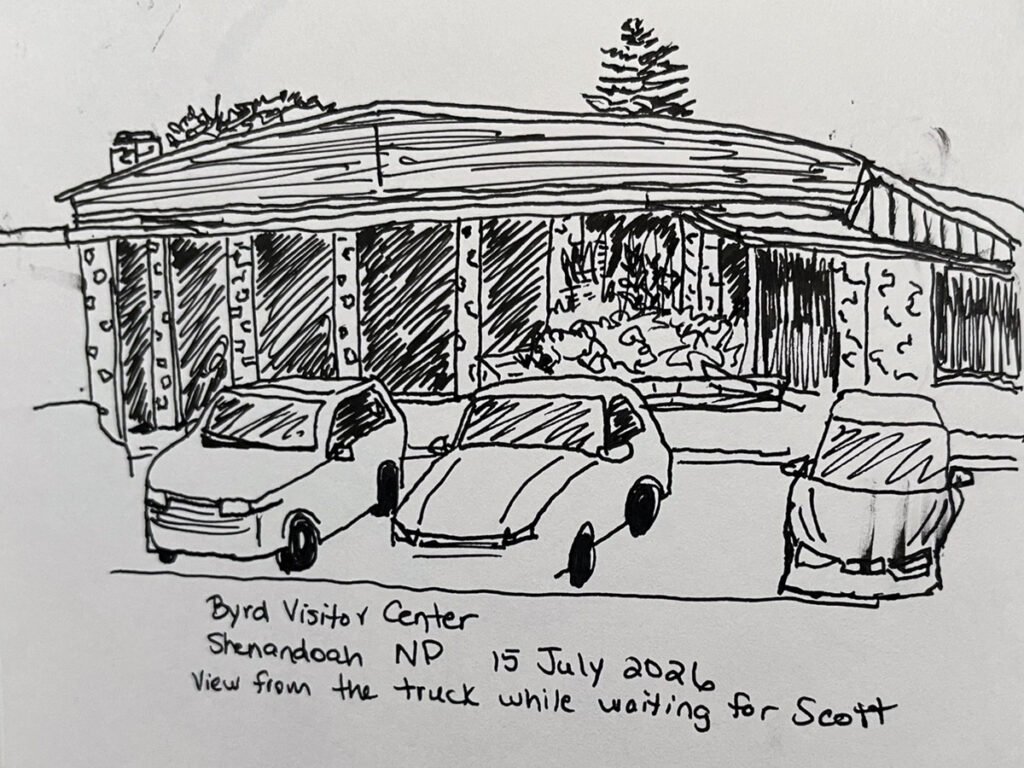
That sketch taught me something useful. I did not need enough time to finish. I only needed enough time to begin.
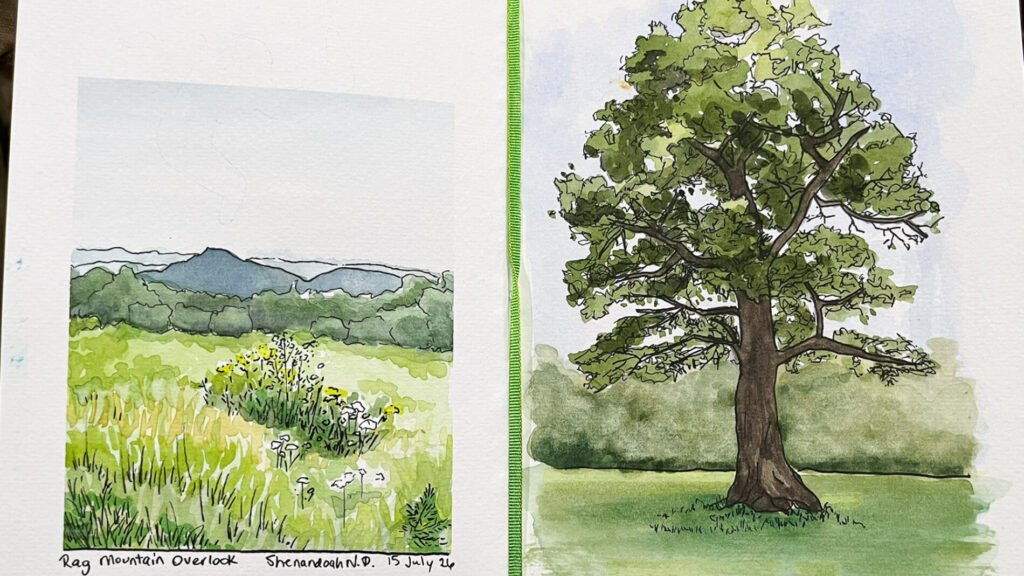
The northern section of Skyline Drive gave us one beautiful view after another. We stopped at overlooks, took photographs, ate a picnic lunch, and visited the wayside stores in search of the perfect T-shirt and stickers. I wanted to paint nearly every ridgeline, but the bugs discouraged lingering. When we returned to Daisy, I used one of my photographs to make a small watercolor of Rag Mountain. It took about an hour, which confirmed that I would not have enjoyed trying to paint it outside while swatting insects.
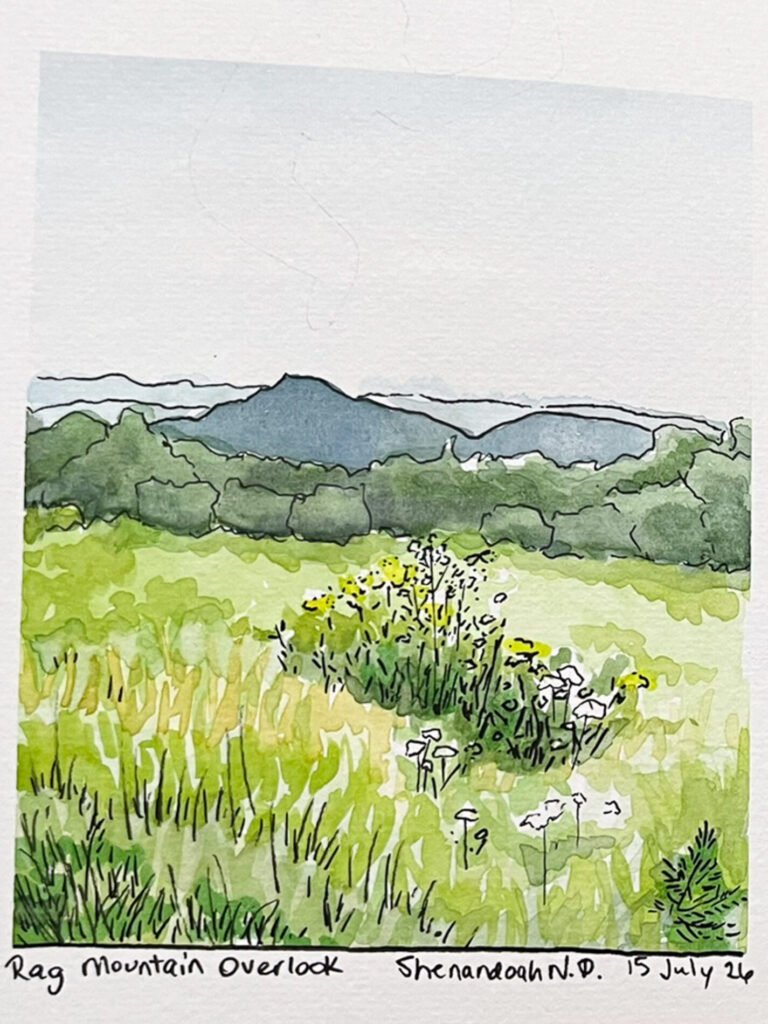
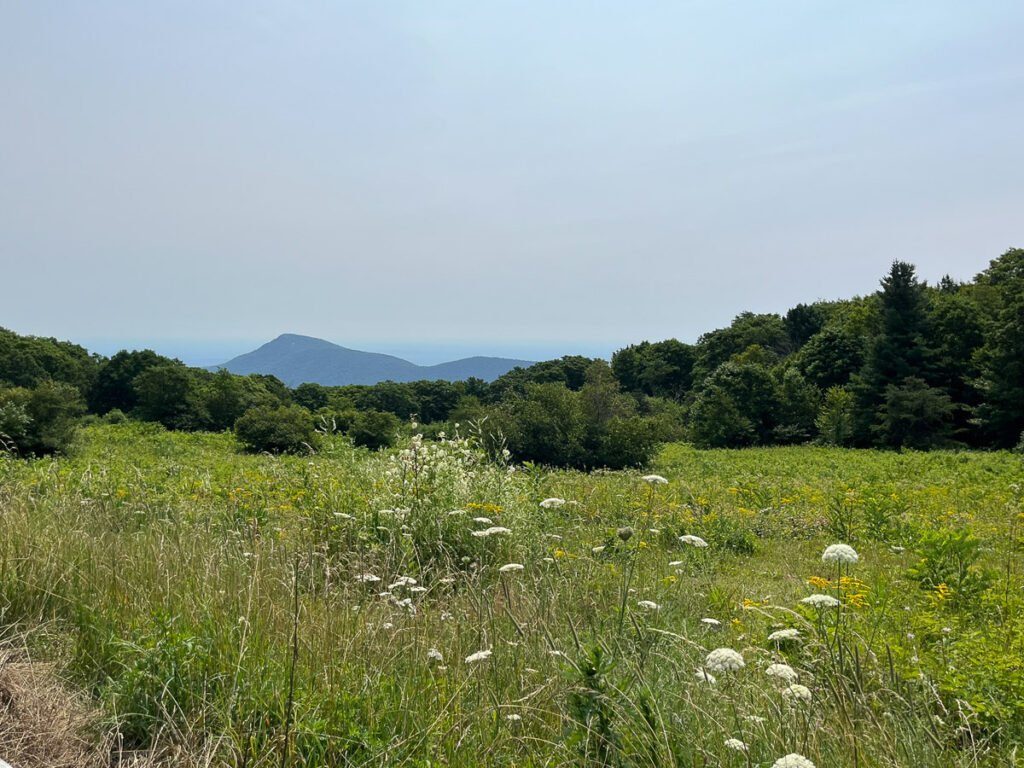
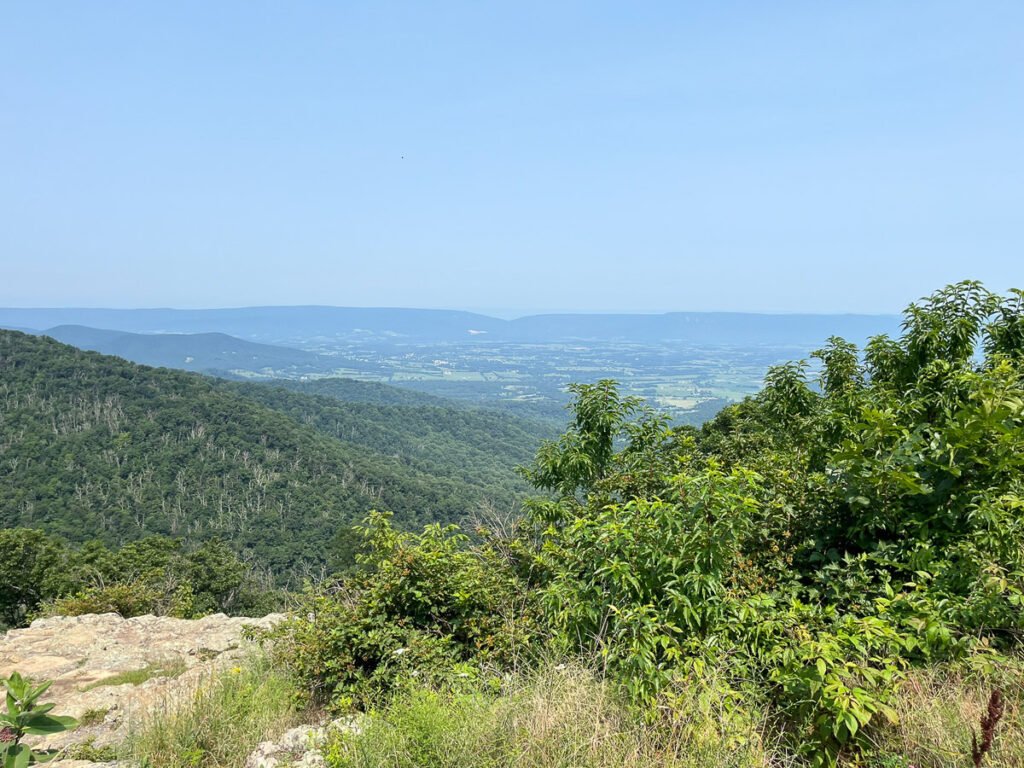
The next day, we drove south. By then, smoke from Canadian wildfires had thickened the haze, and the views were far less clear. We drove about thirty miles before deciding to turn around. It was still a pretty drive, but it lacked the sense of discovery we had felt the day before, when every overlook revealed another layered mountain view.
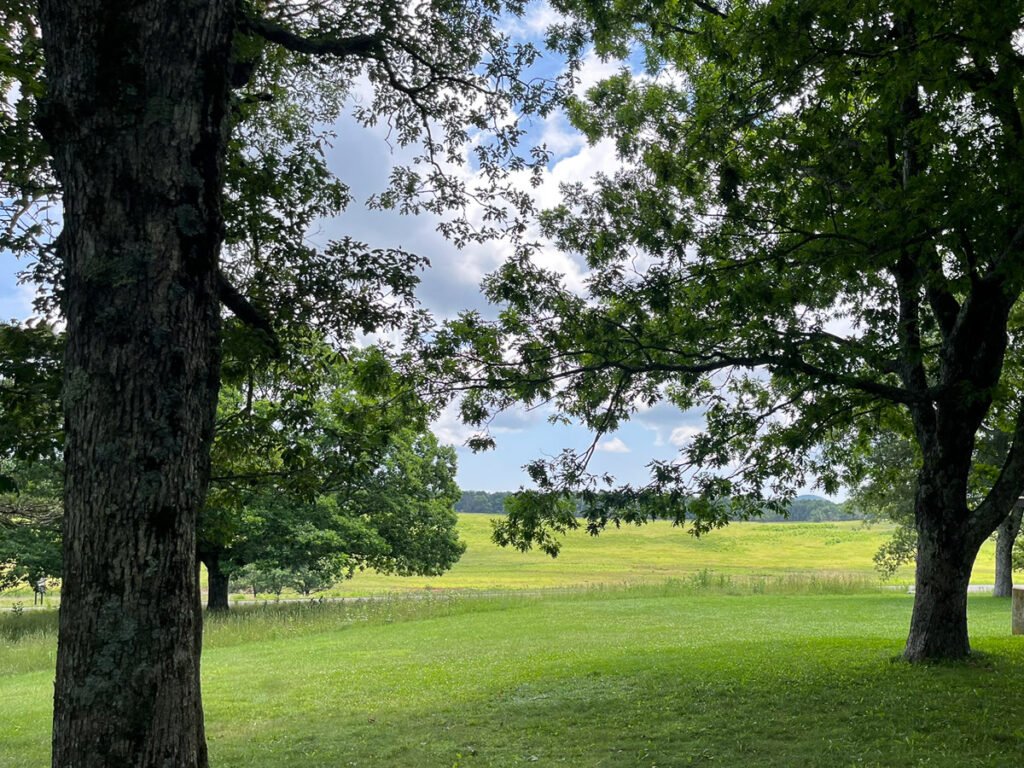
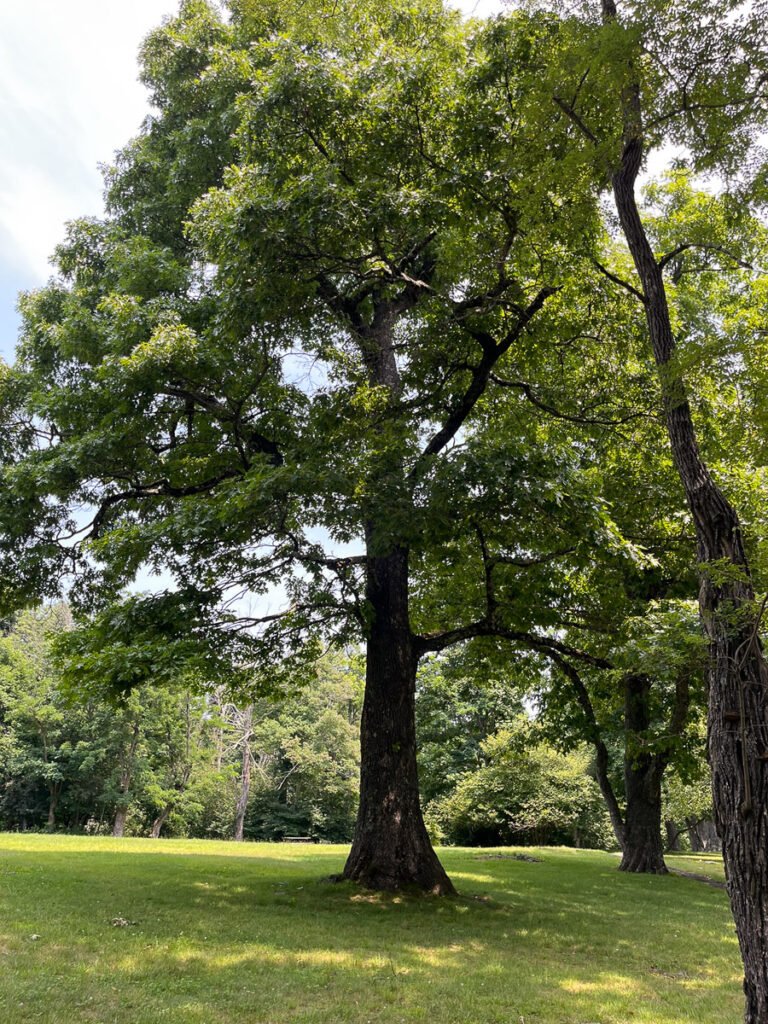
We stopped at a nearly empty picnic area with a beautiful old tree, but the bugs drove us away soon after we finished eating. I took a photograph of the tree and painted it later inside Daisy. That watercolor and the Rag Mountain painting are my favorite finished pieces from the trip.
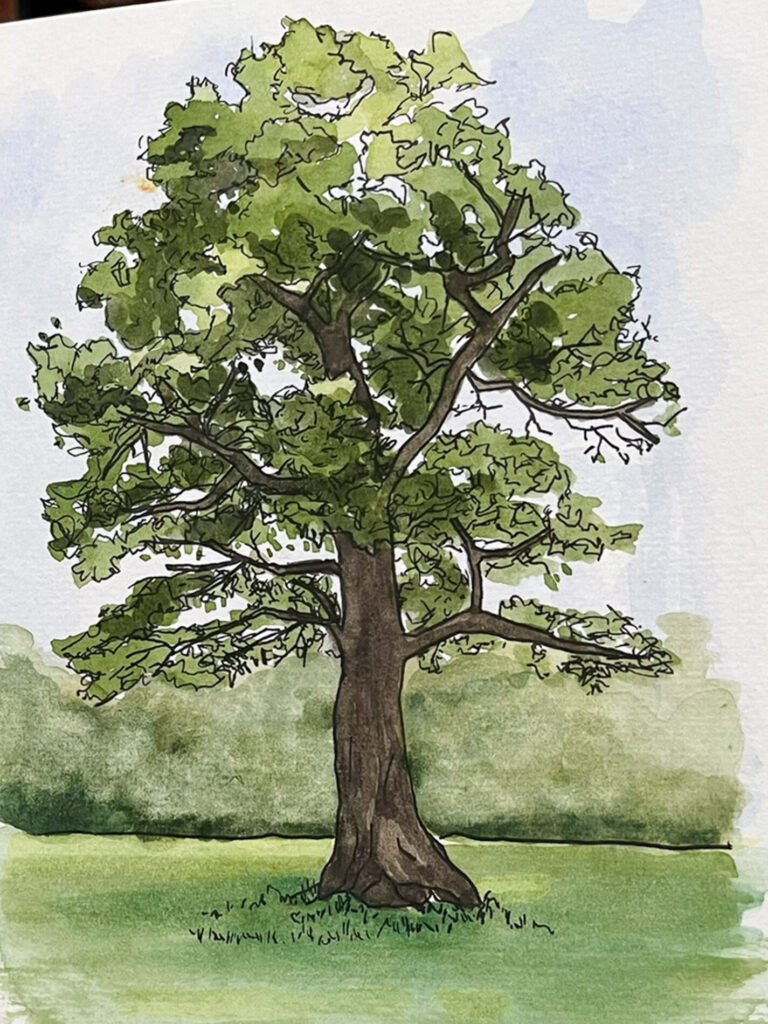
They are not, however, the pieces that best contain the trip.
The Great Palette Experiment
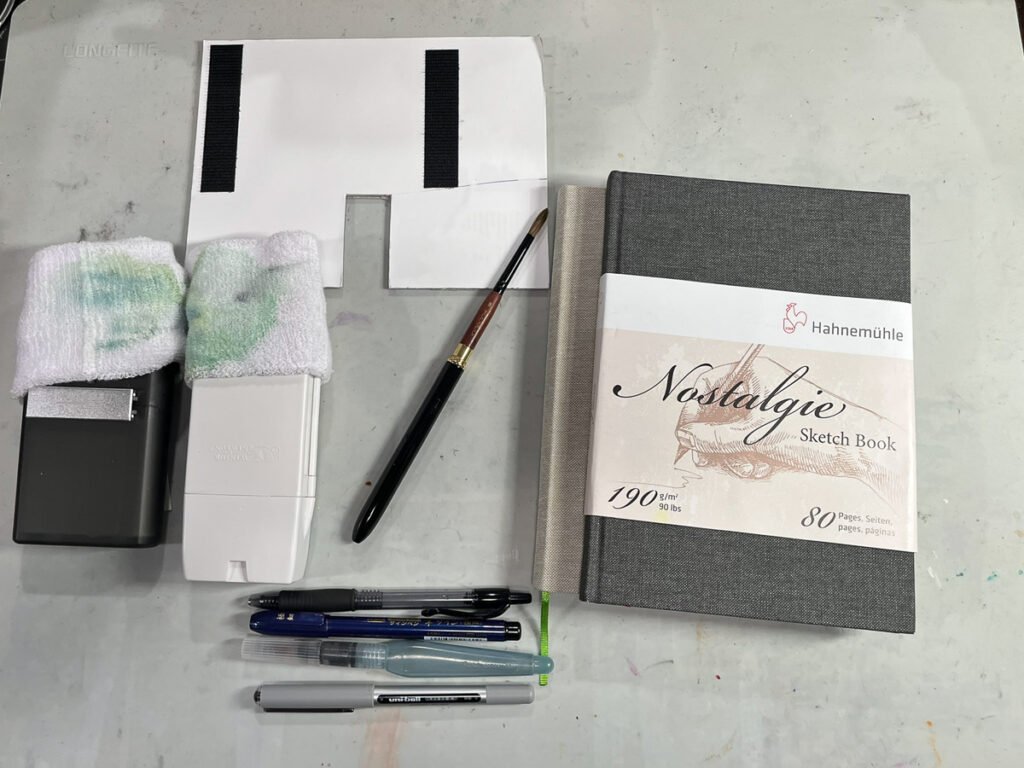
I had brought two watercolor palettes that I wanted to compare: a Winsor & Newton Cotman Field Box and a Portable Painter. I had spent far too much time before the trip trying to assemble the perfect portable setup, as though the correct arrangement of pans, brushes, and water containers might transform me into the artist I had imagined painting beside Skyline Drive.
I tried both palettes, but only inside the trailer, where the table was flat and no insect was attempting to establish residency in my face. It was not quite the rugged field trial I had planned.
The Cotman box impressed me. The paint rewetted easily with a waterbrush, the color selection allowed me to mix a useful variety of greens, and the built-in mixing trays worked well. It was compact, straightforward, and easy to open and use.
The Portable Painter had a more dramatic debut. During the drive to the campground, it flipped upside down inside my bag before all the paint had dried completely. Four pans came loose and stuck to the mixing area. Naturally, one of them was phthalo green, a color with the staining power and territorial ambition of an invasive species. It got onto Daisy’s table, but I managed to clean it before it became a permanent interior design feature.
Once restored to working order, the palette functioned well enough. The colors I had selected were useful, and the attached water container meant I could use the travel brushes I had packed. In practice, though, I used only one brush, and real brushes consumed far more water and paint than my waterbrushes. The Portable Painter required more setup and more mixing than the Cotman box, without giving me any clear advantage during this particular trip.
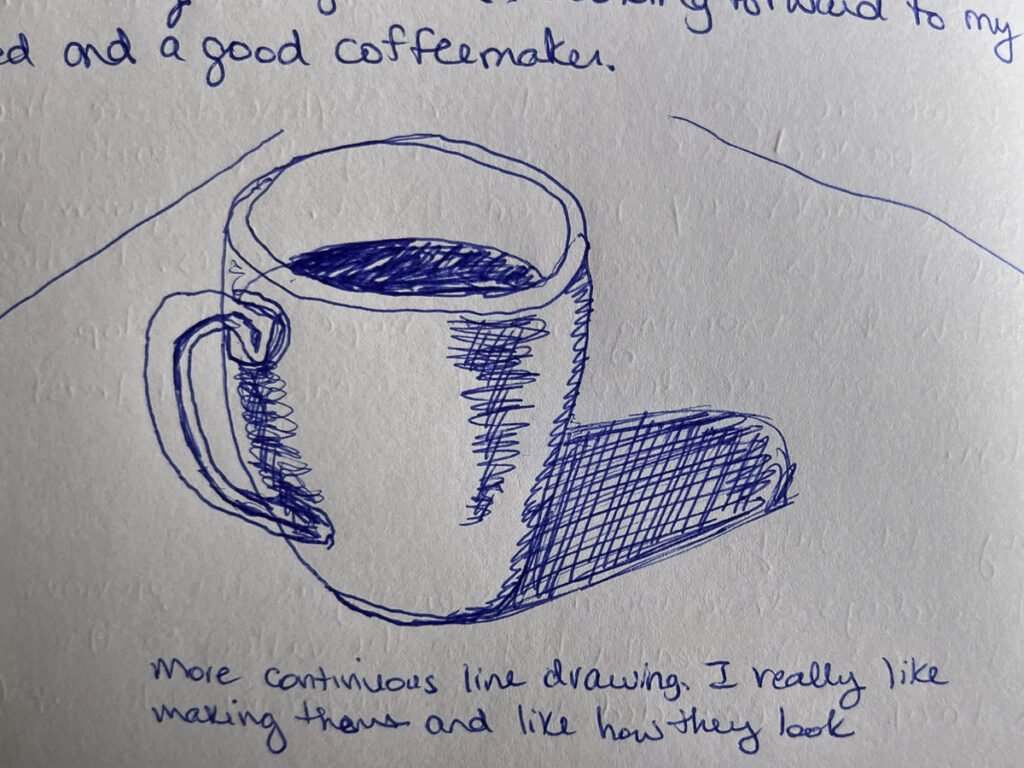
Then my black pen ran out, and I continued with a blue Bic.
That humble blue pen was more useful than everything else in the bag. It was easy to pull out while waiting for breakfast, sitting at the lodge, or watching the dogs. I did not need water, mixing space, drying time, or a bug-free hour. I needed five minutes and something in front of me.
When the Peaceful Days Ended
By Thursday afternoon, the campground had begun filling with weekend visitors. The empty campsites beside us and across from us were suddenly occupied. There were large families, noisy children, barking dogs, music, cigarette smoke, and the unmistakable skunk-cloud of pot drifting through the trees. After the hazy drive and buggy picnic, I returned to find that our quiet little pocket of privacy had disappeared.
The peaceful version of the trip had closed its doors.
For a while, I wanted to ask Scott whether we could simply pack up and leave. Instead, I put on my headphones and worked on the afghan I am crocheting for my son. The repetition became meditative. Later, I went inside Daisy and painted the tree from the picnic area. Focusing on yarn, paint, and the small space directly in front of me helped more than sitting outside resenting our new neighbors. We made burgers for dinner, and I stayed plugged into my music until nearly midnight.
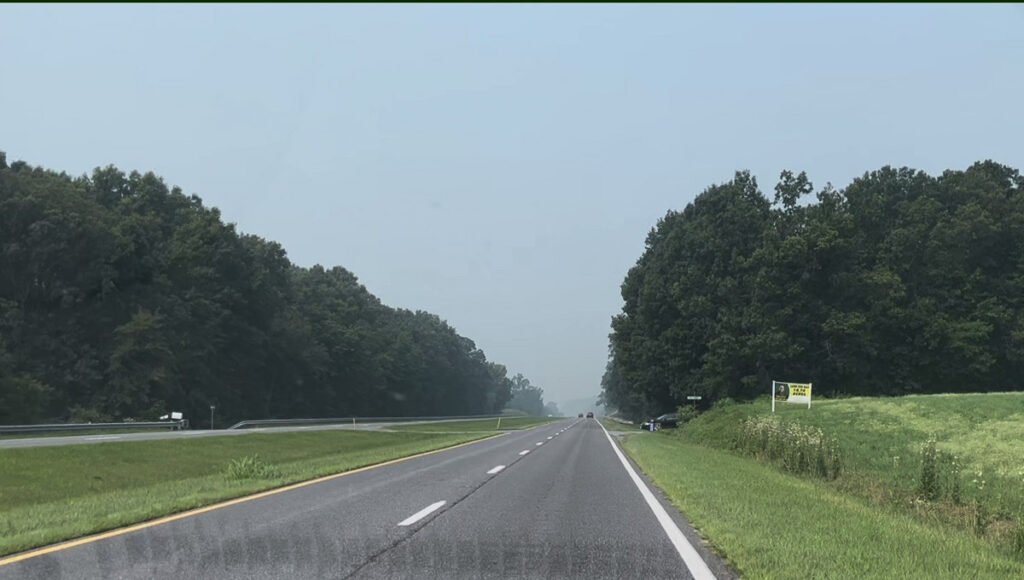
By Friday morning, smoke had settled into the campground itself. We were glad to be going home. I felt relieved as we packed, although I was concerned about the wildfire smoke and wondered whether it would follow us back to Tennessee. When we crossed the state line, the familiar mountains came into view, clear and green. I love that sight every time we come home from that direction, but after days of haze, it felt especially reassuring.
As Daisy’s first real camping trip, Shenandoah was a success. Nothing broke, nothing surprised us, and everything worked as it should. The sleeping arrangements need further diplomatic negotiations, but that is material for another blog post.
I also came home knowing that I did not need quite so many art supplies for a week in a new place with vague expectations. The two watercolor paintings are my favorite finished pieces from the trip, but both were painted inside the trailer from photographs. I could have made them at home.
The sketch that matters most to me is the one of the dogs sleeping in their Pup Tent. It is not the prettiest drawing in the book, but it holds the exact feeling of sitting outside Daisy, surrounded by green, feeling safe and comfortable, with my dogs close by and nothing I needed to accomplish. I drew what was in front of me without worrying about whether it would become beautiful.
Now, when I look at that page, I remember the shade, the quiet, and the rare feeling of having nowhere else I needed to be. That is what the sketchbook brought home.
I hope you enjoyed this post, as I certainly enjoyed reliving it as I wrote. Here are some extra photos I thought you might like:

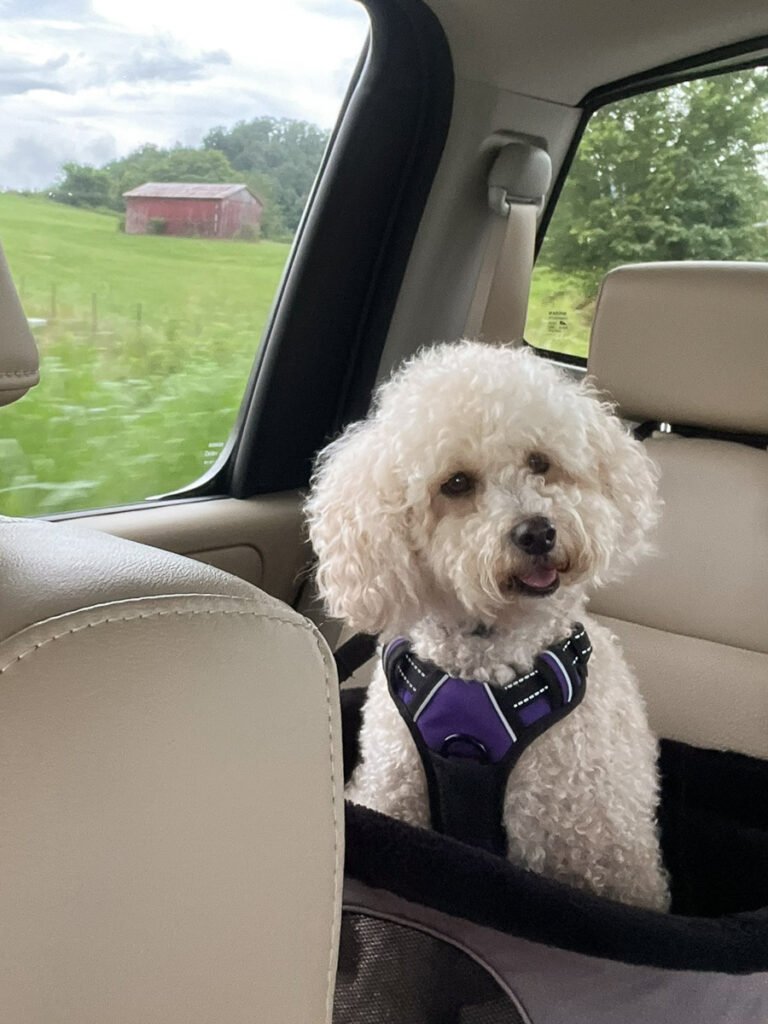
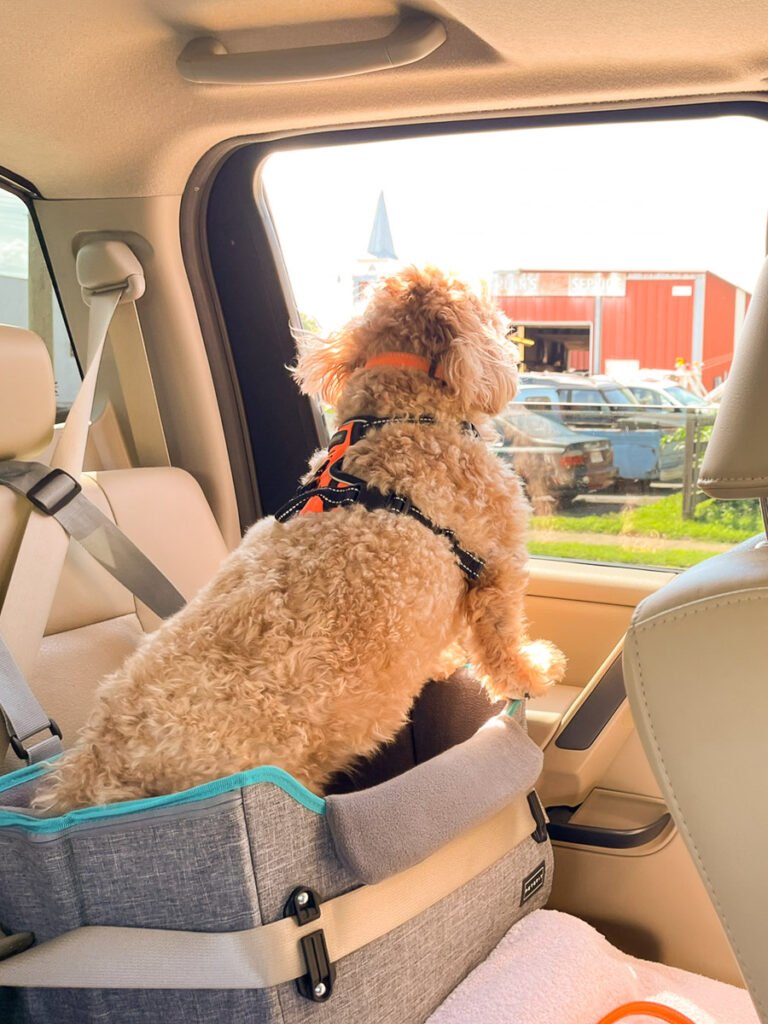
Abby is a good traveler and enjoys the ride Ginger watches the world go by 
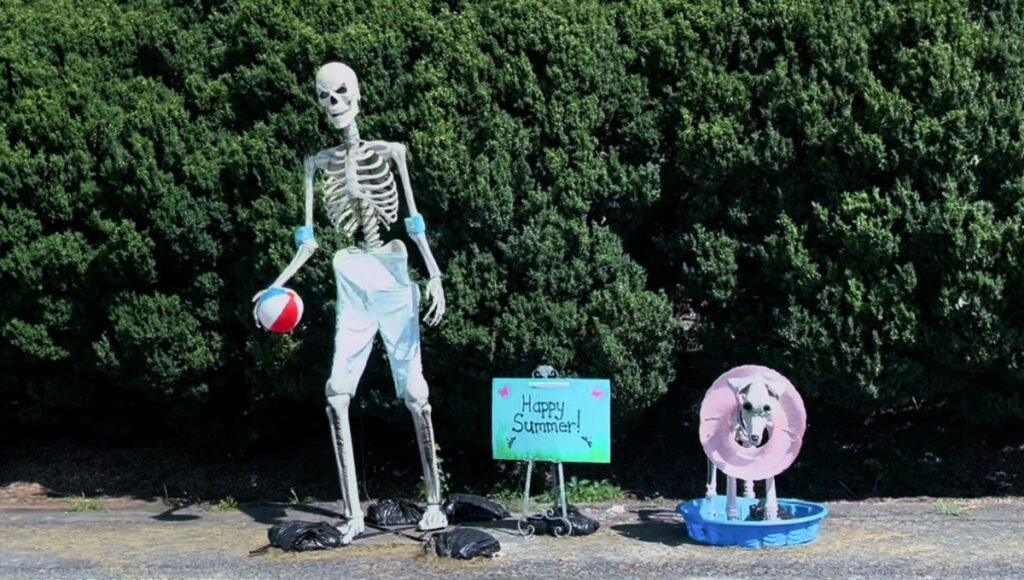
Summer skeletons we passed on the drive to Shenandoah 
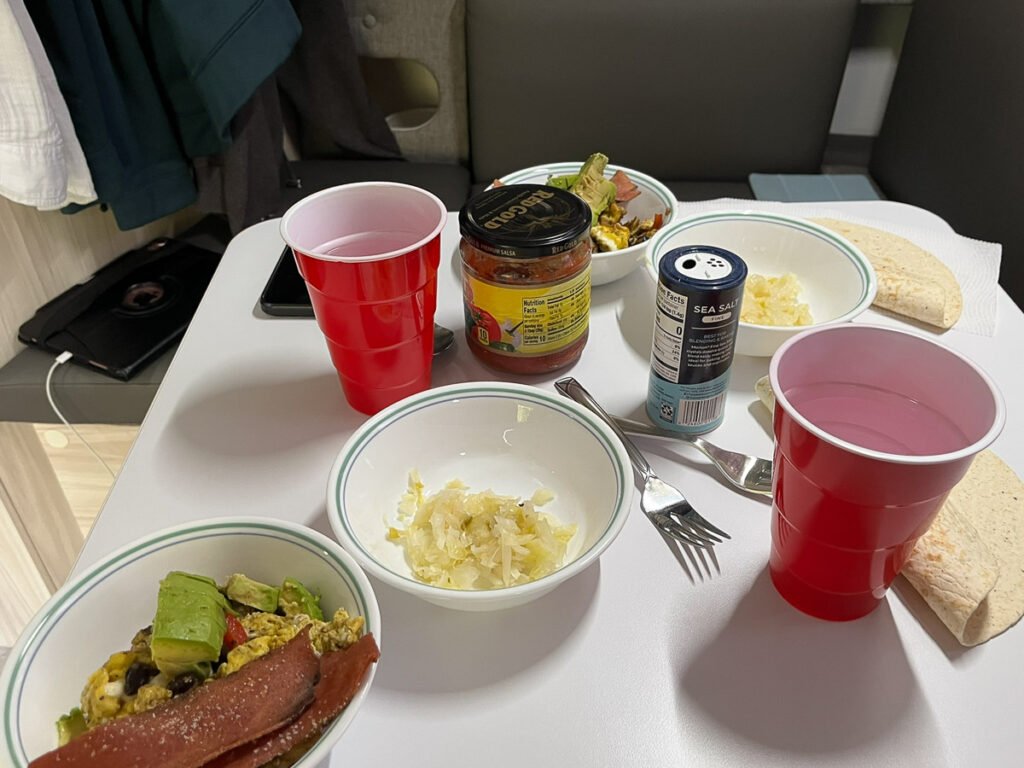
The view of Big Meadows from the visitor center One of our breakfasts Some quick sketches of whatever was in front of me at the time Barbecued tofu sliders and chips outside the lodge One of the numerous views of the valley from Skyline Drive Another view of the mountain ridge The reference photo of the tree at the picnic area Abby licked my face just as I snapped our picture My last cup of coffee in Shenandoah, captured with a blue Bic The smoke was pretty bad on the way home