Tomorrow is St. Patrick’s Day. I’m not Catholic or Presbyterian, but I do have a wee bit of Irish in my blood, so I presume some of my ancestors celebrated the Feast of St. Patrick!
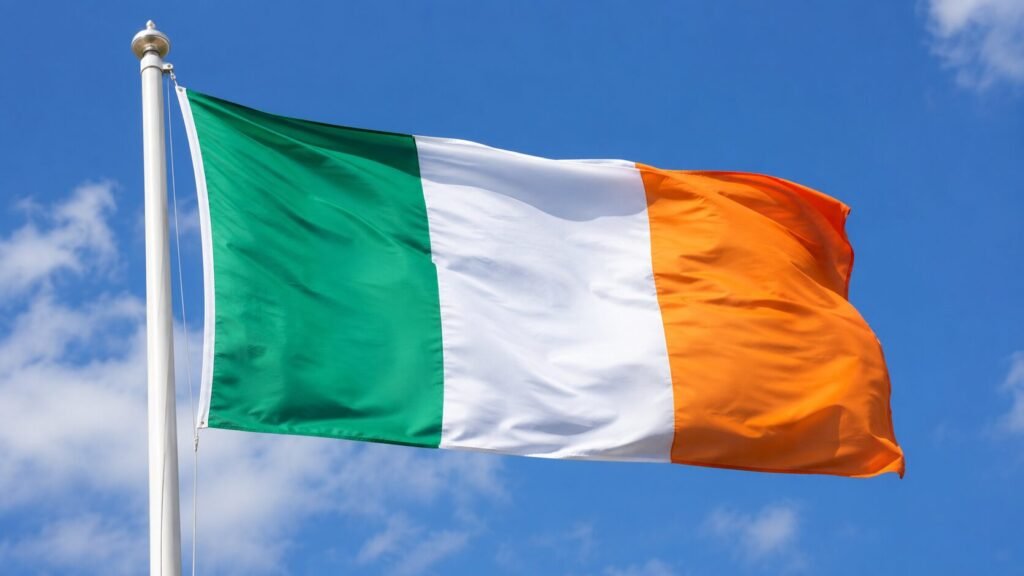
By the way, do you know what the colors in the flag of Ireland symbolize?
Green is for the revolutionaries; the Catholics who, inspired by the French revolution, organized in the 1790s under the United Irishmen. Their rivals, the Protestant Orange Order, are represented by the orange color. White is for the harmony needed to quell the differences between them.
My Irish immigrant ancestors would not have lived under this flag. Jane Matthews, my 7th great grandmother (on my father’s side), was born in Dublin around 1720. She married her Scot husband, James MacMillan, in Dublin in 1750. Sometime between 1755 and 1758 they moved to frontier Pennsylvania, settling in the new county of York and raising at least two more children (they had one in Dublin).
It’s likely they would’ve seen this flag flying in Dublin before they left: the flag of the Kingdom of Ireland.
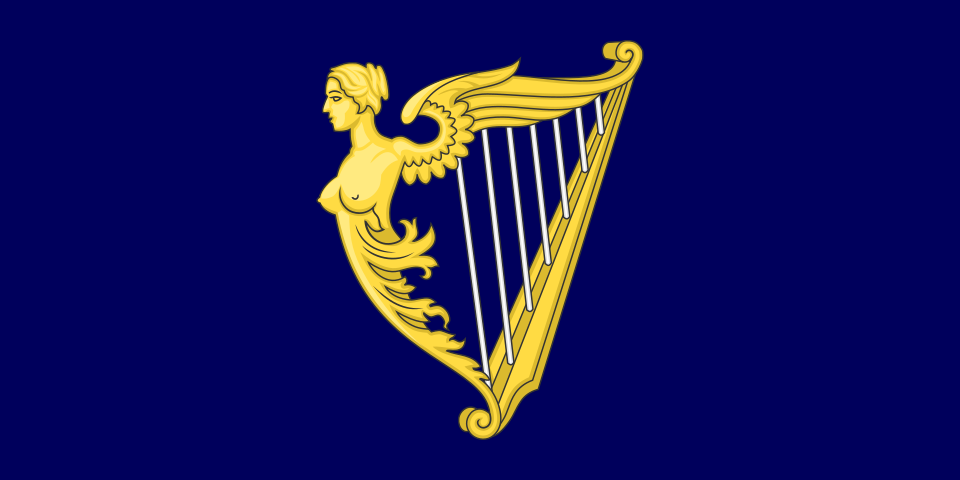
This flag has the Gaelic harp. The harp was famous in Scotland and Ireland during medieval times. Scottish and Irish kings and chieftains kept personal harpers whose duties were to entertain. When the English Henry VIII declared himself King of Ireland in 1531, the harp became the official national symbol of Ireland. But the native Celtic heritage was discouraged, and harpers consequently lost much of their status. Some harpers became travelling musicians who encouraged revolutionary thinking (I think in part to keep a job!). The harp, which was still a symbol of native Irish pride, became a symbol of resistance to England. It remained part of the royal standard until 1800.
Great Grandma Jane MacMillan
During my Great Grandma Jane’s youth, Dublin would have been undergoing major rebuilding from its medieval origins. The Age of Enlightenment was in full swing. People were beginning to believe that science had more of a hand in daily events than God. She would’ve seen many new buildings constructed as the city revitalized with “modern” European culture. Then, after she married, they joined the wave of emigrants moving to the colonies. Even if it was a choice based on their strict Presbyterian beliefs, I think it must have been a culture shock. I imagine she would’ve had a much harder life in the new world than the old.
Jane and James lived during the American Revolution and I assume, since most of the Scots-Irish supported the Revolution, they did, as well. Thus, I can’t be certain they maintained many Irish traditions. They might have been eager to adopt local traditions as part of their new life. They would’ve been pretty old by the time the U.S. tradition of celebrating St. Patrick’s Day was established in their part of the country. But perhaps their children participated!
In any event, my Scots-Irish heritage eventually melded with that of the Germans long before my father was born. For my part, I am proud to have that wee bit of Irish blood. It makes me feel right at home when I visit “authentic” Irish pubs!
originally posted at stillroundthecorner.com