Sooner or later, a cruise comes to an end. It kind of makes me sad. No more buffet. No more nightly martini tasting. No more waking up to the sounds and smell of the ocean.
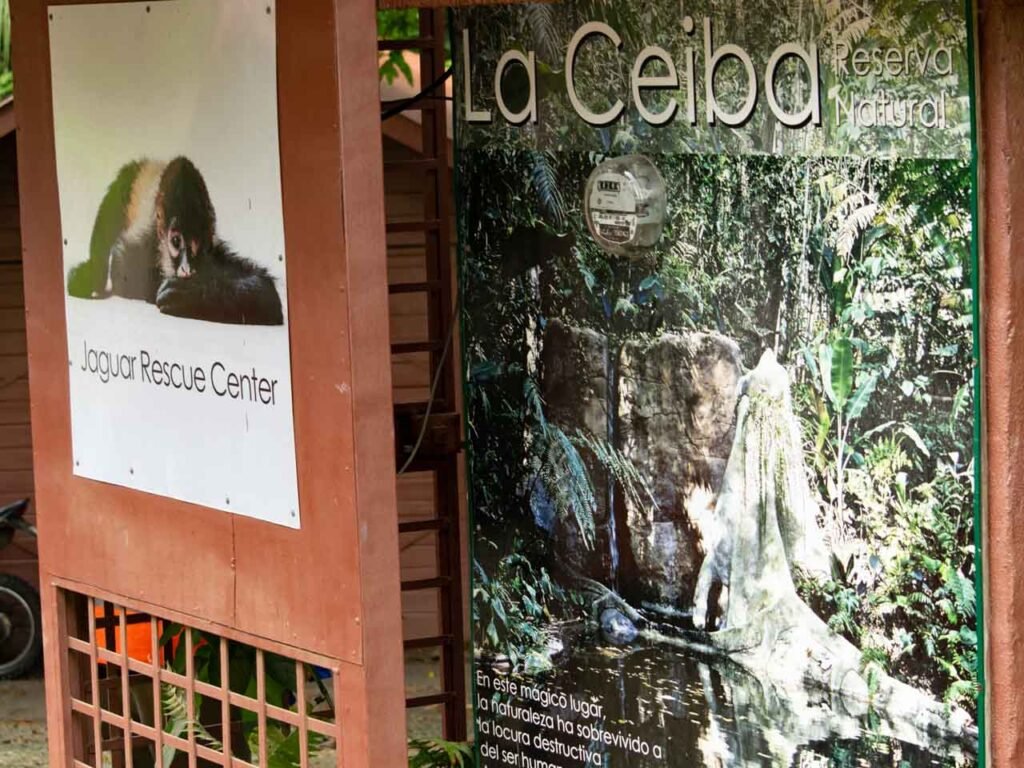
There’s only been one time when I was looking forward to going home. But it wasn’t this cruise. We’d been on the ship for 7 days and still had 3 days left. And the excursion I was looking forward to the most (after Panama) was about to happen: a trip to the Jaguar Rescue Center in Limon, Costa Rica.
What is it they say? It ain’t over ‘til it’s over!
The weather on Day 8 was not cooperative. We woke to rain showers. The forecast was for rain off and on all day. It was a warm rain, but when we got off the ship I quickly found out it was a lot of rain. I got drenched during the quarter mile walk down the pier and to the bus.
Our tour guide, Millie, was optimistic. “You have to remember, this is a rain forest,” she informed us while we waited for everyone to arrive. The bus driver turned on the air conditioning so that the windows wouldn’t fog. It made me cold.
None of this curbed my enthusiasm, however. I’d never been to Central America before this trip and I was looking forward to actually walking through a rainforest. The first part of the tour was a visit to the Rescue Center itself, but the second part was going to be at the Ceiba Primary Forest, a preserve that was supposed to be mostly untouched by humans. How cool is that?
It took us a long time to drive to the rescue center. We stopped briefly to view howler monkeys in the trees alongside the road. The tour guide gave us some information about the center and the local environment. In the early 2000s, a naturalist named Sandro Alviani moved to Costa Rica. He met a woman, Encar, and they fell in love. They had big hearts and often took in injured wildlife to care for and release back into the wild. Eventually they earned a reputation, and the locals would bring anything that was sick or hurt to them for care.
At one point, the authorities brought in an orphaned baby jaguar. Unfortunately, it was too far gone and the couple couldn’t save it. But they decided to open a wildlife rescue and rehabilitation center, and in 2008 it was officially ready for business. They called it the Jaguar Rescue Center in honor of the baby they couldn’t save. Thanks to the protection efforts of the Costa Rican government, jaguars are considered “near threatened” and still roam the remaining rainforest.
Today they continue to rescue and rehabilitate most of the animals they get. Once we were dropped off, I learned from a volunteer named Torie that the center gets between 500 and 600 animals a year. Only about half of those critters recover enough to be released. The rest either die, become food for the other critters, or stay on permanently at the center.
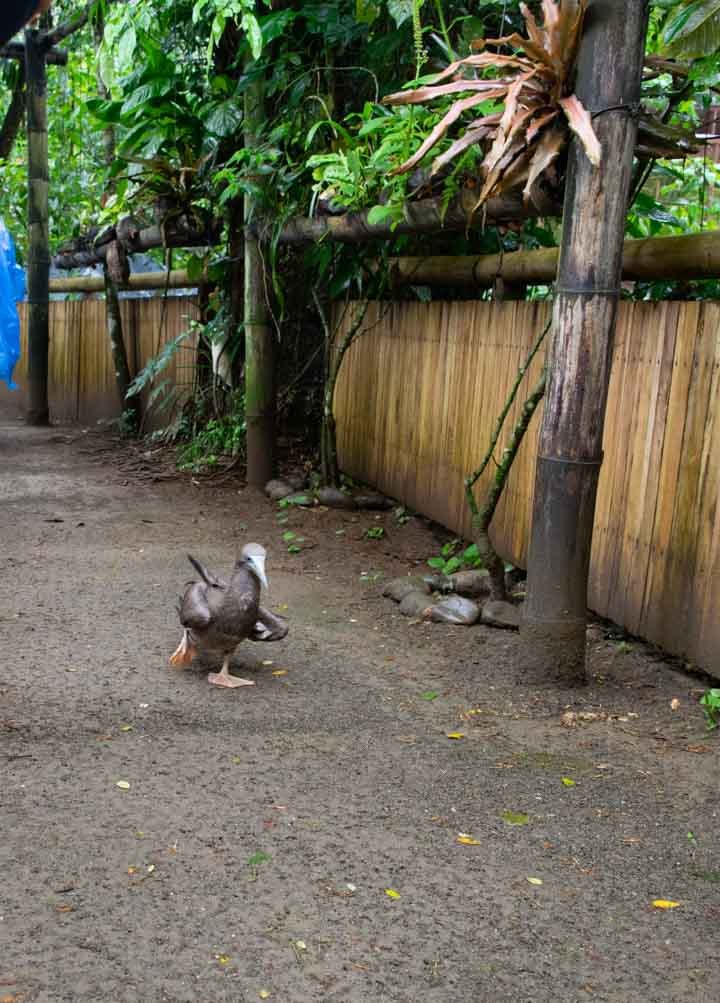
The rain stopped. We entered a lush, fenced area with paved walkways that led us to various outbuildings. As we stood and listened to Torie go over the rules, a peccary wandered over and began sniffing our legs. It looked like a small pig but had long wiry hair. Apparently there were several animals roaming around the grounds, residents who weren’t able to be released because of permanent injury or exposure to humans. We were instructed not to touch or bother them.
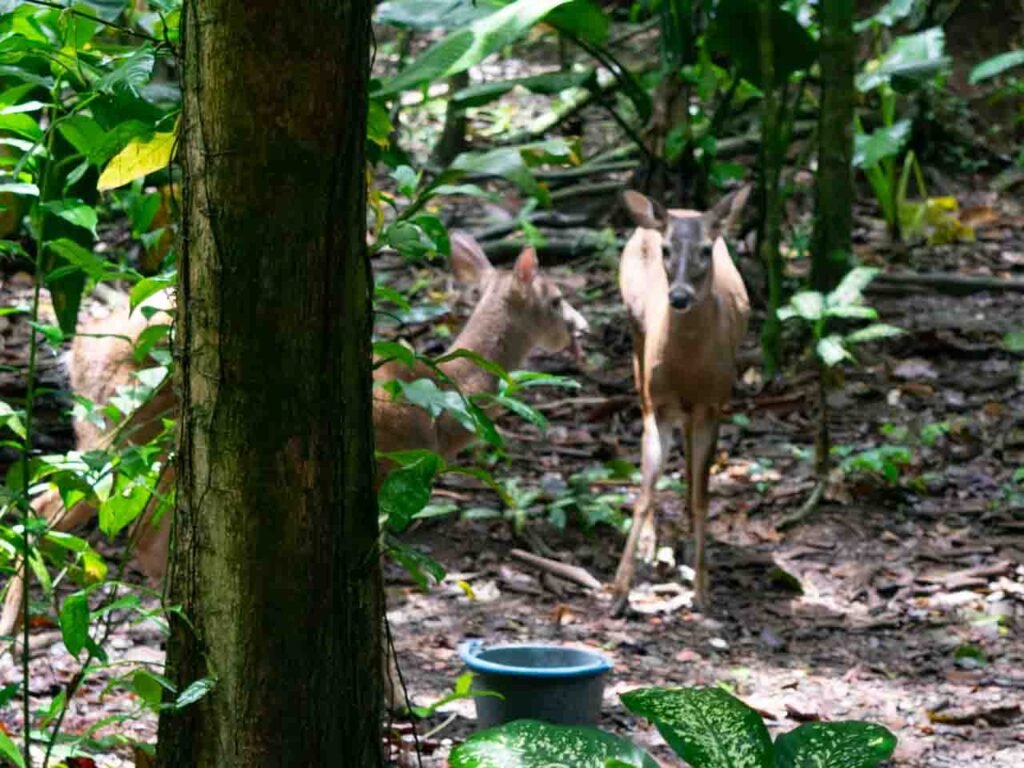
I looked up and realized that a small deer stood two feet away from me in the bushes. It’s tongue hung out of it’s mouth. Apparently its jaw was broken when it was hit by a car. Although the jaw was surgically repaired, it could not eat properly and volunteers had to mash up its food everyday so that it could survive. The deer would never go back to its wild home.
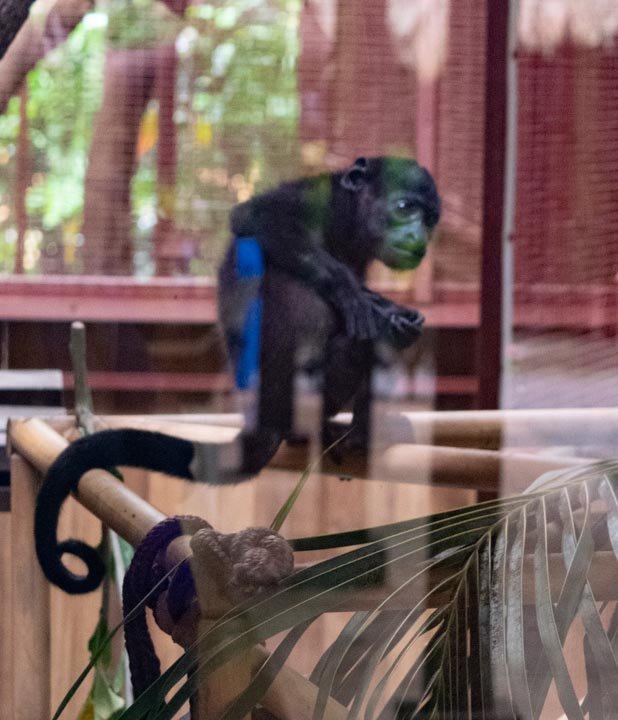
We moved deeper into the center and watched a couple of volunteers taking care of baby monkeys. Talk about the “awwwww” factor! Both of the women had their hair wrapped in buns on top of their heads. This was so that the baby monkeys could hold on and take a ride, just as they would sit on their mother in the forest.
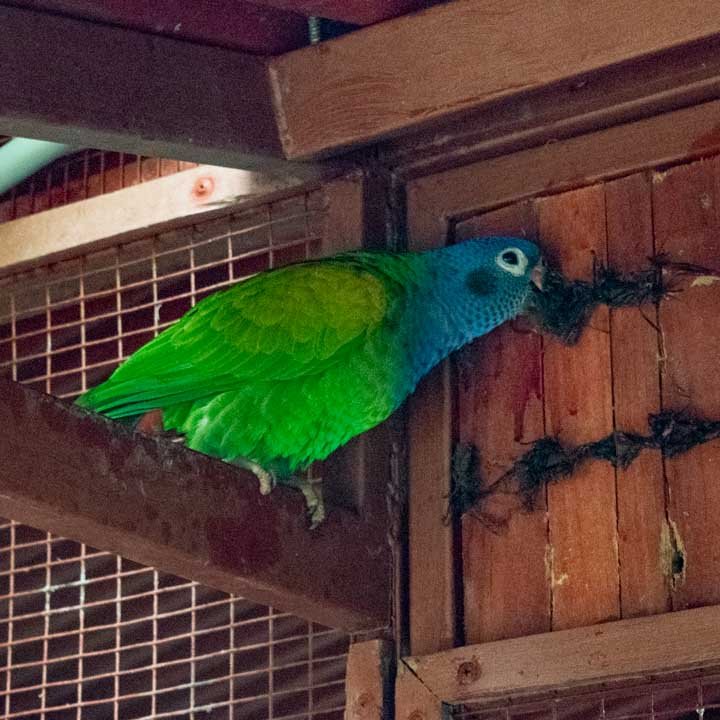
We saw parrots, snakes (thankfully in cages), and a whole bunch of young sloths out on their jungle gym getting exercise and munchies. The baby sloths were, of course, the cutest things you’ll ever see. I couldn’t touch them, but I was allowed to stand within inches of them as they climbed slowly towards a tastier branch.
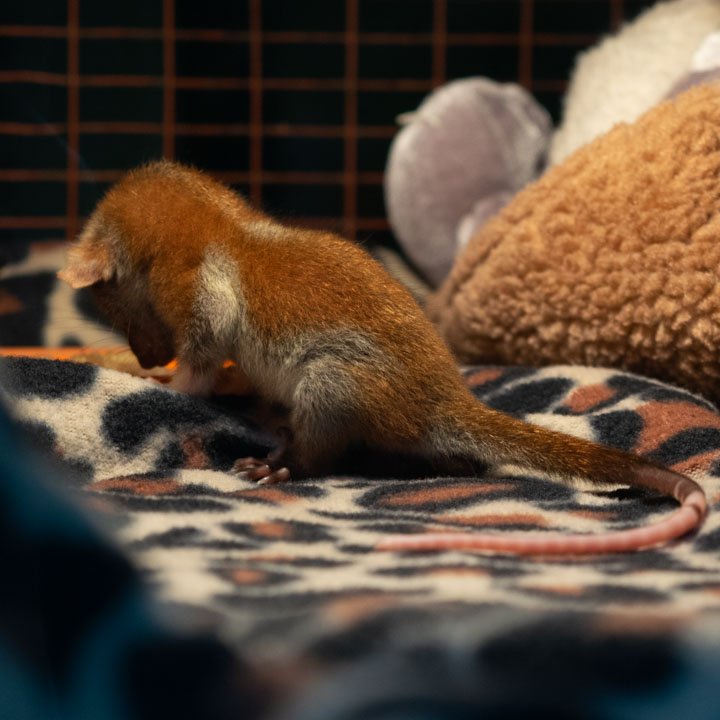
We passed the nursery next, where a baby possum was just waking up. A short while later we stopped at a really large enclosure full of monkeys. Three types of monkeys were currently being rehabilitated: howlers, spider and white-faced monkeys. They chased each other and played together on hanging vines. One found a hibiscus flower to snack on. Two found a volunteer who was sitting on the floor in the pen. They curled up in his arms like little kids.
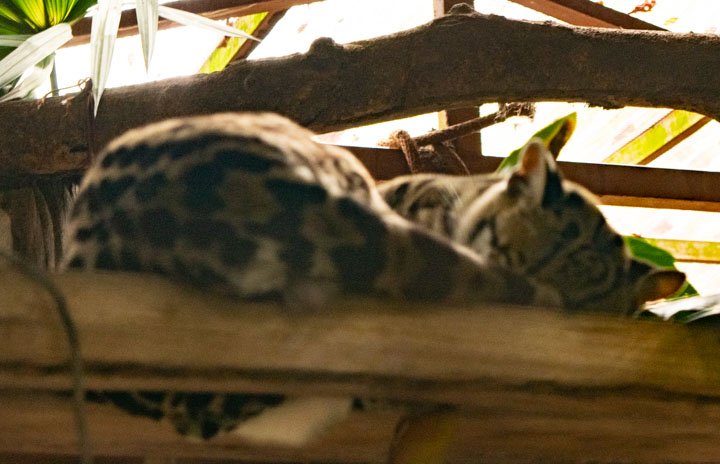
On our way back to the entrance, we passed a margay sleeping on a branch in a pen. It looks like an ocelot, only a lot smaller. They live in trees and, unlike other cats, they can climb down a tree trunk head first. They used to be common in Costa Rica but are now on the endangered species list due to habitat destruction.
I bought a souvenir baseball cap and a pound of rainforest coffee before we got back on the bus. The rain started again, but wasn’t nearly as bad as it had been at the dock. We took a short drive down the road to the Ceiba Primary Forest and handed over to our new guide, Dan.
We crossed a creek using a rickety iron bridge that didn’t look like it was going to be around much longer. Dan kneeled at the base of a huge tree and gave us a brief lesson in rainforest ecology. A tiny spotted frog hopped at one of his feet.
As we walked along a wet path, he pointed out a green and black poison dart frog that jumped out from under a plant. It was only about an inch long. He tried to catch it so we could see it up close, but wasn’t successful.
We passed a huge mound of dirt that we learned was a nest for leaf cutting ants. It was about three feet high and eight feet long, and can house over five million ants! I was extremely glad I didn’t see any. They get their name because they cut and carry leaves back to the nest. The leaves are used to raise a fungus that they eat. The ants travel on the forest floor in wide trails to get to the leaves that cultivate fungus.
From then on I focused on the trail as well as low hanging branches. I didn’t want to be surprised by gazillions of ants or low hanging snakes!
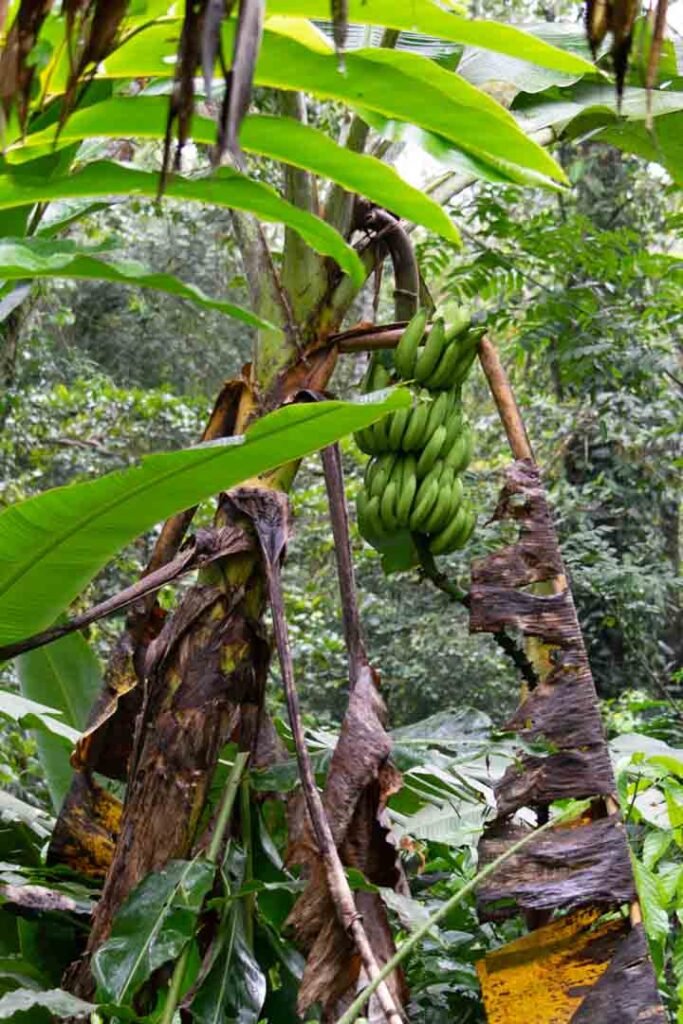
We went a little ways farther along the trail and found fresh juice and fruit waiting for us under a covered pavilion. We sat on chairs around two wooden trestle tables. The rain began in earnest. I’d just spotted a banana tree, when someone at the next table screamed.
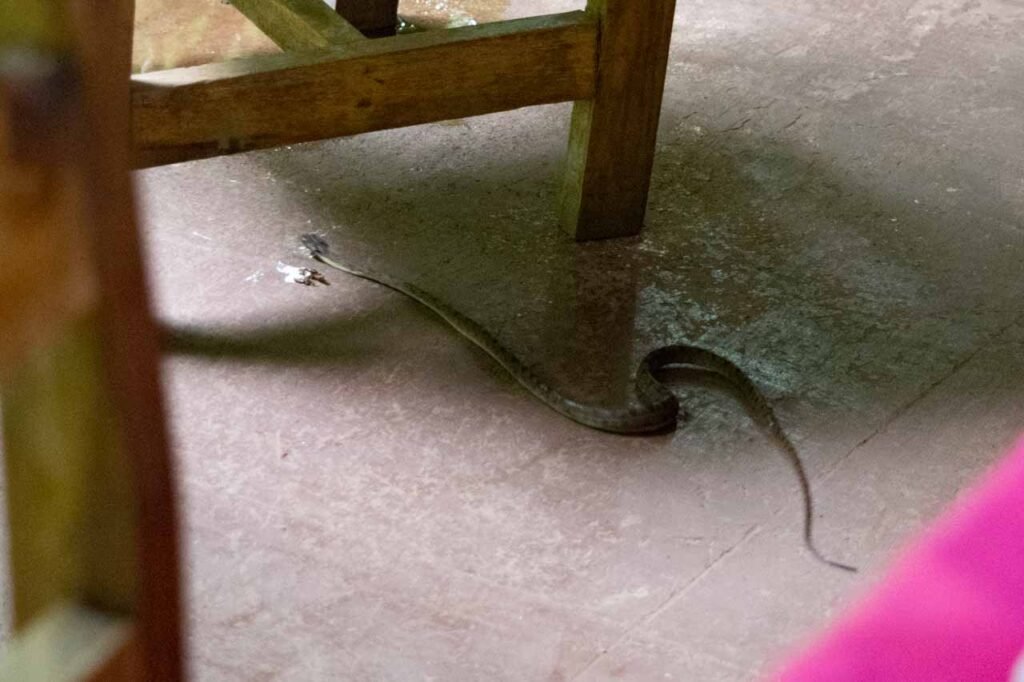
We all jumped. Dan ran over to see what was going on. One of the tourists in our group had taken a chair near the edge of the pavilion. He’d been conversing with his tablemates and thoughtlessly swatted what he thought was a mosquito on his bare leg. It turned out that it was a snake crawling out from under the chair cushion and down his leg to the ground.
Yes, I would’ve screamed, too!
Dan tried catching the snake. He said it wasn’t venomous. I think he called it a brown vine snake. It probably was sleeping under the cushion and was startled when the man sat down. After I took pictures of it, I checked under my cushion. Just in case…
The rain came down hard as we walked back to the bus. I had to put my camera into a plastic bag and couldn’t take any more pictures. We had a long ride back to the ship so I got to see a lot of scenery. The bus stopped for lunch at a local restaurant where I enjoyed beans and rice, a small salad, and fried plantains. Yum!
Costa Rica is a beautiful country. I learned that the name literally means “Rich Coast” and that it has the largest percentage of protected areas in the world. That’s especially important because, even though it only has a quarter percent of the world’s land mass, Costa Rica alone has over 5% of the world’s biodiversity. There are over 200 species of mammals and 300,000 species of insects that live there. 5000 – yes 5000 – new species of plants and animals have been discovered in Costa Rica since 2011.
That’s amazing!
The bad news? Rainforest acreage is still declining due to deforestation for banana plantations and cattle grazing. What can you do to help? First, buy local produce instead of bananas. You’ll not only help your local farmer but also save the planet from all the carbon emissions created when bananas are transported from Central America. The only reason banana plantation acreages are increasing is because people in developed nations are demanding more bananas.
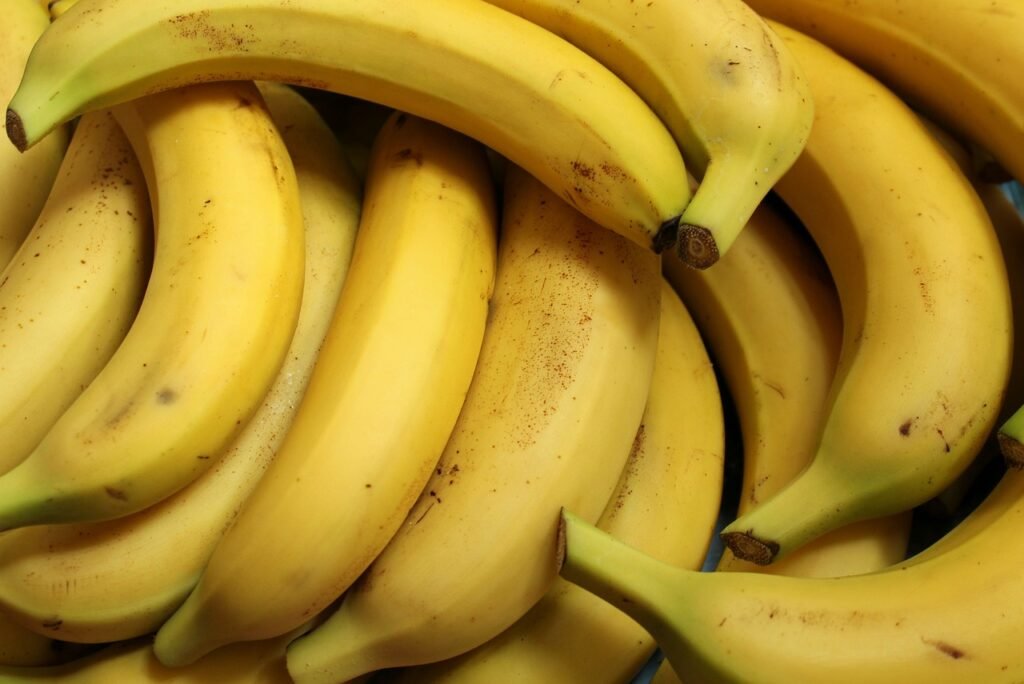
If you really must have a banana, buy and eat only the organically grown ones. The pesticides used on conventional plantations destroy the natural ecosystem as well as harm the children who work there. The pesticides leech into the soil and eventually end up in the ocean where they contaminate marine ecosystems. Organic plantations encourage insect predators to keep weeds and pests at bay.
Finally, be aware that the large scale banana business contributes to the cocaine problems in the U.S. According to the Council on Hemispheric Affairs, Chiquita pleaded guilty in 2007 to supporting a military rebel group in Columbia that is responsible for exporting cocaine and causing countless of drug crimes surrounding cocaine dealing. The U.S. had already labeled this group as a known terrorist organization in 2001. You can read about it here.
http://www.coha.org/para-business-gone-bananas-chiquita-brands-in-colombia/
This isn’t an isolated incident. Bananas make big money in an area of the world that has weak political security. Would you knowingly donate money to support a drug cartel? I didn’t think so.
Well, it’s time to wrap up this little slide show about my Panama Canal cruise. The last two days we spent at sea were pretty unremarkable. We ate, drank, did a lot of walking around the promenade deck, and enjoyed the ocean air.
Would I do it again? IN A HEARTBEAT! Probably not with HAL, but I would be very eager to go on a cruise that went entirely through the canal. Those are usually a minimum of 14 days and add stops at ports along the Mexican Riviera. The only drawback is having to fly to and from airports on opposite sides of the country.
So now that I’m finished talking about the cruise, I can get to the trip I most recently returned from: a week in Nashville. It definitely wasn’t what I expected!
Until next time…
originally posted at annettezimmerman.com