Hello!
In last week’s post I mentioned that my little art studio has been displaced during our basement finishing project, so I’m stuck in the living room unable to really do anything more than some light drawing and studying. We’re still “enduring” our project; the three weeks completion time now looks more like seven, and I’m still filling my time with technical practice and research. So today I want to share some insights that I’ve discovered from my reading.
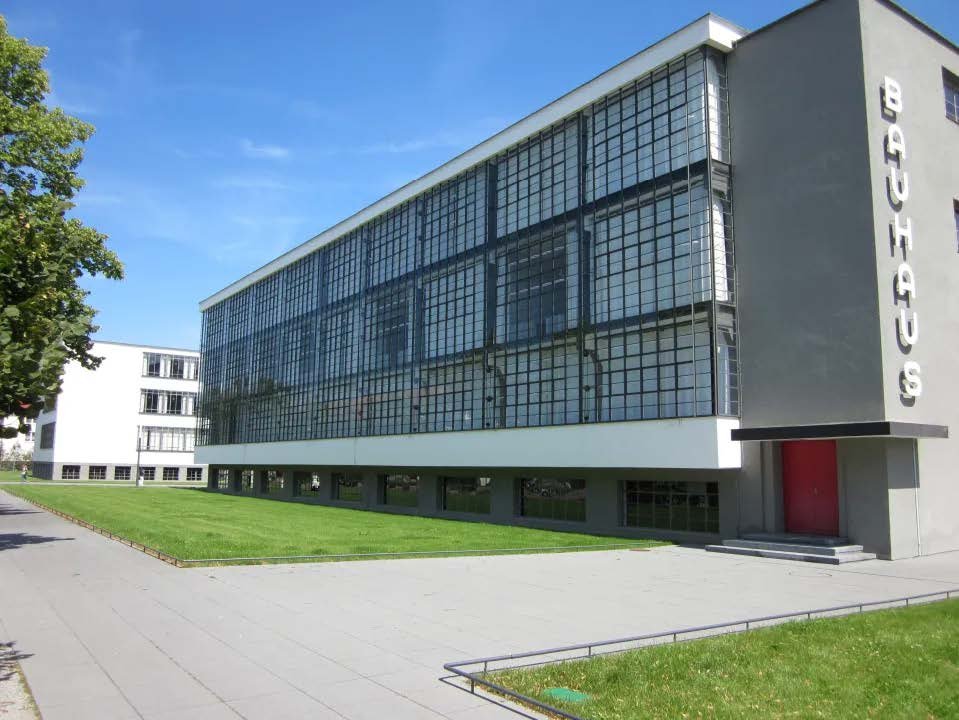
A couple of weeks ago, I picked up a book on art history and started browsing. In it was a short description of the Bauhaus, a post-WW1 school of design in Germany. I learned that the general principle of the school was to unite artists and craftsmen in producing innovative design based on functionality and material appropriateness, in the author’s words, “giving artists a purpose”. The school was short-lived due to the onset of World War 2, but made such a remarkable impact on industrial design that it led to a complete reformation in the way that art was perceived by the public.
It immediately captured my attention. What was going on at the time that artists felt they no longer had a purpose? Why did they have to collaborate with the trades? How did it reform ideas about art? And, finally, since the school was closed due to political turmoil, was there anything left unfinished that would’ve changed how we perceive art today?
The more I read about the school and its professors, the ‘Masters’, the more I became intrigued. I realized much of what we encompass as “art” today can be traced back to this period of history. And perhaps some of the artistic existential questions that I hear in forums – things like “how do I find my style” or “what should I create that will have meaning” lead back to cultural changes that began during the Bauhaus era. It begs discussion.
Let’s start, however, by going back to 1900 to see what the world was like. It will help us understand why the Bauhaus came about and why the changes it created were so drastic. Besides, a proper story needs the right setting!
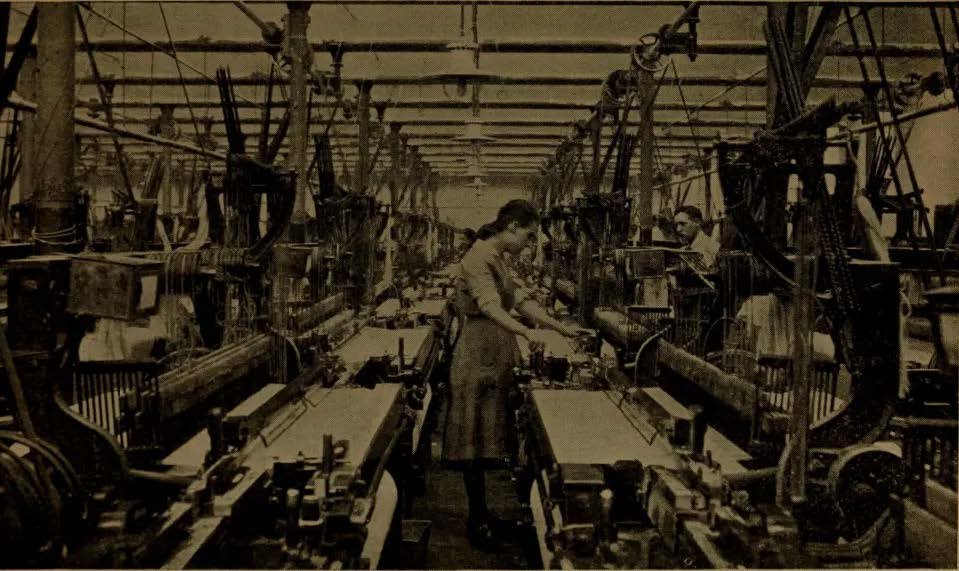
The Industrial Revolution was in full swing at the beginning of the 20th century. Manufacturing companies were popping up all over the U.S. and Europe. The textile industry, in particular, was flourishing, because machine weaving had reached a pinnacle. Similarly, automated lathes and other woodworking machinery were being perfected that revolutionized the production of wood products. New machines were being created at a rapid pace that would do the monotonous work on assembly lines faster and more precise than humans could.
The Arts and Crafts movement was on the decline. Craftsmen, who had spent the latter half of the 19th century proving that no machine could produce goods that were as high a quality with as good a form and function as they, were being proved wrong as the quality of mass produced goods rose. In addition, manufactured goods were far less expensive than their hand-crafted counterparts, allowing the working class to attain homes, furniture, and clothing that substantially increased their standard of living. Everyone was eager to welcome in the age of the machine, but, consequently, craftsmen were no longer in demand. Consumerism was born.
At the same time, Kodak began producing the Brownie camera in 1901. Now, anyone could take photographs of themselves as well as record important events. The demand for portrait artists, already low, lost its final battle with photography. Few people were willing to support artists who were not only redundant to the machine, but also produced work that was more expensive and not as realistic.
In the world of science, the atom was ‘discovered’. Einstein and others were proving that if scientists had the right tools, including a good foundation in natural laws, they could figure out how anything worked. In this same mechanical spirit, artists were figuring out what made good designs, devising everything from color theory to “laws” of composition.
The public, eager to rush in a new, modern century, was ready to abandon tradition and embrace new ideas.
Along came Walter Gropius, with a middle-class background in architecture and friends in both the manufacturing world and the world of fine art. He saw that manufacturers were having difficulties producing things like furniture and houses with their traditional appearances. He also saw that his artisan friends were in need of employment. It was the perfect opportunity to put the two together.
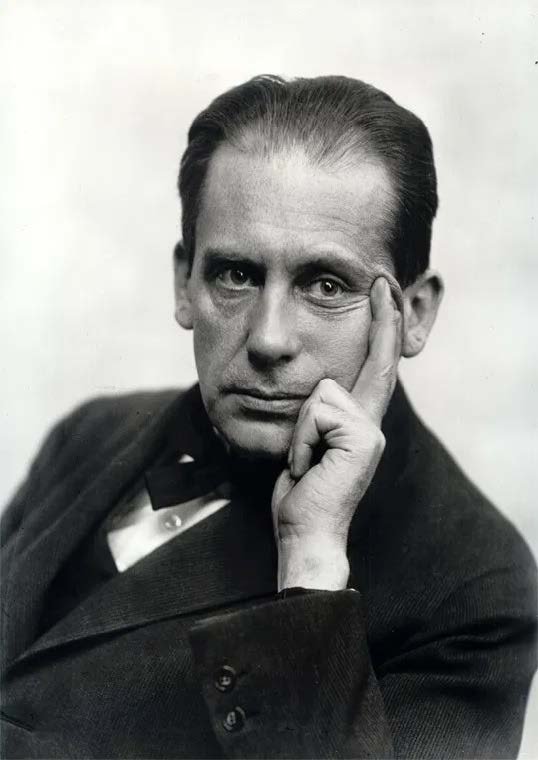
If there was a school that could train artists and tradesmen in the ways of industry, they could create designs that could actually be produced by machines, products that would replace the “soul-less” objects that were currently being turned out. The new goods would be simple yet functional, make the best use of the material, and have beauty.
And so he came up with the idea of the Bauhaus.
It was the right place and the right time. Students were first given free reign to discover for themselves the best way to utilize materials to their utmost capability. Then they took their new knowledge into workshops to create prototypes for industry. Their designs were sold, helping students finance their education. Unsurprisingly, the two most profitable areas of production became architecture and furniture making, although many other types of goods were produced. But throughout its short lifetime, the Bauhaus’ primary purpose was to train artists to work with industry.
Fine art wasn’t forgotten, however. Gropius had worked for a time with Peter Behrens before launching his own career, and agreed with Behrens’ modernist ideas that the exterior and the interior of a building should be cohesive; that is, the two designs should blend harmoniously so that the building exhibits a unified whole. He believed that the color and line of a prototype was as important to the design as the material and its form, and all the Bauhaus students would learn the basic laws of artistic design as well as fundamental engineering principles of materials and the sciences.
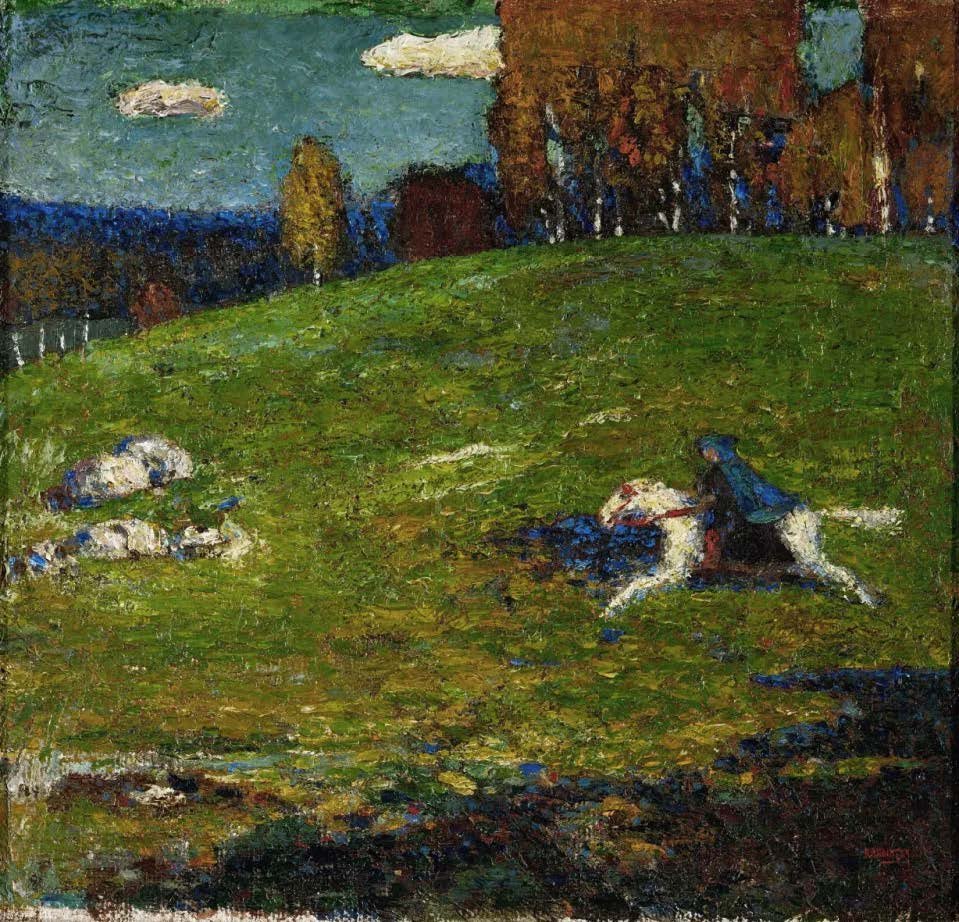
But who would teach? Machines could only produce simple forms, so the designs of the students had to be reduced to the most basic construction. Artists who were experimenting with abstract design would be inspirational professors. Gropius hired Vassily Kandinsky and Paul Klee, amongst others, to become the Masters, giving them the freedom to explore and develop the ideas they brought with them.
Although politics caused the Bauhaus to relocate twice after its founding in 1919, the Gestapo closed it permanently in 1933 because its modernist influences didn’t match the conservative ideals of the Nazi regime. However, many of the Bauhaus students and Masters went to other European countries and the United States after closure and continued teaching the Bauhaus principles at prestigious institutions such as Harvard and in what would become the new Chicago Institute of Design. The idea of unifying art, crafts, and technology has become incorporated into the heart of modern art schools all over the world.
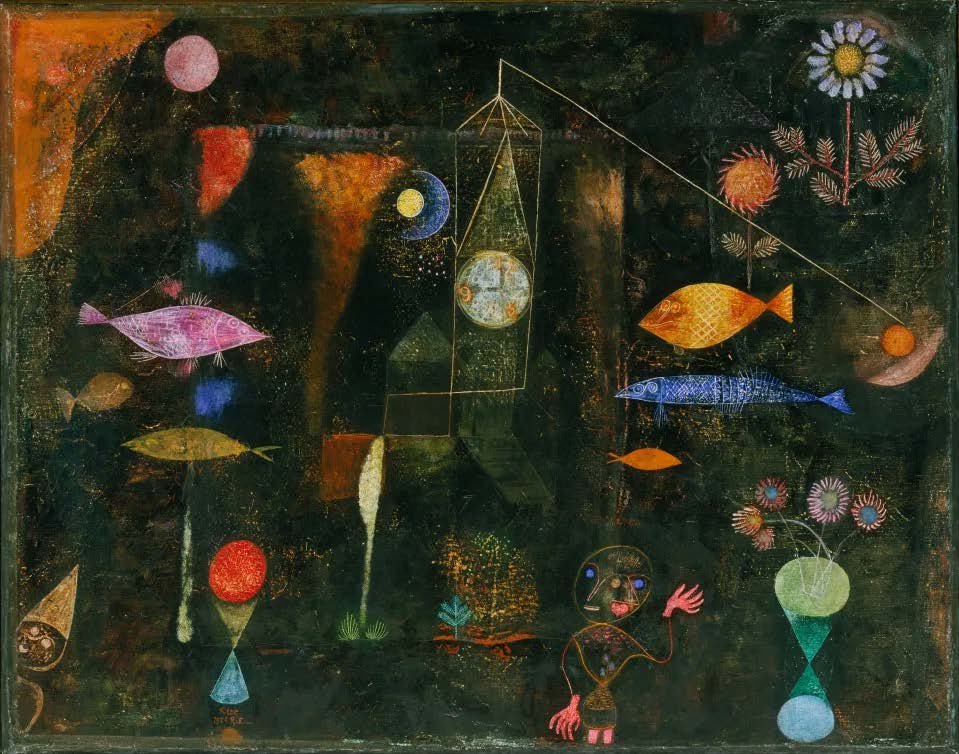
So this is where we stand today. Because of the Bauhaus, artists found a home in industrial design. The world’s pattern artists, graphic designers, automotive designers, et al., can thank Walter Gropius for a lucrative career.
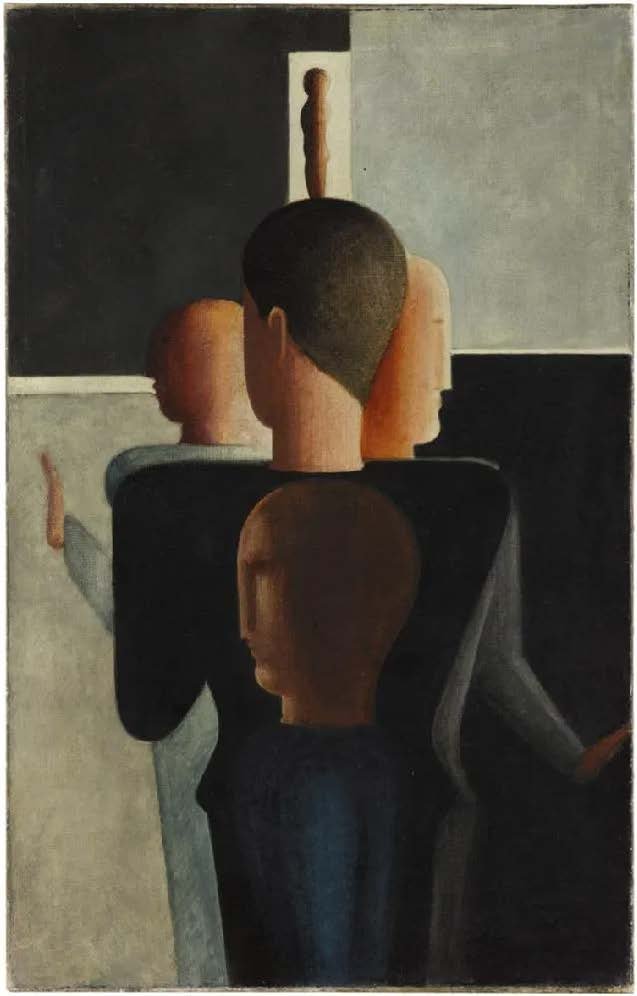
But what about fine art? Well, it changed too. Prior to the Bauhaus, fine art was mostly representational. Even impressionists painted something material, albeit in a watered down fashion. The Bauhaus Masters helped change all that (amongst others, don’t get me wrong, Picasso, for example wasn’t a Bauhaus professor). By simplifying color, line and form down to their most basic characteristics, artists experimented with conveying mood and emotion through the abstract. A whole new movement was born. It completely changed how the public perceived art.
Thanks to the Bauhaus, art now had a functional purpose in addition to a more scientific basis for existence.
Alright, well, I’m not an abstract artist. Maybe you aren’t either. So how does this make my art any better? Well, for one thing, the principles of design that were developed during the 20th century make everyone’s art better. If you apply the principles of color, tone and form to your work, it’s going to improve. In addition, the principles used to create abstract art can be applied to any art.
So why not experiment a little and see what comes of it?
Distill your message until you have a condensed idea to convey.
Choose images that are very basic, and use as few of them as possible.
Use the principles of design as part of the story, allowing line, color, and tone to relate your message.
If this doesn’t appeal to you, try experimenting with materials you’ve not used before. Take a stained glass class, learn how to weave or knit, try your hand at pottery. The first class every student had to take at the Bauhaus was a comprehensive introduction to materials in which they were to become familiar with a wide variety of material properties. They could find their “natural” inclination for wood, metal, paper, or fiber by playing with the materials, first, to see what made the most sense for them.
Sounds easy, right? I’m not so sure. So next week I’d like to discuss Wassily Kandinsky, one of the world’s premier abstract artists and a Bauhaus Master, and look at how we can use his work as inspiration for our own.
Do you think the Bauhaus was a good cultural influence? Are there any benefits or problems we are experiencing today that you think could be traced back to this interesting time of history? I’d love to hear what you think, or if you try any of the suggestions I’ve made.
Just a heads up, though, that I may be a little late getting it out, because I’ll be traveling again next week and I don’t expect to do any research or writing on the trip. Nevertheless, look for an upcoming “work along” tutorial in the next post. We’ll see if we can create something for the portfolio that inspires us to stretch our creative muscles!
Note: all images are public domain.
originally posted at annettezimmerman.com