To me, storytelling and art go hand in hand, but I didn’t always think this way. In fact, I never heard of storytelling prior to three years ago when I moved here.
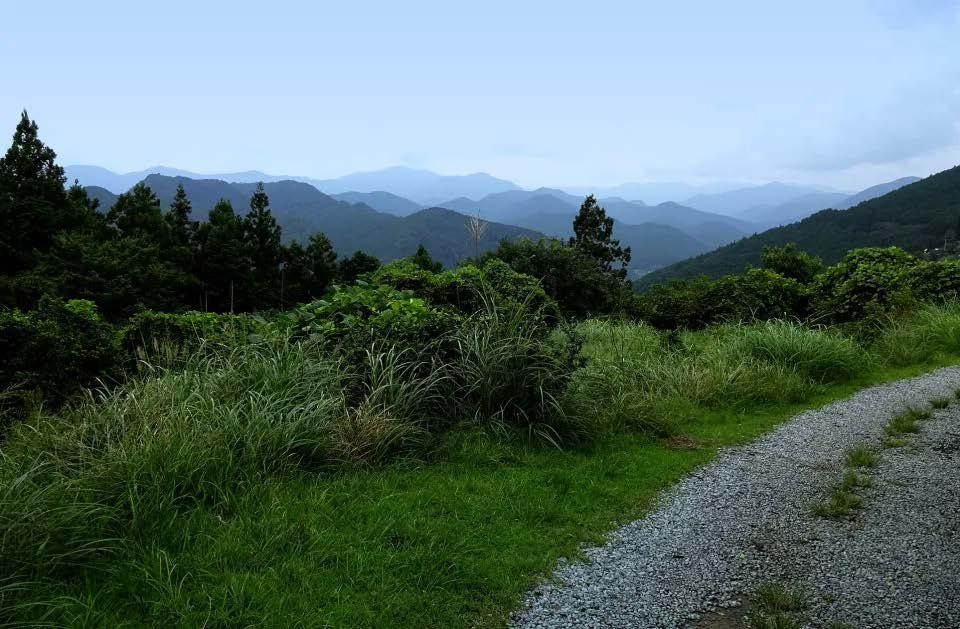
It was in 2017. We’d been searching for a new home that would suit us for life in retirement and found a beautiful little place in the foothills of Tennessee. The land reminded me of the Kii Mountains in Japan, a lovely temperate rainforest steeped in Japanese history and tradition that my husband and I explored in 2015. The history here in the Smoky Mountains is different, but it’s just as full of vitality. From at least as early as 200 CE, the area was inhabited by ancestors of the Cherokee, some of whom are still here today. But in the last couple hundred years, there was a flood of Scots-Irish immigrants who brought their own stories and traditions. So today we have a region rich in the folklore of both cultures.
We relocated from California two months before the annual International Storytelling Festival. Everyone we met told us it was an event we didn’t want to miss. Well, we did end up missing the first year, but hearing such good things about it prompted me to volunteer at the International Storytelling Center to learn more. Every week a new storyteller came to town so I felt fortunate that I could experience a kind of sampling of a variety of Tellers.
I was captivated. Some of the stories were about funny events that happened to the Teller. Some of them were folk tales retold to audiences who’d never heard them before. I went to the festival the following year and heard stories that made me cry, stories that made me laugh until I couldn’t breathe, and stories that made me think about social issues in a different light.
After that, I began volunteering for our local radio show, the StoryTown Radio Show, where I’m part of a cast of voice actors who tell the stories of our local citizens. I found out how important it is to tell the stories of the people who live in the community because people are what make a community. A community isn’t a bunch of stores and restaurants and parks and houses; it’s grandparents, parents, children and neighbors. I was once again reminded of something I learned from Sesame Street a long time ago. A community isn’t a place, it’s relationships.
Which brings me to this EdX course I’m taking.
It’s called Storytelling For Social Change. Presented by the University of Michigan, it’s goal is to help you develop skills used in storytelling to reach audiences and effect change.
I saw the course by chance while I was signing up for another class on Nature Illustration. You can just go to EdX.org, sign up and take it -it’s all free if you choose the audit route, so please go check it out if you’re interested. At first I thought I’d just skim through all the videos and see what I could pick up. Kind of like going on a video binge when I find a new YouTube artist, I thought I could whip through the five modules of the Storytelling class in a matter of hours.
But it’s too good to whip through. I found myself doing the homework assignments. Rewinding videos to watch again. Clicking through all the optional resource links to learn more. I was eating everything on the plate and going back with my bread to wipe up the gravy.
It wasn’t about writing a good story. It wasn’t about acting. It was about storytelling: creating a bridge between the perspective of the audience and a perspective known by the storyteller.
Wow. It turns out storytelling is kind of like what I think Art is. Only…backwards.
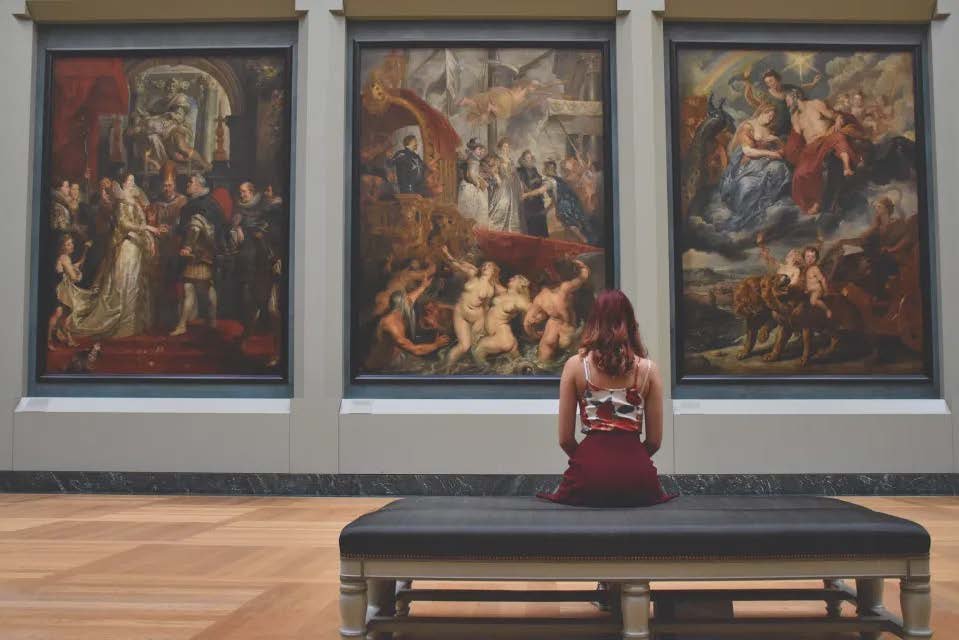
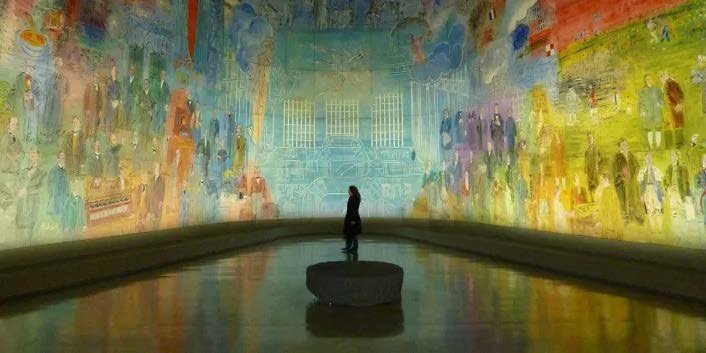
Last week, I discussed how Wassily Kandinsky kind of led the way to our modern thinking that art is an expression of the artist. Prior to him, before that period of time, visual arts were more about expressing the beauty of a landscape or interpreting a memorable event, or commenting on a social or cultural observation. Kandinsky and many other artists of his time said Art is more spiritual than that. Visual arts, such as painting or drawing, fulfill the Artist’s need to communicate his perspective to an audience. His inner soul. His thoughts about Life, the Universe, and Everything.
Storytelling (which I’d also classify as an art), the kind of storytelling I’m learning about in this class, takes the opposite approach. It fulfills the audience’s need to understand the perspective of the Teller. On the surface, it’s a story, just like a painting may look like a bunch of colorful squares and circles. And it can be appreciated as a good piece of art in that manner. But if the Teller is really good, they have taken the time to understand the audience. They find a common ground between the perspective of the audience and the perspective that they are trying to communicate. And then use use that information to help the audience empathize with the characters in the story. If the audience can empathize, they are more willing to take action if needed.
It was a light bulb moment for me. These two aspects of my world – visual arts and storytelling – are naturally complementary. I am now seeing Art as a dichotomy between the artist’s need to be understood and the audience’s need to be understood in order to understand the artist.
What can I do with my artwork to create a bridge between the perspective of the audience and my perspective on life? Again, it boils down to determining the message, first. Clearly the audience will not understand anything that I’m also confused about. Once the message is clear, how can I present it to the audience in a way that they’ll understand? What can I do to help them empathize with my perspective? What is the story I want to tell?
I’ll give you an example I thought of just this morning. In my previous career, I had to work with environmental engineers to get reports that showed how our construction project would impact animal life at the site. One project involved a very tall tower that had mirrors at the top for the purpose of magnifying sunlight in a process to create electricity. The tower would be high enough and the magnified light bright enough that it would impact aircraft. But it also impacted birds. Not only could the birds fly into the tower and be hurt or killed, they could potentially fly through the magnified beam of light and be burned. Or rather, fried to a crisp.
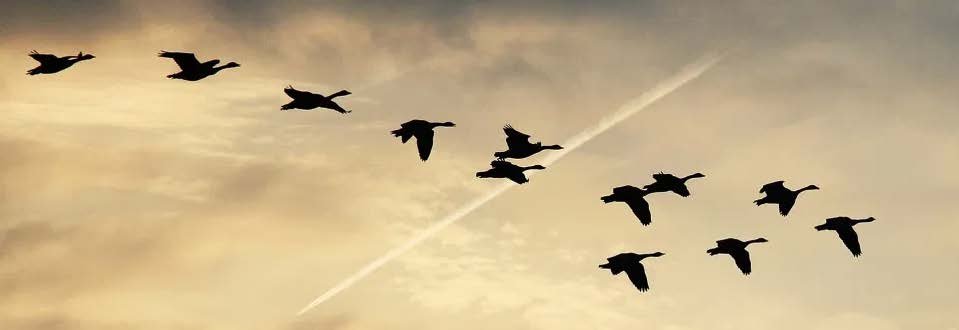
This, of course, was an issue of concern. But during that project I found out that the estimate for the number of birds being killed by this tower was much less than the number of birds being killed annually by the construction of tall buildings within migratory flight paths. Furthermore, it’s a preventable problem, but because it’s not big news no one really cares about these birds.
What would make someone understand and perhaps take action to prevent it? I thought about what it would be like to be one of those birds. Maybe a Canadian goose who was flying north to my regular breeding ground. It’s kind of like a commute. I’m just flying along the regular route, honking at my goose buddies, enjoying the sun and the breeze through my feathers. All of sudden, this building appears out of no where and… WHACK. My leader hits the building. There’s no time for the birds behind her to adjust. Maybe a couple of them manage to veer to a side, they certainly won’t have room to maneuver and fly up over it. If they’re lucky, maybe a bird or two will slow down enough so that they hit just hard enough to go senseless and don’t kill themselves when they hit the ground. My life as a goose would probably be over.
Poor things.
So that’s my story. Yet drawing a picture of birds hitting the side of a building is likely to draw the attention of only a few people. Most will just look at it and wonder why anyone would waste time drawing it. The audience has no frame of reference, no perspective of their own that will help them empathize with the birds.
But that’s not to say they don’t have a need to empathize with the birds. Maybe they don’t realize how critical the birds are to their own community, or the role the birds play in the ecology. They need to understand, but in order to understand they must first find a bridge, a way to empathize with the plight of the bird.
What would they empathize with? Something in the normal everyday life of the human that is similar. My mind immediately went to a commuter on the freeway who’s suddenly forced to maneuver because a truck jackknifes in front of them.
Actually, the human commuter probably has a better chance of surviving because they have the protection of a car and safety equipment, but I think I’ve made my point. Convince the audience that the bird situation is as dire as the freeway commuter’s situation and you’ve made a connection.
I am interested in trying this. Not sure how to go about it yet, but really interested in it.
What approach do you use? Do you feel like you’re creating art that creates empathy with the audience? Or do you take Kandinsky’s approach, leaving the audience to figure out how to connect with you? I would love to hear what you think.
originally posted at annettezimmerman.com