Does it ever seem odd that the month at the end of summer is often thought of as a time for new beginnings?
September is here, and, for me, it’s always been back-to-school time, even though it’s been a long time since I’ve sat in a classroom. The time to begin a new grade year. I started first grade the Tuesday after Labor Day in 1971 (who can forget their first day of school?) and the first day of school continued to be after Labor Day until I reached middle school. September meant crisp air during the morning walk to school, art class (it was the only class I liked at school), and cooler, shorter evenings for play. When the weather isn’t quite fall but no longer summer. For many years now, instead of yearning to create with crayons and paste, it makes my fingers itch for balls of yarn and a couple of sticks. So today my brain is focused on knitting.
Let’s talk about socks.
Last week I visited Ravelry and searched for a knit along group, hoping to find something that would start soon but not require all of autumn to complete. There were several shawl groups due to start, but since I don’t wear shawls, they wouldn’t be a good fit. But at the bottom of the list was a mystery sock knit along. Perfect! And I still have sock yarn from a stash I received as a wonderful Christmas gift of 2016. Double perfect! And the pattern was free! It just couldn’t get any better.
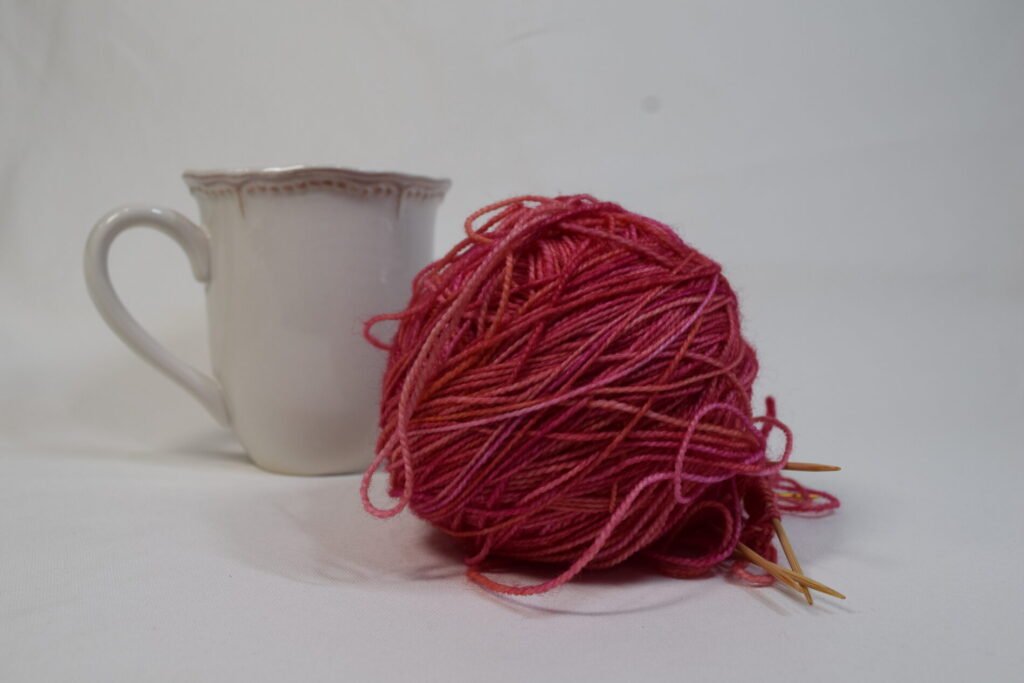
I had to do three swatches to find knitting needles that would make gauge. But I was ready on September 1 for the first part of the pattern. Unfortunately, it wouldn’t be fair for me to show the in-progress pictures of the knitting until the event is over. It’s supposed to be a mystery, after all! Instead, I thought today it might be fun to look at different ways that socks are knitted.
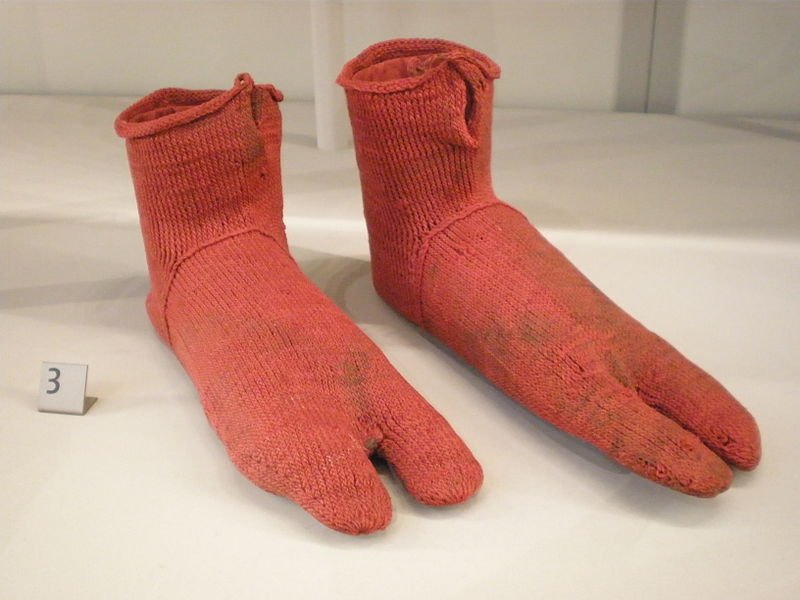
A quick peek at Wikipedia reveals a general history of socks. The word “sock” comes from the Latin word “soccus” which was a light shoe worn by Romans. So it’s no surprise to read that the first “socks” were made of animal skin or fabric tied at the ankle. I suppose those were lighter than, say, Roman sandals made from leather. Prior to that, it seems the ancient Greeks used things made of matted animal hair.
Socks covered more of the entire leg by the Middle Ages, and in 1589 when the knitting machine was invented, socks were knitted faster (although also still knit by hand), primarily in silk, cotton and wool. The next big step in sock development came with the invention of nylon in 1938. Today they are made out of all kinds of synthetic materials, and I would say that hand knitting has been relegated to hobby status.
Where to start?
I’ve knitted socks by starting with the cuff and I’ve knitted socks starting at the toe. I don’t think one is easier than the other, but I do like that I can make the cuff shorter if I start at the toe and find myself running short on yarn. One way to tell is to weigh your ball of yarn before knitting, then weigh it again when you get mostly through the first sock. If there’s less than half your yarn left, you know you’re going to have to improvise.
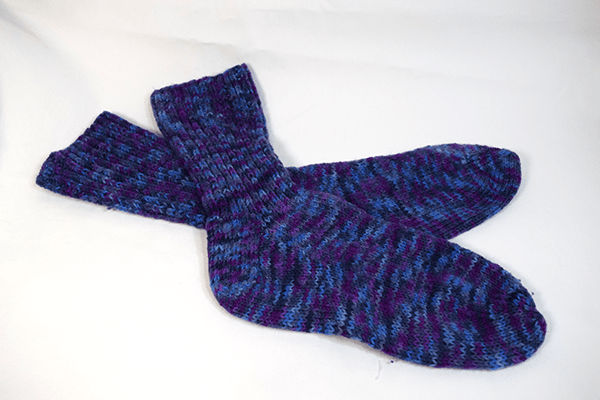
My first pair of socks were for myself. I knitted these so long ago that I don’t know what pattern I used, but I suspect it was the general sock pattern from Ann Bud’s The Knitter’s Handy Book of Patterns. It was started at the cuff, nothing fancy, and completed with an afterthought heel. I don’t remember having any problems with the pattern, and I’ve gotten good wear out of these, although admittedly they probably only get 5 or 6 uses a year in the dead of winter.
If you aren’t familiar with an afterthought heel, it’s another way to knit socks. In a regular sock pattern, the heel can get complicated because you’re increasing and decreasing at the edges to get around the turn of the foot. With an afterthought heel, you essentially knit straight across the instep in a flat knitting pattern until you get through the turn, then later go back and pick up stitches at the sides of this flat piece to knit the heel. With an afterthought heel, you can use a different color of yarn for the heel-a handy trick if you run out of yarn while doing the rest of the sock!
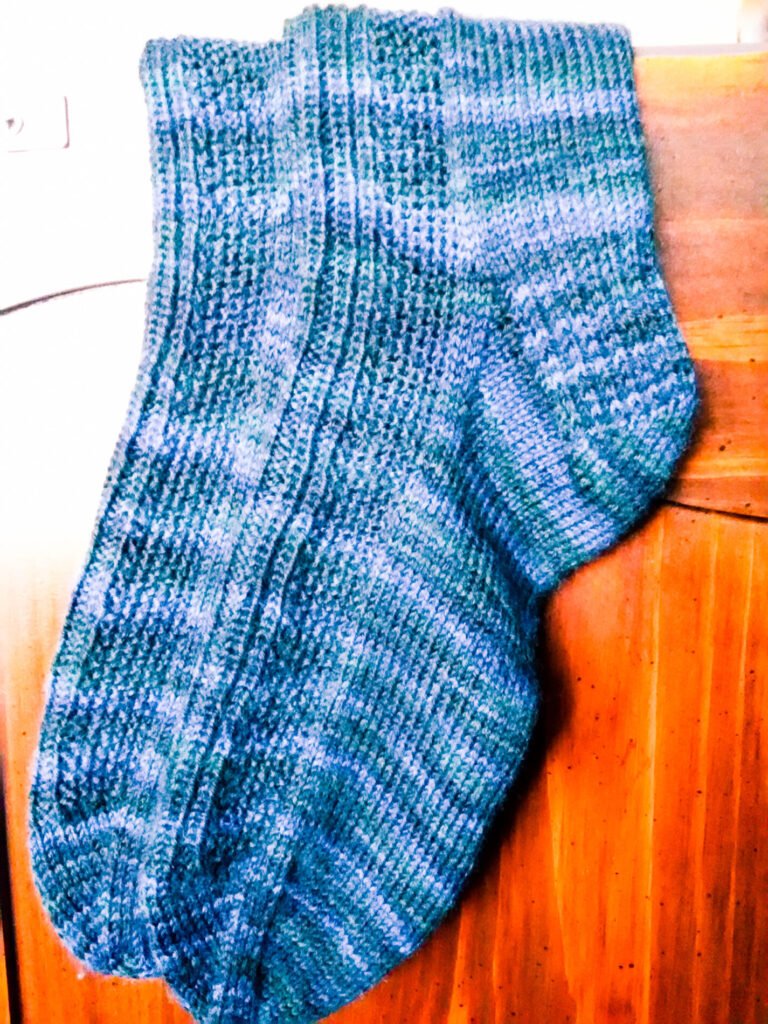
I’ve knitted socks for others. One year I knitted a pair of socks for my husband and posted about it here. It was for a birthday present. I’m not sure if he didn’t like them or if he’s afraid of wearing them, but they’re still sitting in the bottom of his sock drawer as pristine as the day they were opened. This was a pattern from Ravelry called Textured Socks. The link to my project is here: (https://www.ravelry.com/projects/AnniZknitter/thermal-textured-socks
The most recent pair of socks I knitted was from a KnitPicks pattern called the Butterfly Sock. https://www.ravelry.com/projects/AnniZknitter/butterfly-garden
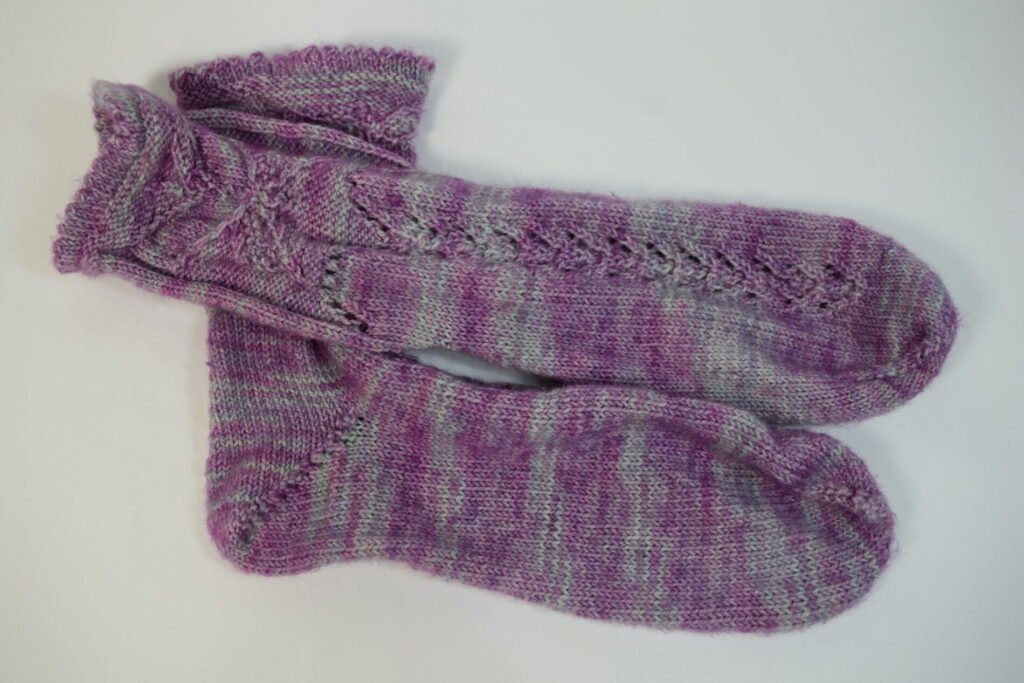
These were toe-up socks. I didn’t like the top of the cuff pattern so I stopped after knitting the butterfly. Also, the butterfly pattern was to be repeated twice along the leg, but I was afraid of running out of yarn so I only knitted it on the front and used regular stockinette on the back. They aren’t my favorite pair of socks. They slouch (maybe because I didn’t do the cuff per the pattern) and I don’t really like the color or the yarn. But they were a good project for traveling; I knitted them on the drive to Florida and back for a cruise (didn’t pick them up much on the cruise itself) and continued knitting them when we traveled more than 2 hours by car anywhere, until they were done. Socks and dishcloths are my go-tos for projects to take on the go.
Are there any other ways to knit socks?
It seems like the two favorite ways to knit socks are either toe-up or cuff down, although you can knit them flat, too. I have never tried knitting socks side-to-side in that way, although I’ve seen it done. The fabric is knitted from the toe end to the cuff, then turned and knitted back down. I think short rows might be involved, and the heel would definitely have to be knit after the fabric is sewn into a tube. So maybe you could avoid having to use double pointed needles? I kind of doubt it, as I don’t know how else you would do the toe or cuff. So I don’t see any advantage to knitting a sock this way.
I’ve not tried knitting with the magic loop method, either, as I feel quite comfortable with dpns. I would be interested in hearing which method others prefer, though. Are you a sock knitter? What methods have you tried? Are there any kinds of sock patterns that you’d definitely shy away from? Let me know in the comments what you think!
originally posted at annettezimmerman.com