Bucket lists.
If you’re over a certain age, you probably have one. AARP has statistics that half of all US citizens over the age of 37 have a bucket list, and most of the items on the list are travel-related.
I’ll bet the Panama Canal was on the majority of those. It was on mine! And the trip was oh so worth it!
Did you know…
- The first serious explorations of the Panama Isthmus for the purpose of building a canal occurred during the Victorian era. People were fascinated with science, reading Jules Verne novels, and steam power was at its height. There really seemed no limit to what man might do (David McCullough)
- The French, under Suez Canal architect Ferdinand de Lesseps, tried to build a canal between 1879 and 1889 but failed due to a poor design, high mortality rate amongst workers, and poor financial management.
- The Panama Canal is considered one of the most deadliest construction projects in history. The true number of fatalities is unknown, but estimates range from a confirmed 5000 to an unconfirmed 30,000 workers. Most of these people were killed by yellow fever or malaria.
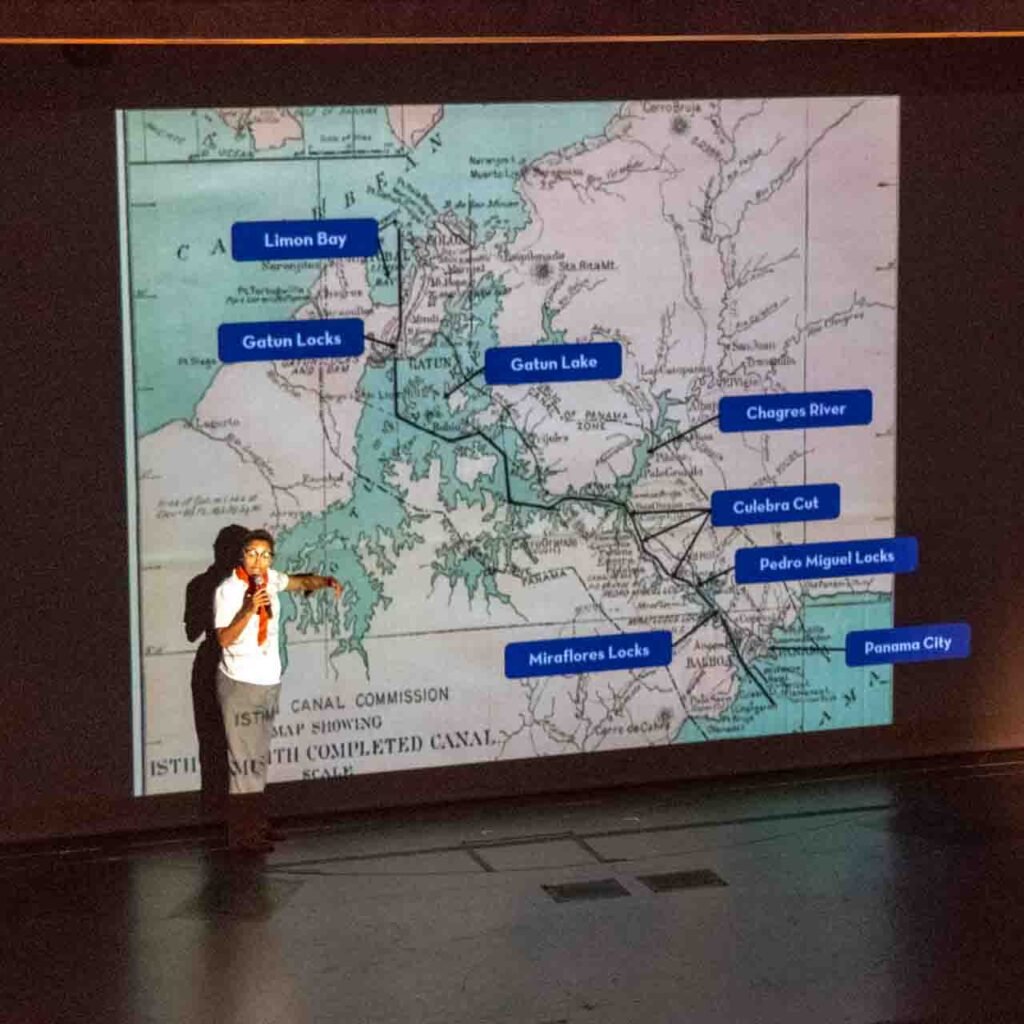
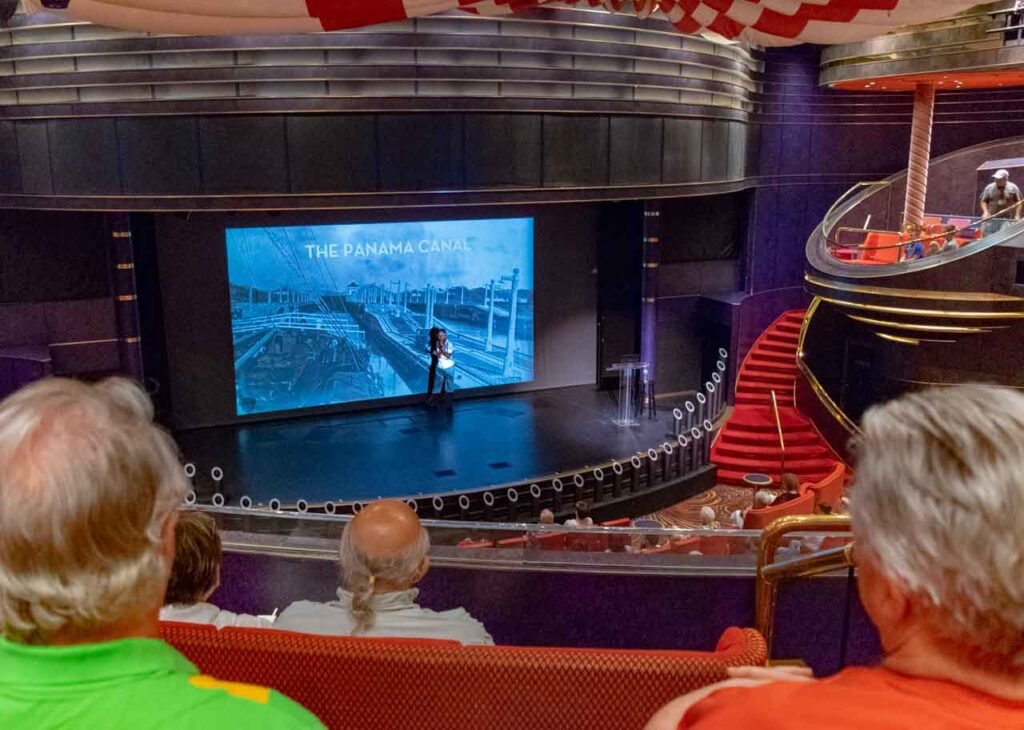
On Day 6 of the cruise, my husband and I attended a presentation in the Zuiderdam’s main auditorium. The speaker gave us a synopsis of the history behind the Panama Canal and some information about what to expect the next day when we arrived. I’d been reading David McCullough’s book “The Path Between the Seas: The Creation of the Panama Canal” and was already familiar with the tragic construction story. But I was glad to get a schedule for our transit.
We woke before dawn on Day 7, showered, and went out in the dark to watch our arrival. As we passed the breakwater, we saw more and more ships of all shapes and sizes moored nearby. I imagine some of them were waiting their turn to go through the locks. Larger ships pre-book their transit for a specific day, but some ships still wait until the arrive before they get scheduled. Then they have to wait until the Marine Traffic Control sends a pilot out to guide them in. It gets quite complicated because of the various sizes and drafts of the ships make the complete transit time unpredictable.
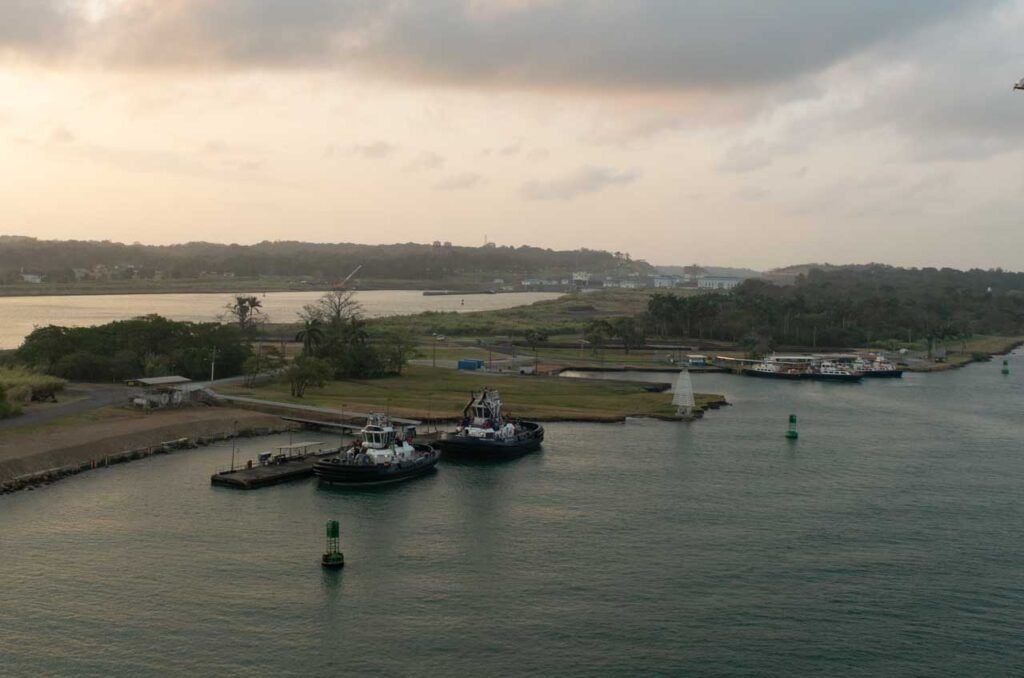
Cruise ships are scheduled. Our ship had to pay $138 per berth (per bed) to go through. So we paid $276 of our cabin fare just for the experience of traveling through the Canal.
Our pilot met us soon after dawn. The crew opened the bow deck areas on Decks 4 and 5 so that we could experience the passage from all parts of the ship. They offered Panama Rolls and juice at the Deck 4 forward viewing area. The Panama Roll was good; I’ve posted a copy of their recipe here. And the buffet opened early so that passengers could grab breakfast and still get on deck before we entered the locks. I spent most of my pre-lock time running between Deck 8 forward, down the steps to Decks 5 and 4, and then to Deck 8 aft. There really was no bad place to have a good view, but I wanted to see EVERYTHING.
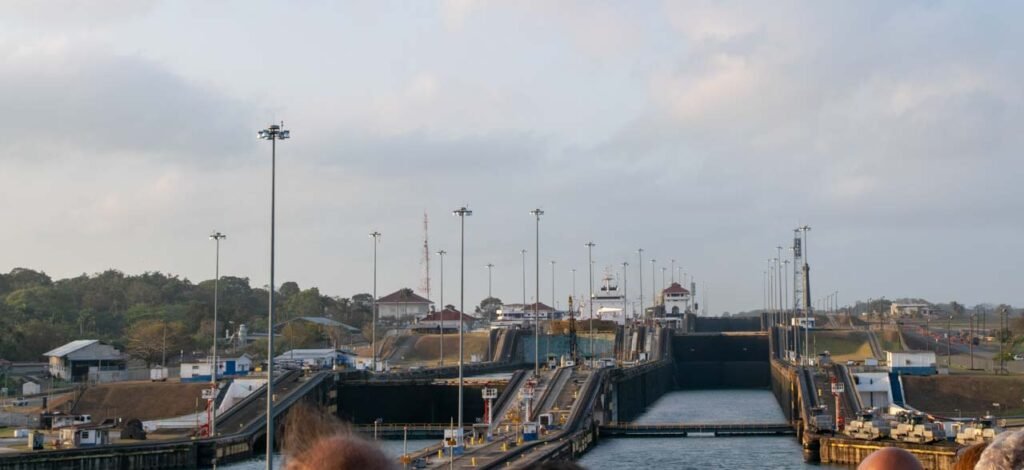
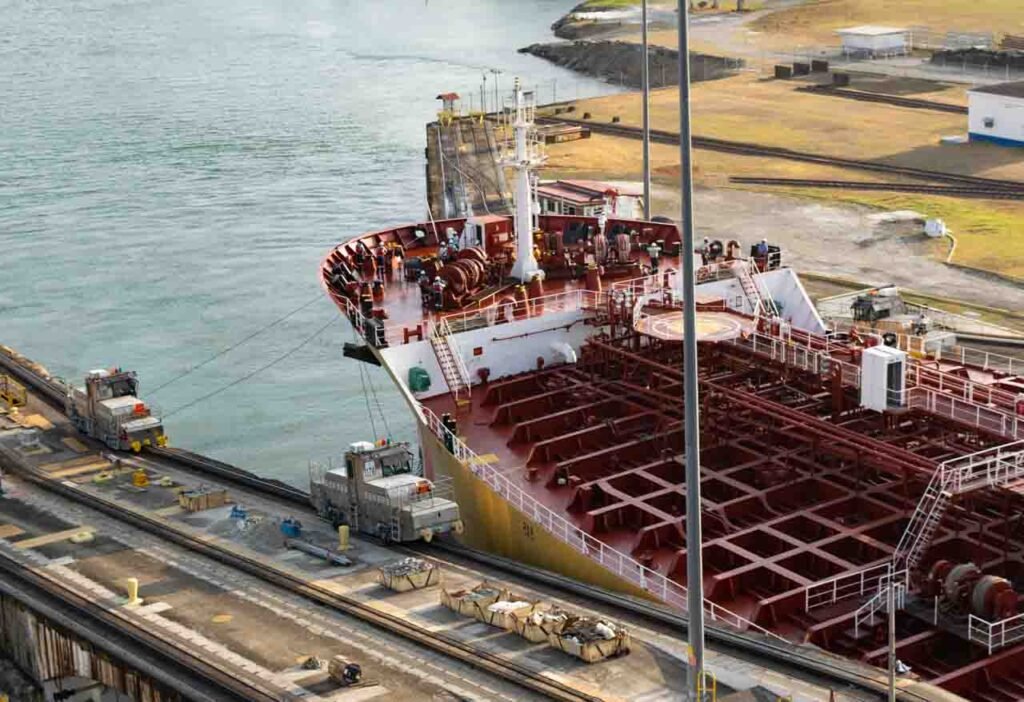
The transit isn’t quick. Even though it took a couple of hours, it seemed to go by fast. I had fun watching the ships that were going from the Pacific to the Atlantic on our port side. Everyone was excited!
The Canal is divided north-south by Gatun Lake, a man-made reservoir that really made the whole project possible. When we reached it, our ship anchored long enough for tenders to offload anyone who had an excursion. If you didn’t have an excursion, you weren’t allowed to leave the ship at all. My husband and I had a long day ahead of us: a visit to the visitor center at the newly constructed locks, an ecological tour of Gatun Lake, and a visit to a native Embero tribe.
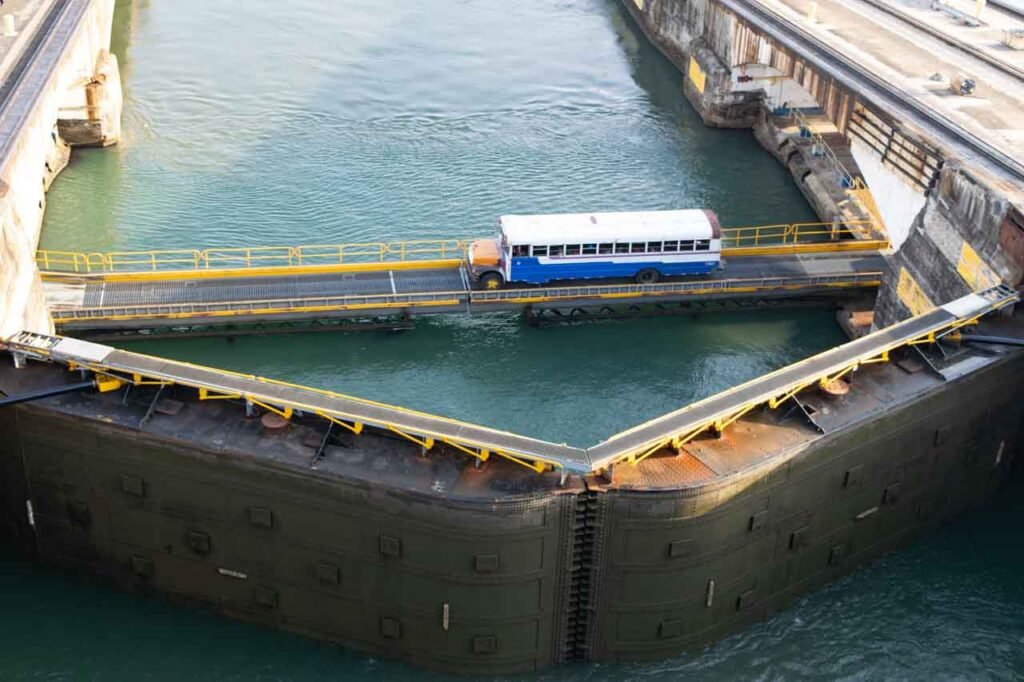
We boarded a tour bus as soon as our tender made shore. Our guide, who wanted us to call him Geronimo, was knowledgeable about the construction of the expansion project. It was completed in 2016. The original canal has two “lanes”, one for northbound and one for southbound traffic. Each of these has its own set of locks. The maximum size of a ship was previously limited by the size of these lanes (the ships are called Panamax). The expansion added another lane that is deeper and wider than the old ones. Now larger ships can go through. These are called New Panamax and are roughly 1.5 times the size of the old Panamax.
Our bus went alongside the northbound lane of the old canal before going past the water saving basins at the new locks. Then it took us to the Agua Clara Visitor Center. It was packed full of people. We had to wait awhile just for our bus to get through the bus line to the drop off area.
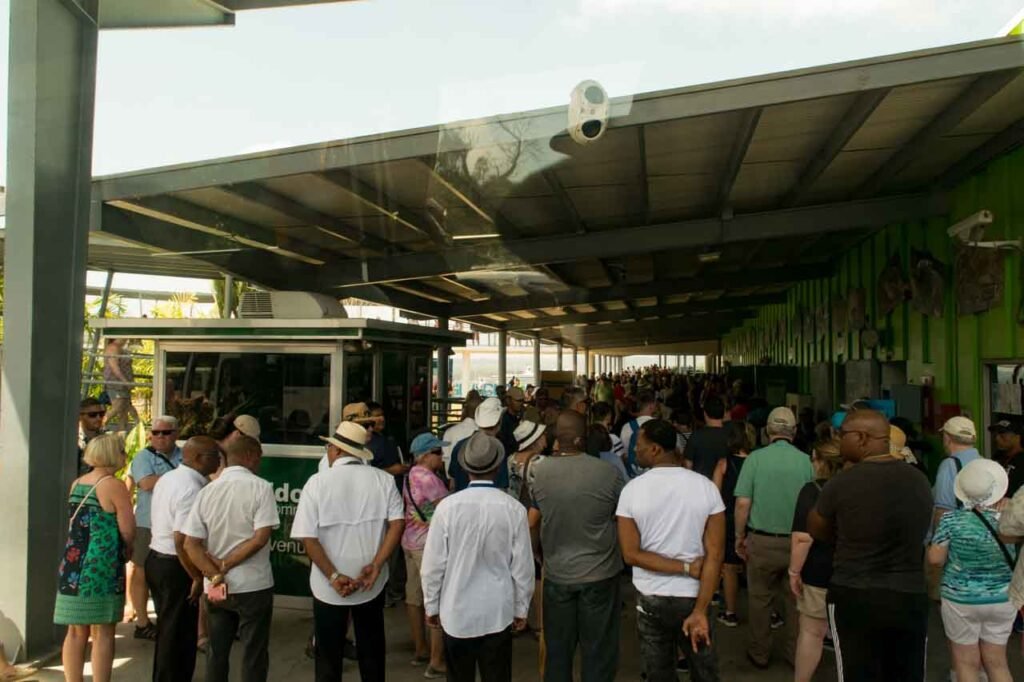
Our guide handed us tickets and we got into the entrance line. Once we were through that, things went more smoothly. I’m not sure if the entrance bottleneck is an everyday occurrence, but if you go, take your patience. I can’t imagine what it’s like on very hot days.
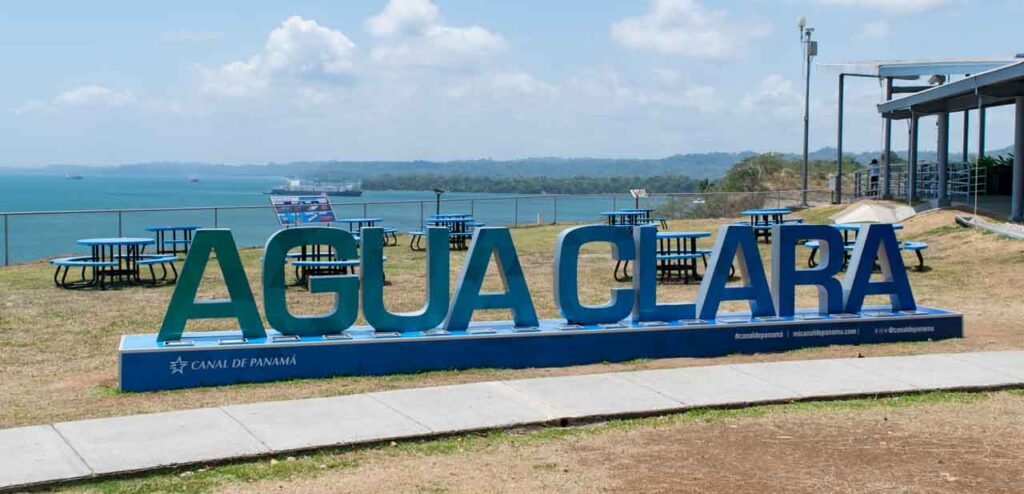
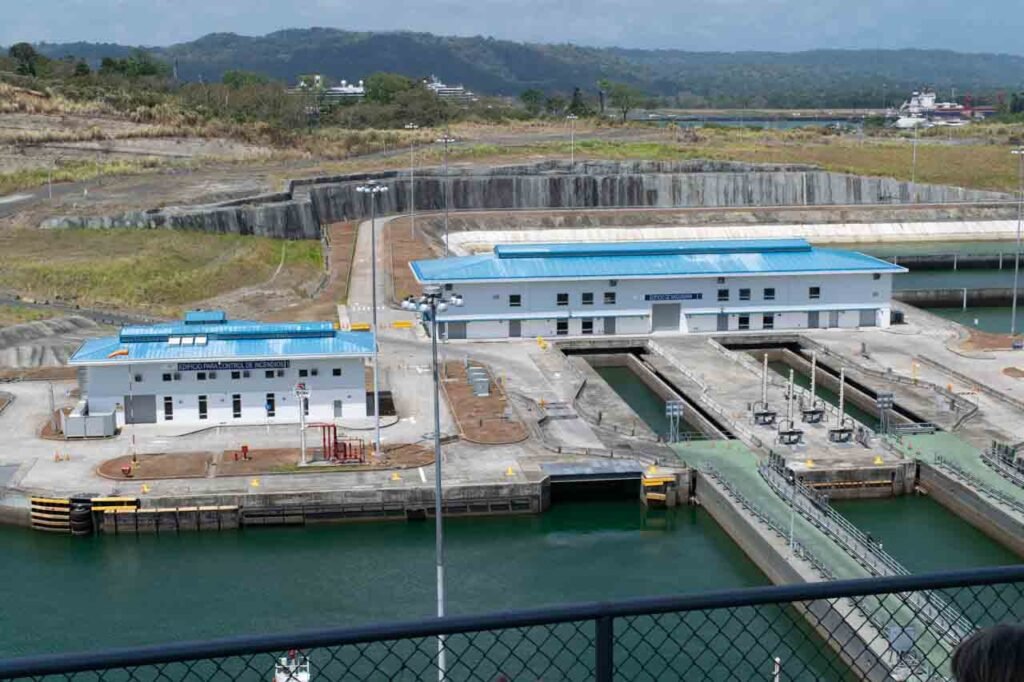
We had a great view of the new locks from a covered overlook and watched a ship enter from Gatun Lake. We could also see the Zuiderdam going back through the old locks to the Caribbean.
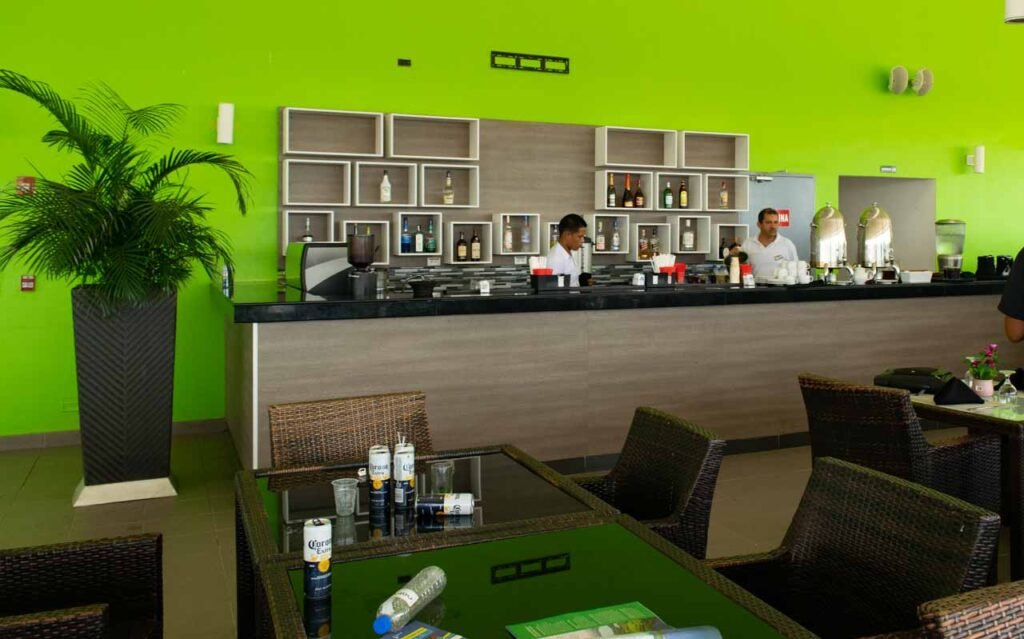
There’s a gift shop, a restaurant/bar, and a theater as well as the viewing area. My husband and I skipped the theater due to time constraints and chose to have a beer at the bar instead.
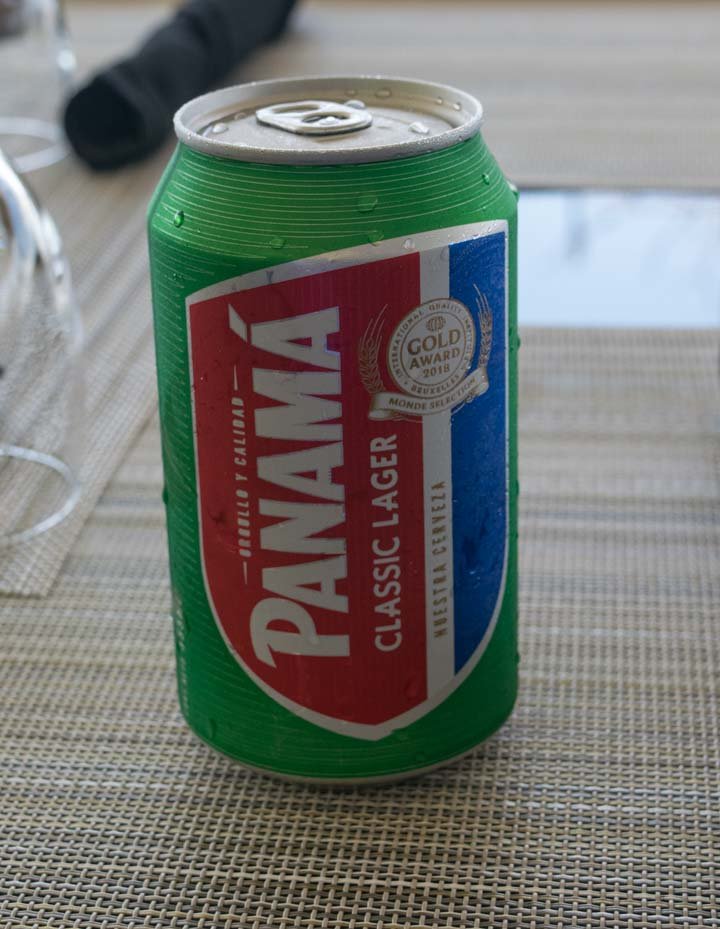
I think we spent an hour at the visitor center before our bus picked us up. By then, most of the people had already left.
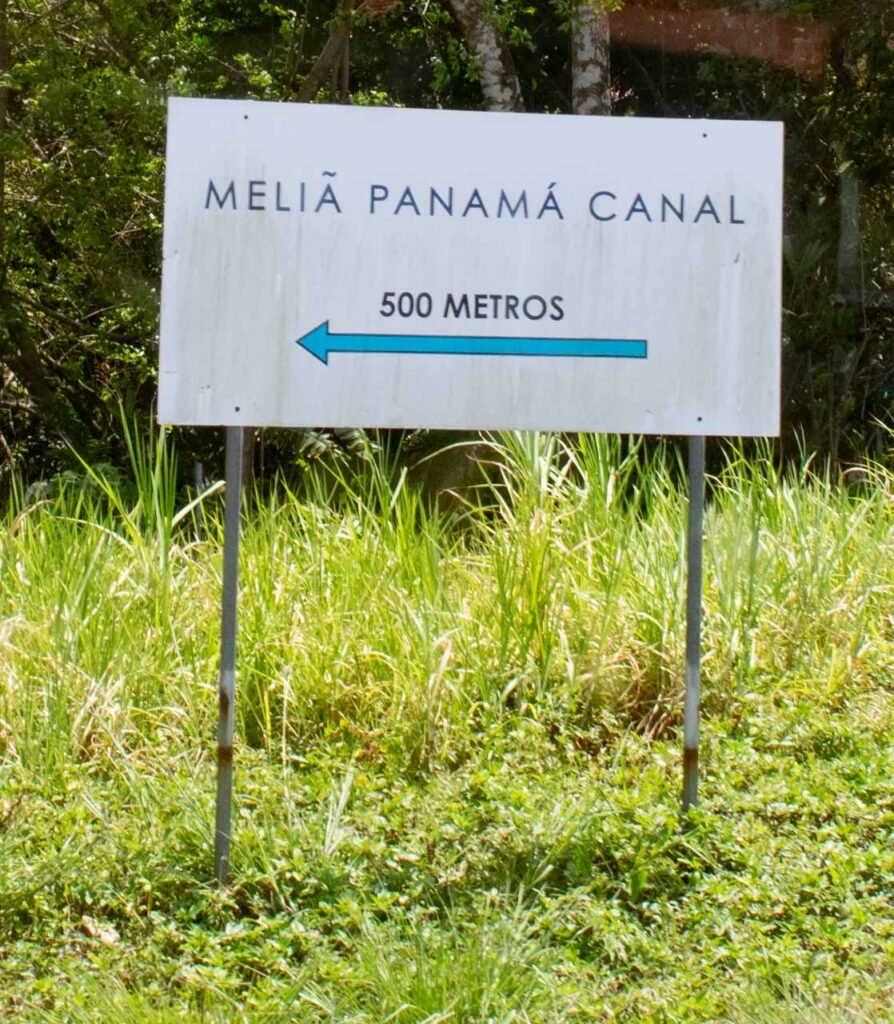
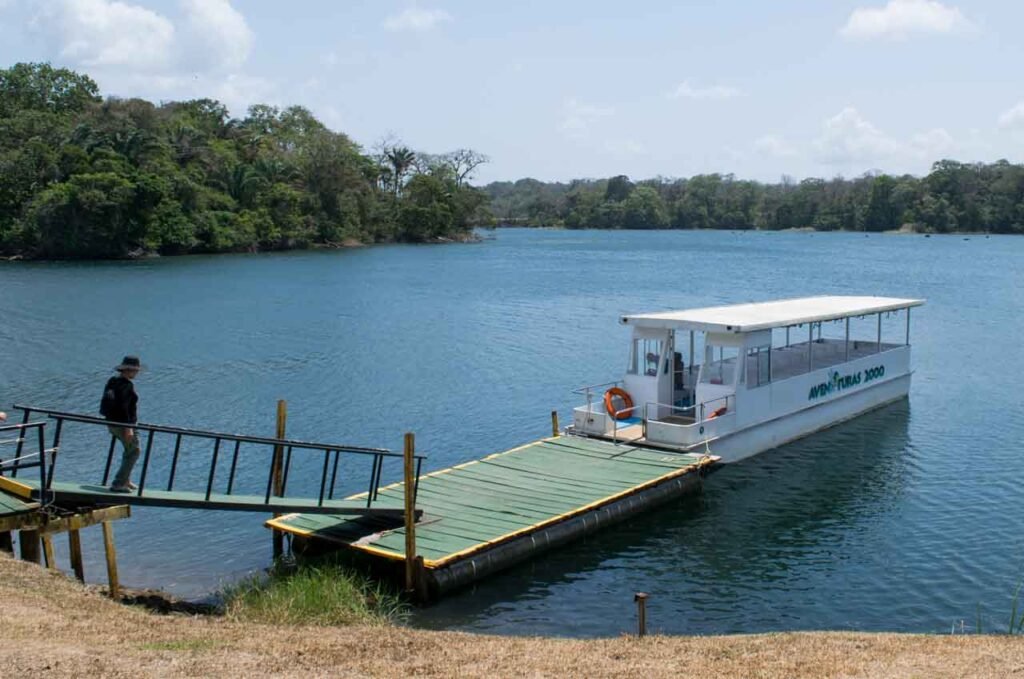
The tour resumed, this time focusing on Colon, the small port city surrounding the Canal. I saw a lot of old US military buildings that are now being used as apartments for the locals. After a short drive, we reached a resort, the Melia Panama Canal, where a pontoon boat waited for us. I didn’t get to see much of the hotel, but we all trekked past the pool on our way to the boat dock. It seemed nice.
Geronimo accompanied us on the boat trip. As we puttered around the shore he talked about some of the native animal species. We spied a young limpkin first. It eats snails and used to be common in Florida. Its range now extends through the Caribbean into South America.
We rounded a bend and Geronimo spotted a crocodile on the bank. The captain took us up close so that we could get pictures. We stayed 10 to 15 feet away on the boat, but some kayakers that were nearby decided to get in closer. One woman in a kayak kept saying she didn’t see it. We were all telling her how close she was, but she kept going closer. Suddenly, the croc jumped towards her and into the water. We all agreed she was lucky she didn’t get bit. Crocodiles are known to have jumped onto boats and would have no problem jumping onto a kayak. Geronimo reminded us that the females can get testy when they are nesting and March was the beginning of their egg laying season.
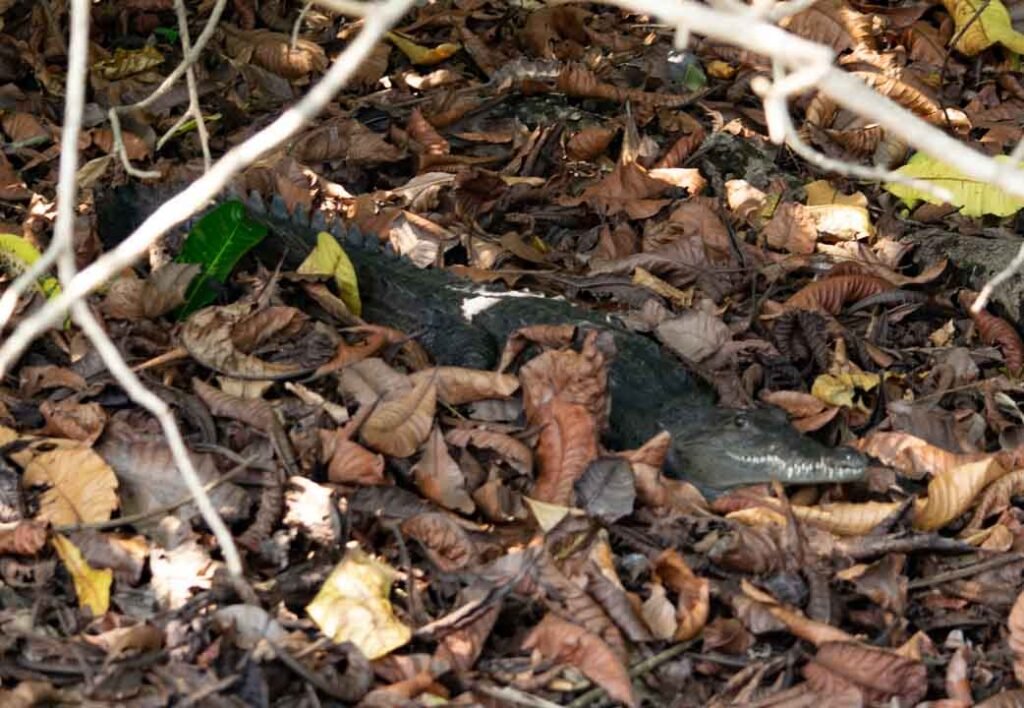
The only other animals we saw on the ecotour were howler monkeys. We didn’t get very close to them because, apparently, they like to throw things. They are common in Central America.
Eventually we landed at a boat dock that led to the Embera native village. Embera means “people” in their language. This village is an offshoot of a larger village in the Darien province. The Embera historically lived by raising banana and plantain and selling them for cash. They hunted and fished for meat and supported themselves, requiring minimal contact with outsiders. As Panama’s population and tourism grows, the land available to the Embera is shrinking. The government of Panama has therefore directed them to find other ways of supporting their people, namely with handicrafts and cultural presentations to tourists. Otherwise they would be forced to adapt to metropolitan society in order to survive. Many of their traditions would be lost.
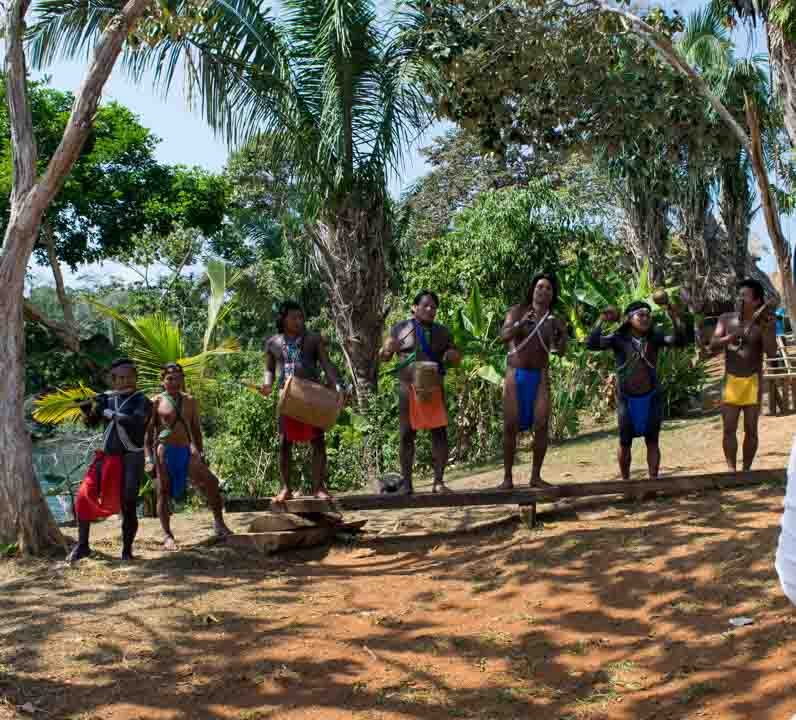
We were greeted by the whole village. The men lined up on one side of a walkway and played music on hand made instruments. The women and children lined up on the other side and danced. After Geronimo explained what we were going to do, he led us up the walkway into a large, thatch-covered hut. Tables lined three sides, all covered with native carvings, beadwork and dyed fabrics. The floor was dirt.
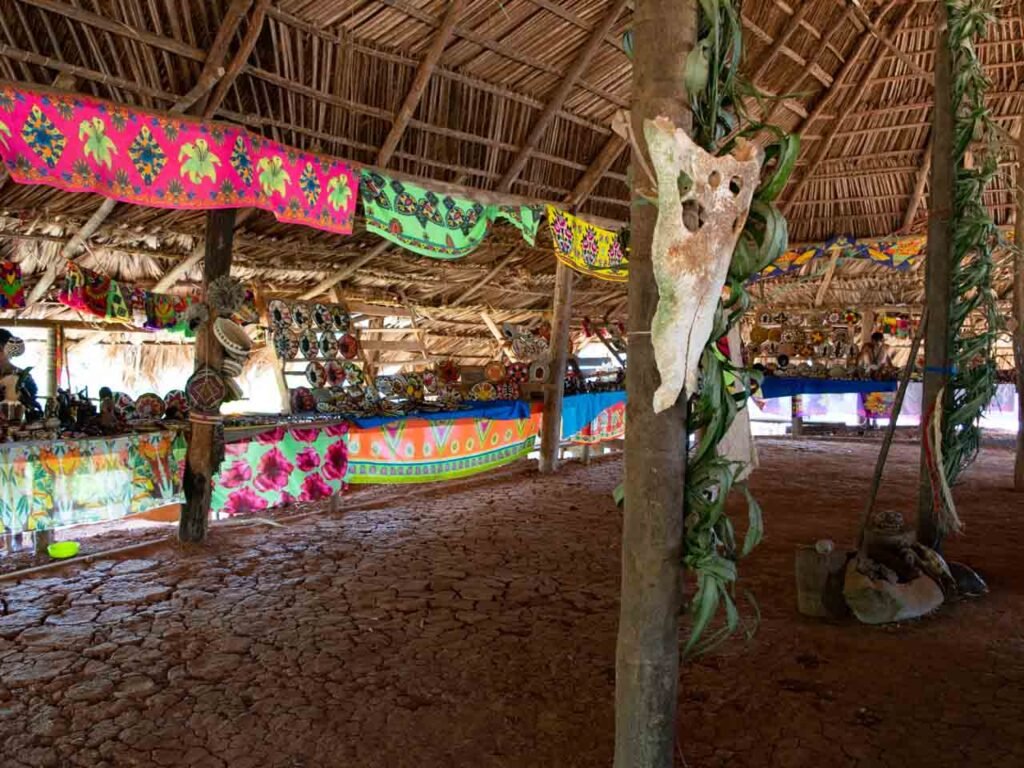
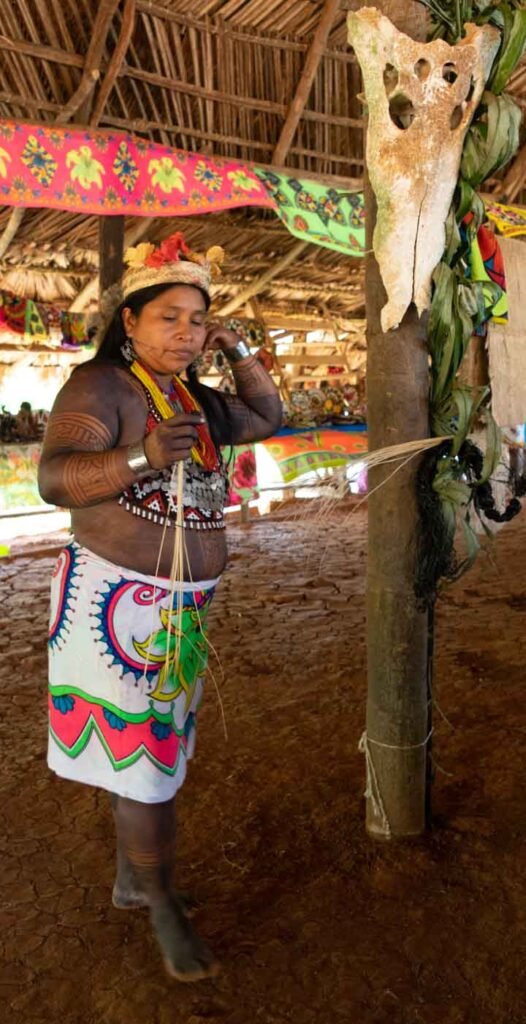
We took seats on hand-hewn wooden benches and listened as Geronimo introduced us to the leader of the tribe, his wife and his father. The leader explained, in Embera, how they made their crafts while Geronimo interpreted into English. It was very interesting. We passed around a cacao pod and leaves that would be made into dye. We watched a weaving demonstration and heard each of their instruments as it was explained how they were made. At the end of the presentation they danced for us.
All the while we were watching the speakers, three little Embera boys were watching us. They quickly discovered that my husband had a Lego Batman flashlight on his backpack and had a good time playing with it. They were so cute that my husband gave them a small bag of candy he had stashed in his pack. Now they were all best friends!
The last dance of the presentation was a “group” affair; members of the Embera village each took someone from the audience and led them around the hut as the music played. The boys chose my husband for their partner. What a sweet bunch!
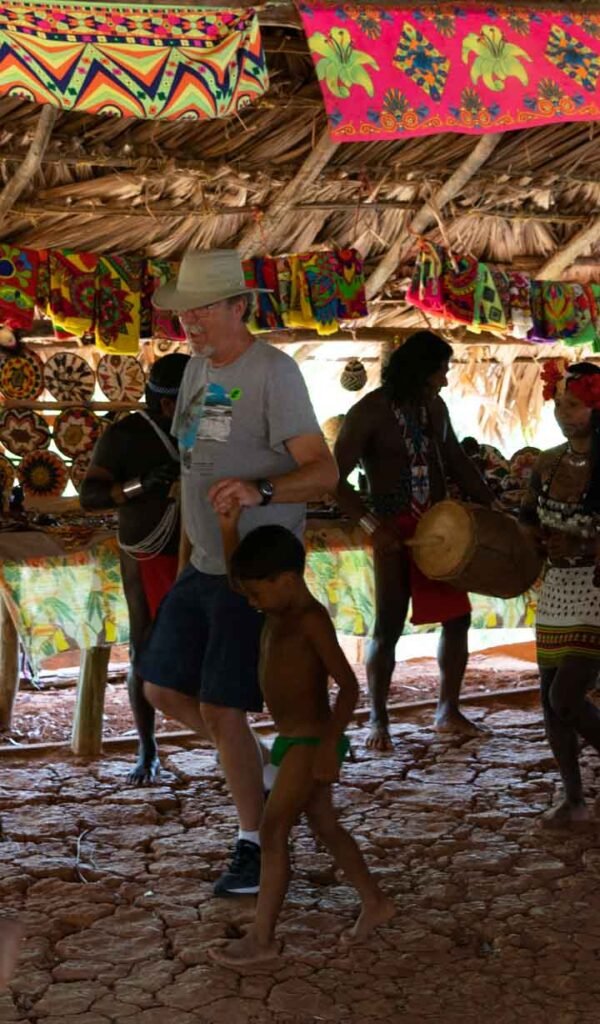
We spent some time admiring the handicrafts, and my husband purchased a carved toucan for a momento. Then we made our way up a short hill to see their homes before getting back on our boat. It was quite an experience, and very refreshing for someone who is accustomed to being manipulated by greedy business people. The Embera appeared honest and happy. I hope that they are allowed to continue living their native lifestyle without too much pressure from the outside world.
What more can I say about Panama? Unfortunately, my trip ended on a sour note. As the bus traveled through Colon, many of us noticed the huge piles of garbage that lay everywhere. Unfinished rooms of buildings were full of garbage. Garbage piled up alongside the roads. It was awful. The closer we got to port, the worse the situation grew. Most of the garbage looked like plastic. My husband and I were appalled. How could a country that was making so much money (via the Canal) not offer garbage service to its citizens?
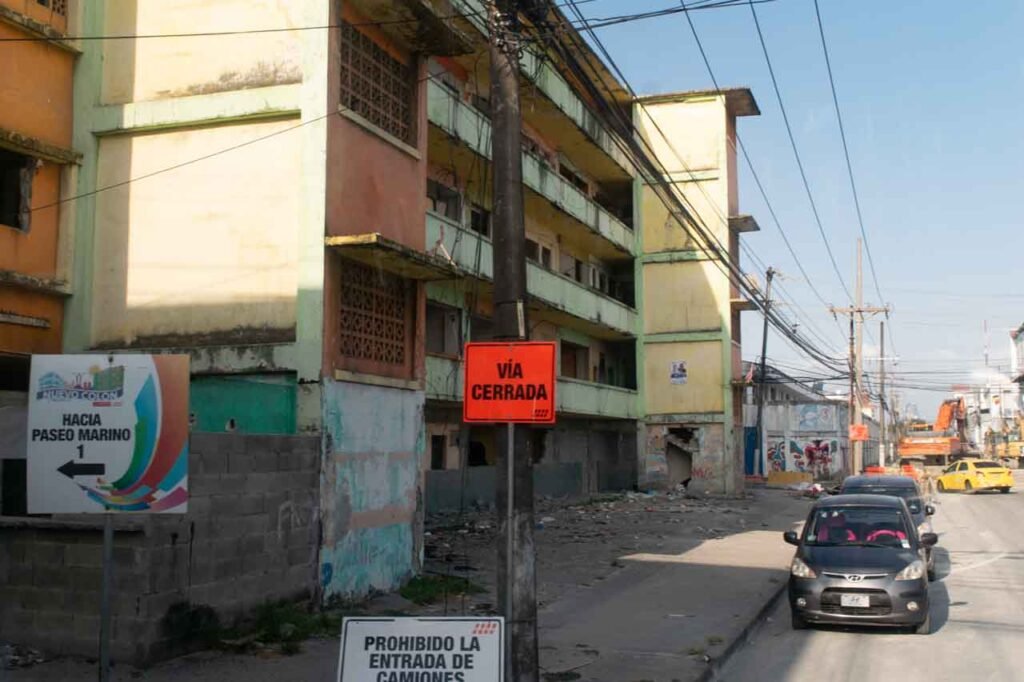
Later, I found out this is a problem that is out of control in many underdeveloped countries but especially prevalent in Panama. To begin with, citizens can’t afford to buy some things in large quantities, so single-serving plastic packets of soap, condiments, laundry detergent, etc., are common. There is no recycling, so the plastic packaging is waste. Food vendors serve customers with plastic utensils and styrofoam cups, and once they are used they are simply thrown down. There’s no culture of “Give a Hoot, Don’t Pollute” encouraged. Landfills catch fire (we experienced that as we sailed through the locks) and sometimes they are bulldozed onto neighboring mangrove groves. The beaches fill up with garbage after heavy rainfalls because dumps aren’t designed properly for containment.
So the problem is twofold: manufacturers do not produce the things needed for everyday human consumption in affordable, ecologically sustainable ways, and the people of Panama need to be made aware of the damage that the garbage is doing to themselves, their future offspring, and the environment. Hopefully, as the entire world becomes better educated about how human behavior changes the Earth, things will change in Panama.
This has been a really long post, but it’s not the end of the cruise yet! Tomorrow I’ll wrap up with my visit to Costa Rica – a real tropical rainforest. Until then, saludos!
originally posted at annettezimmerman.com