In art, as with most hobbies or sports, or really just about anything, I believe it’s important to have challenges. I’m not referring to competition; I’m referring to the kind of challenge that tests the perception we have about our personal ability to do something. The kind of challenge that makes us prove to ourselves we can do it.
This kind of challenge is beneficial because it’s also a test of how important the ability is to me. There’s no pass or fail; what’s important is the approach I have towards the task, the effort I apply to the task, and that I complete the task. If I perform all three of these well, I’ve met the challenge: the ability is important to me. On the other hand, if the task is so low a priority that I neglect it, or if I only put in minimal effort or don’t bother completing it, it says that the ability being tested is not important enough to bother with. I’d be better off doing something else rather than wasting my (or anyone else’s) time.
Sometimes we create our own challenges. And sometimes they find us, as in the case of a drawing challenge that popped into my inbox recently. A week ago, I received an email from John Middick at Sharpened Artist Academy announcing a free class called “The Portrait Prep Challenge”.
Have you ever had that happen, ever opened an email to find out that someone wants to give you something helpful with no strings attached? What a wonderful, rare opportunity!
I’ve never taken any of John’s online classes before, but I enjoy reading the tips he sends in his newsletters and I listen (albeit irregularly) to the podcast he shares with Lisa Lachri (A Colored Pencil Podcast). Not only is John talented and knowledgeable about the art of drawing, but he has a genuine interest in helping other artists improve their craft. Needless to say, if you haven’t heard of him you should go check out his website and podcast. It will only help you get better at drawing!
The Portrait Prep Challenge was held over eight consecutive days. Each day I got a link in my inbox. When I clicked in, I was taken directly to the course website. The point wasn’t to spend a lot of time on the lesson, since John knows everyone’s time is valuable. But the lessons were flexible enough that you could spend as much time as you wanted to. I thought they were so helpful that I wanted to spend a great deal of time on each lesson!
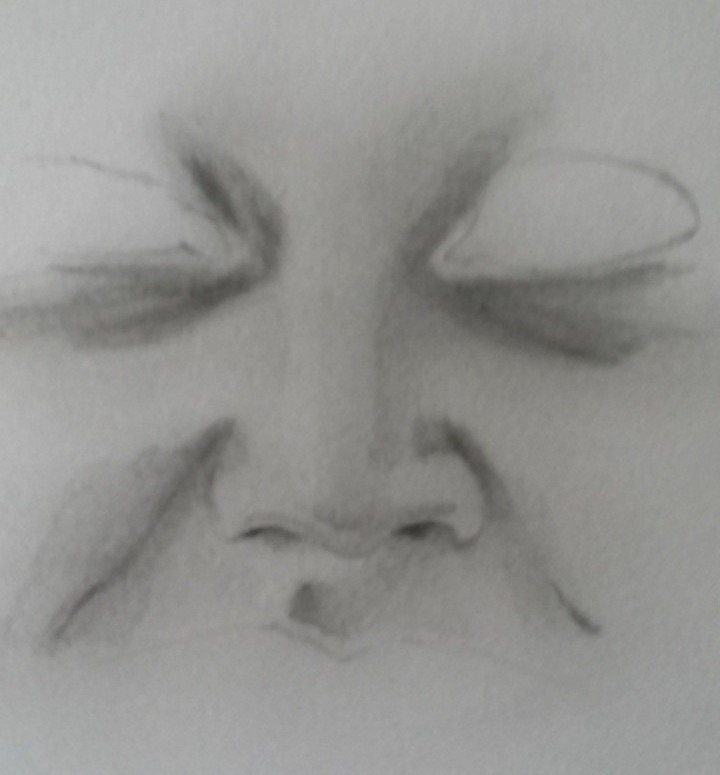
Each class started with a video in which John presented a short explanation about how to draw a part of the face. He offered tips, important anatomy vocabulary, and spent a few minutes drawing the part so that the viewer could get an idea of how to approach it. The first three classes required using graphite, but then they switched over to colored pencil for the remainder of the course.
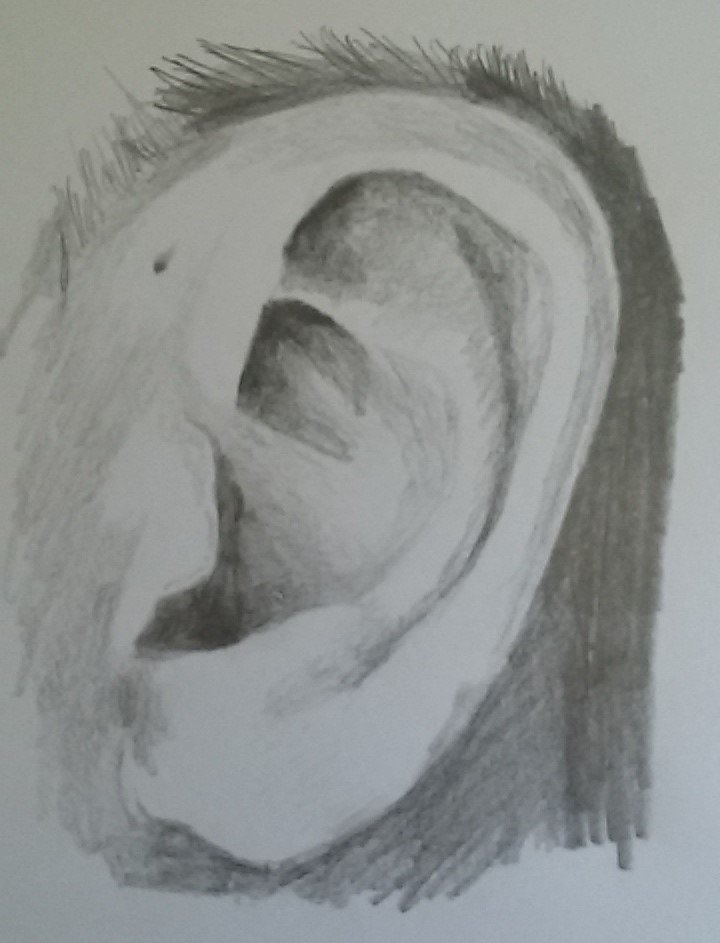
Some of the classes included a few questions, a mini “quiz”, I could answer to test myself on how well I understood the lesson. I could complete the lesson without answering them, but I did it anyway.
I was surprised to find out with an incorrect answer or two that I didn’t get something important from the video. So I watched a couple of the videos more than once just to make sure I understood all of the “secrets” he was conveying. None of it was really secret, of course, but now that I know these tips I see why some portrait artists are good and where it’s easy to mess up.
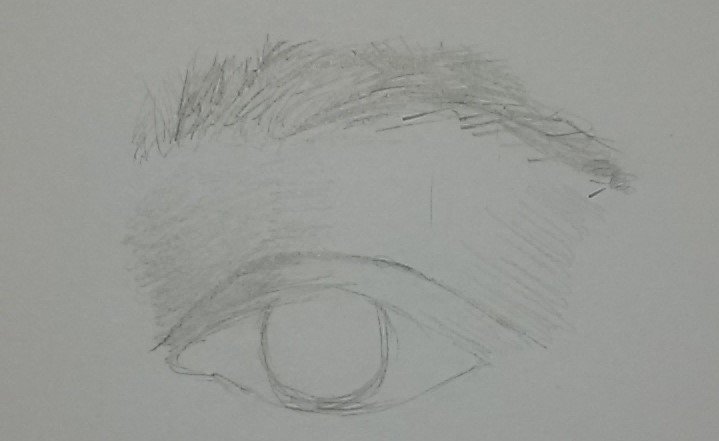
Finally, I downloaded the photograph that he provided and tried the drawing myself. This was the challenge part. Could I apply his tips and techniques and get a result that I liked?
The answer was yes, but only when I focused on doing it right. Any time I tried to hurry through it, I ended up with awful results. So I started over and did it right.
Did I learn enough to make the time spent on the course worthwhile?
Yes, but it was because I finished every class. Alternatively, I could’ve just taken notes and learned a few things without doing the drawing part. But would I have remembered any of it the next time I did a portrait?
I don’t think so. There were so many little things I figured out as I was doing the drawing lesson that made the drawing exercise as important as John’s lesson. For example, doing my own drawings helped me to understand where to expect shadows on the face and how to check my proportions. And completing the white-on-black drawing really made me hone my observation skill. It was almost as strenuous as a full body workout!
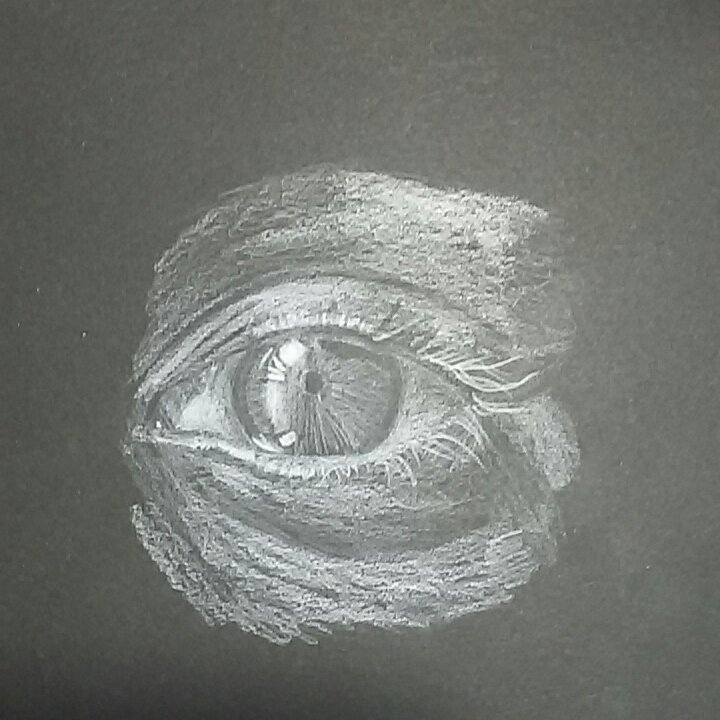
It’s always tempting to apply a half-hearted attempt to a class and say “that’s good enough”. But ultimately that doesn’t help me. If I don’t get every ounce of knowledge that I can out of the time that I spend practicing, I’ll never improve. So this class reinforced the idea that practice isn’t practice unless right effort is involved.
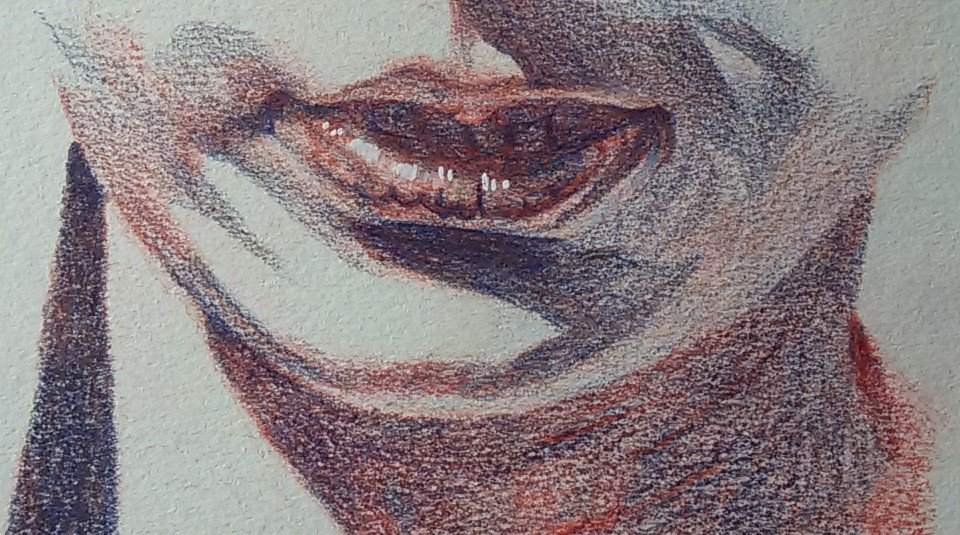
One other outcome that I was happy to realize was that I can draw without using a tracing or a grid as a crutch. Yes, it takes more time. But it’s extremely more gratifying to know that 100% of the result was due to my observation and drawing skills.
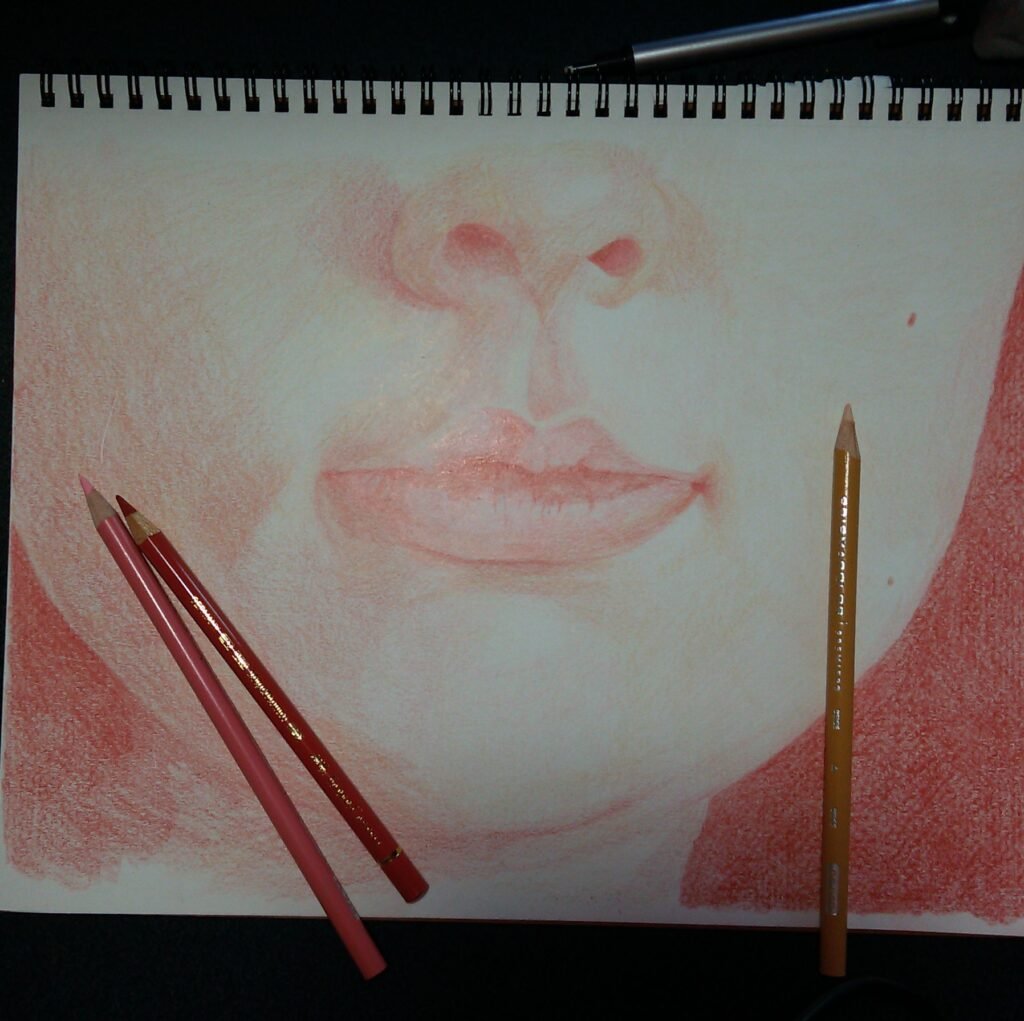
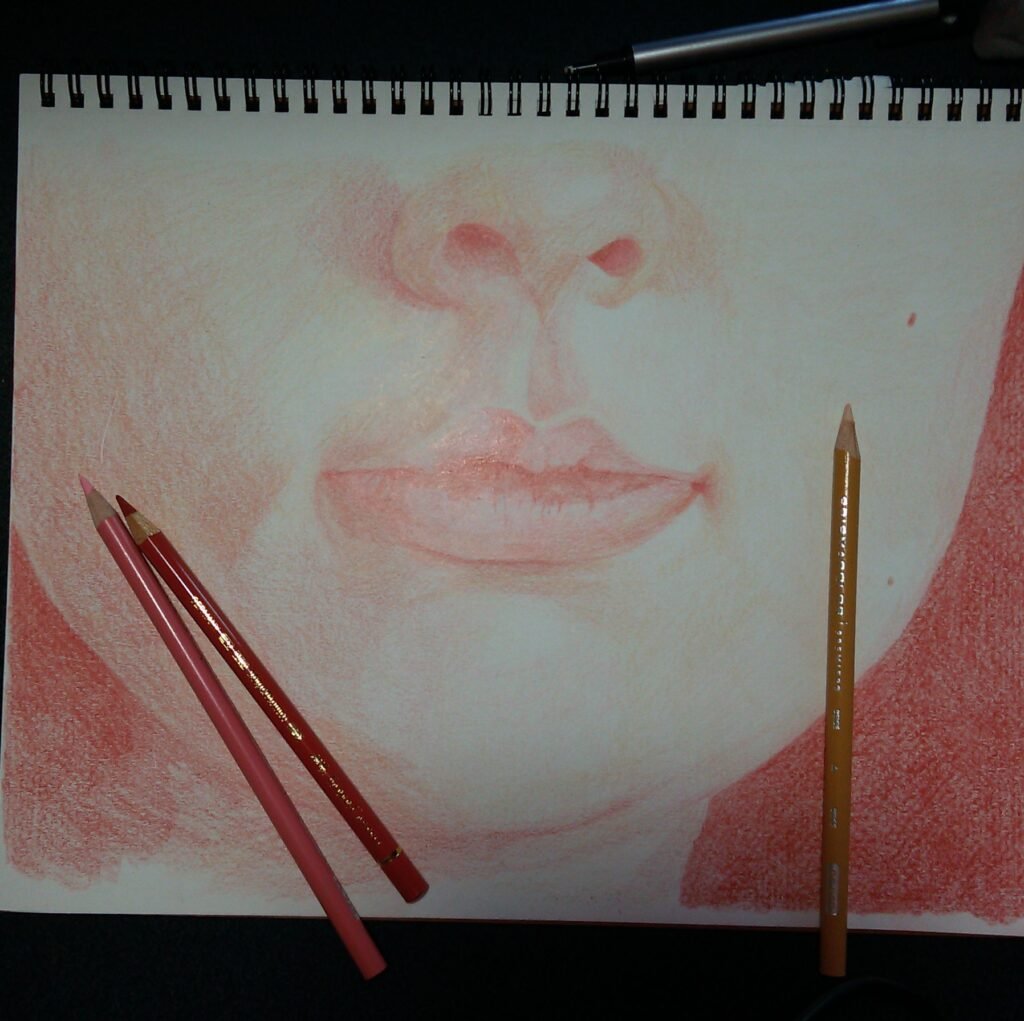
Three pencils were allowed for the mouth. I took this to a greater degree of detail by making it 9 x 12″. The model’s mouth had so many fine lines and shadings that I wanted to draw! In a normal 8 x 12″ full portrait, there’s no way to capture all of the nuances. This was a great exercise in using limited color as well as proportion accuracy!
Okay, so the course is now over and I don’t know if John will offer it again. He does have other classes available (for a fee). He doesn’t have a Patreon channel (I’ve checked!). His blog is short but worth reading for all of his tips. You can check that out at http://sharpenedartist.com/cpblog.
I hope this was helpful. The next time you consider trying a challenge, first think about whether or not you want to apply the right effort for the entire task. Too little effort or not completing the challenge will be of no help to you. To get the most out of it, apply your best effort and finish it. You’ll be glad you did!
originally posted at annettezimmerman.com