It was time for a day trip!
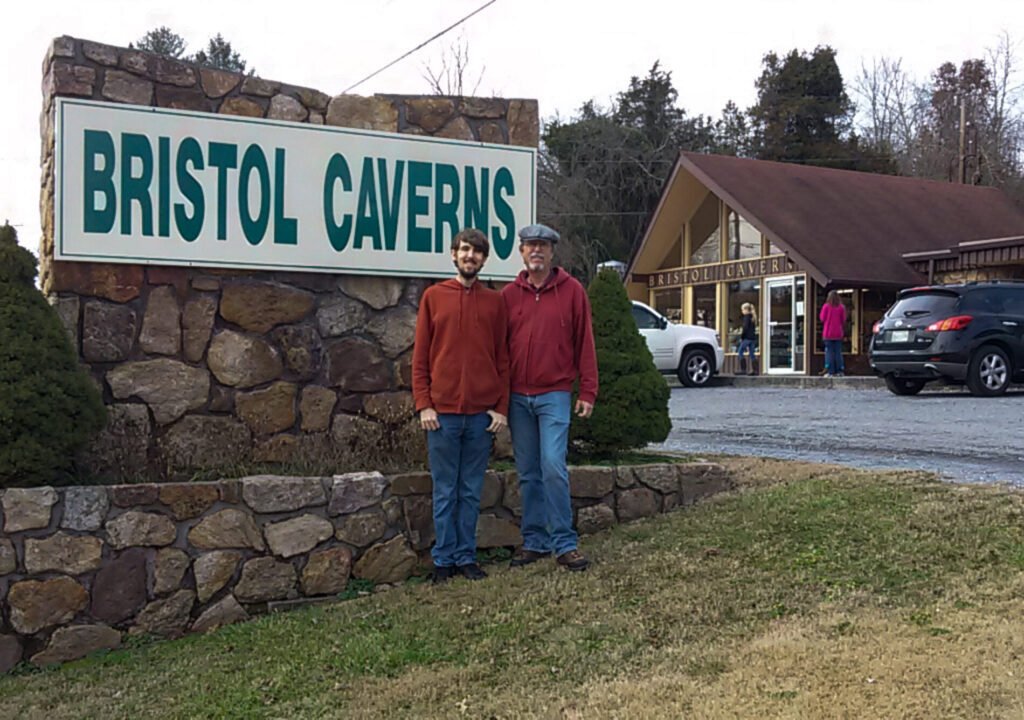
My son, husband and I piled into our Titan and drove to Bristol. After paying $15 each for a ticket, we waited in the gift shop until the tour began. The shop had the typical trinkets: bags of rocks (polished and unpolished), figurines cut from quartz, kids books, T-shirts and mugs.
A few minutes later, we joined a couple of other families outside and followed our young tour guide to the first stop on the trail. It was a hole in the ground that was covered with an iron grate. Our guide explained that the hole was the original entrance to the underground cavern. He then told us a story about how the Indians (his term for the Cherokee) used the caves to sneak into and raid the local farmer’s fields.
The hole in the ground
We followed the trail a short distance and arrived at the new entrance to the caverns.
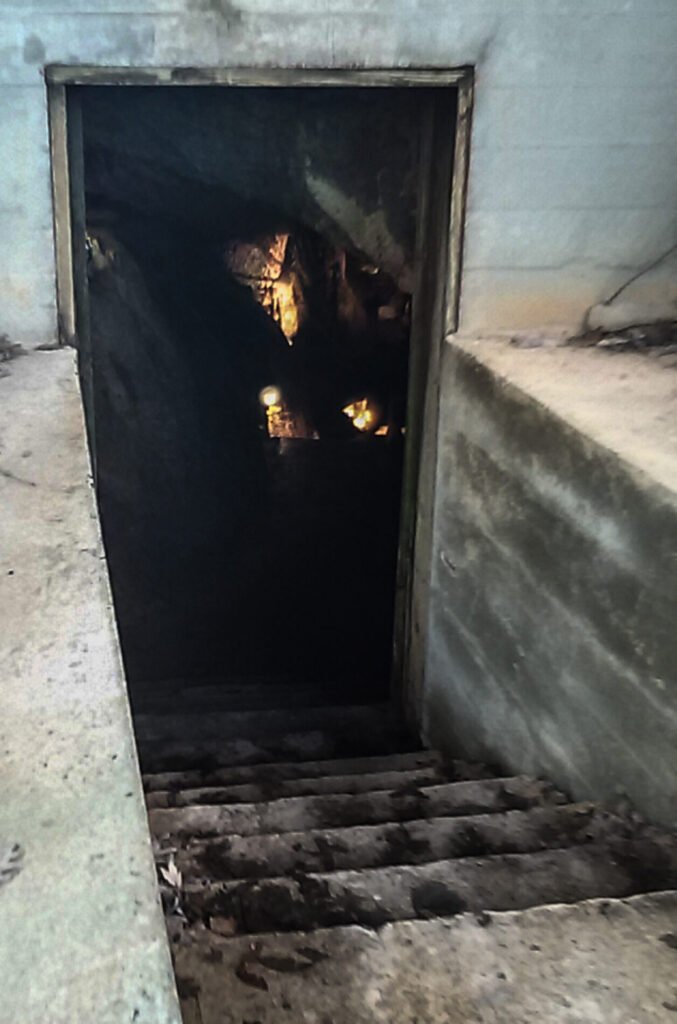
The caverns were rediscovered (the Cherokee found them first) in 1863 by the landowner Samuel Sesler. He was digging a cellar for his house where this entrance now stands and dug right into the cave. Sesler used the caverns for a cellar for several years because the temperature stays constant around 60F all year round. Then he figured out he could rent this cooler space to his friends and neighbors for their storage needs, as well as rental space for “secret” meetings of the locals.
I could only imagine what kind of groups might have needed to meet in hidden caves in the last hundred years.
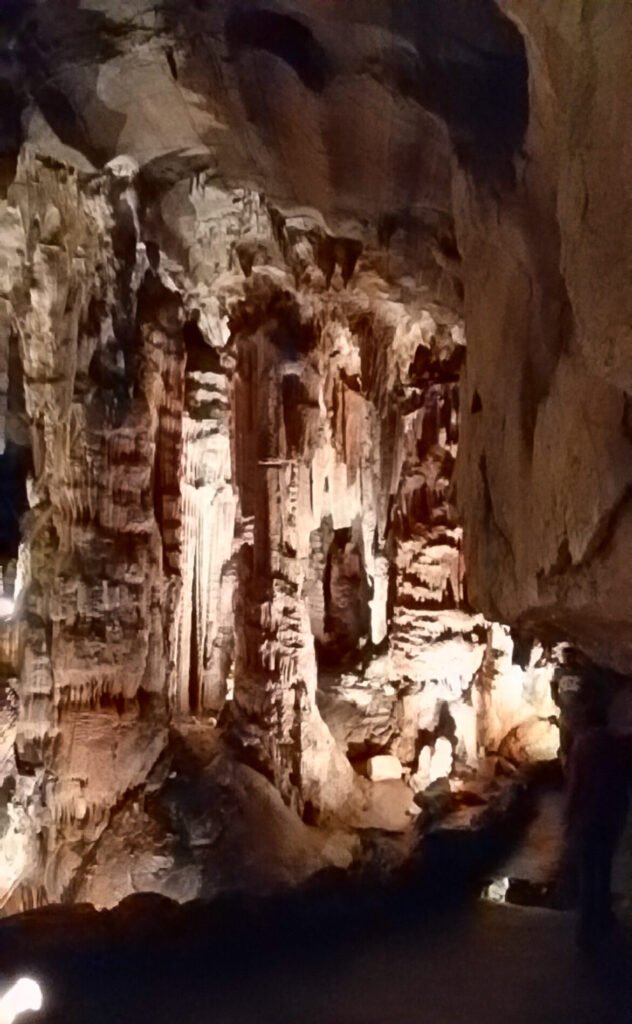
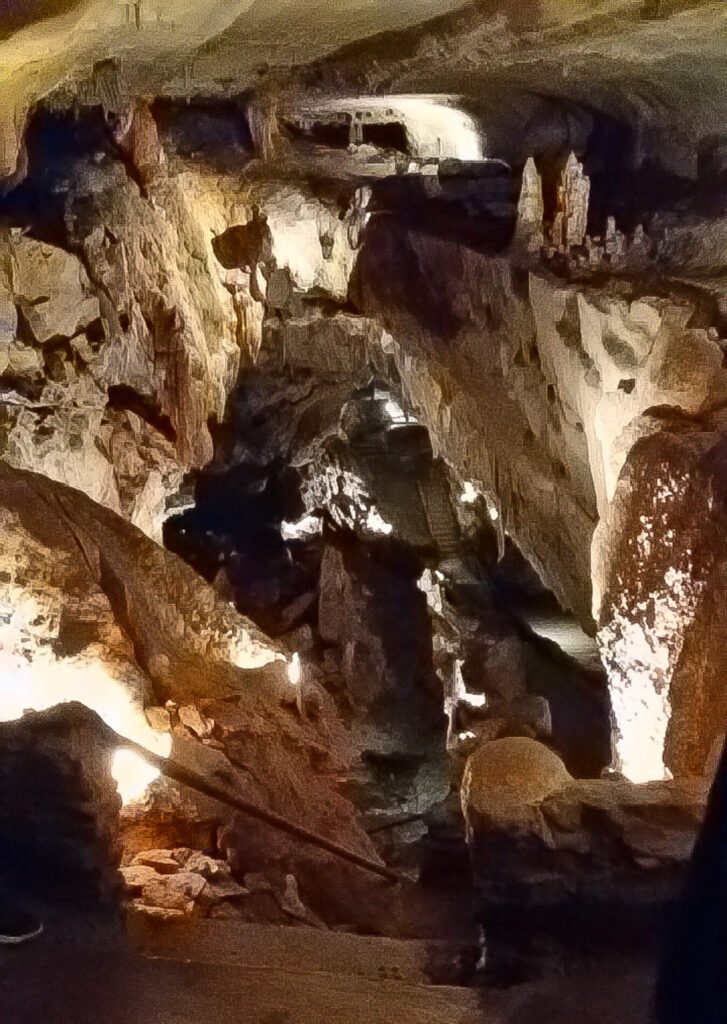
In spite of the storytelling, I was awed when I entered the caves. The first room stretched up and back in front of us, strategically lit to enhance the beauty of the rock formations.
I learned the caverns were opened as a tourist attraction in 1944 by the current owner. He was responsible for placing concrete paths and metal handrails so that people could safely walk through the caverns. He also laid the wiring for all the electrical fixtures, some of which were located in places that must have been very difficult to reach.
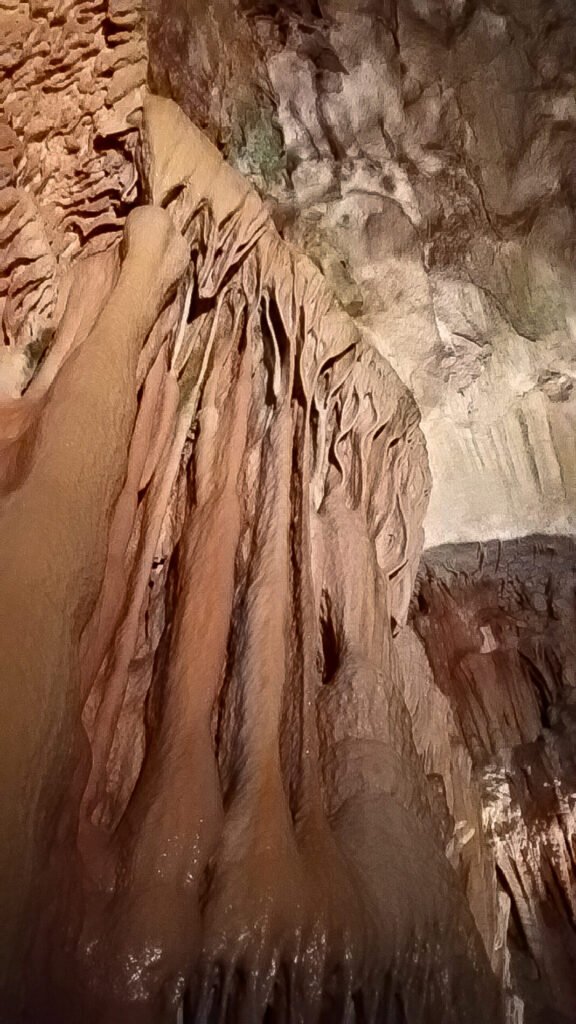
The caverns were formed over 200 million years ago by an underwater river moving through the sandstone. There is iron and a small amount of copper in the rock.
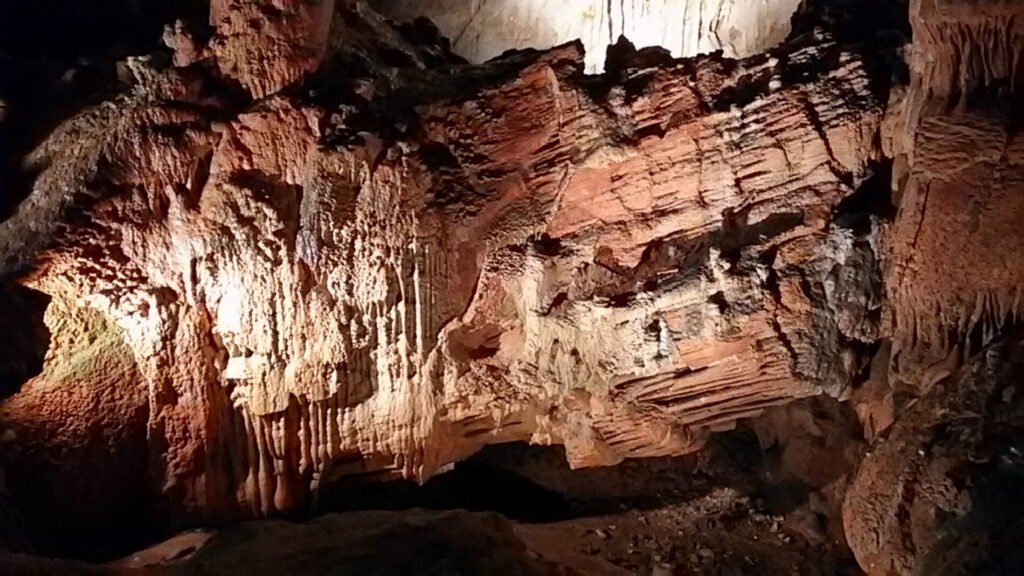
Can you spot the dragon’s head?
As we wandered deeper and deeper into the caverns, the only sounds I could hear were the drips coming from the ceiling. The air was cool and moist.
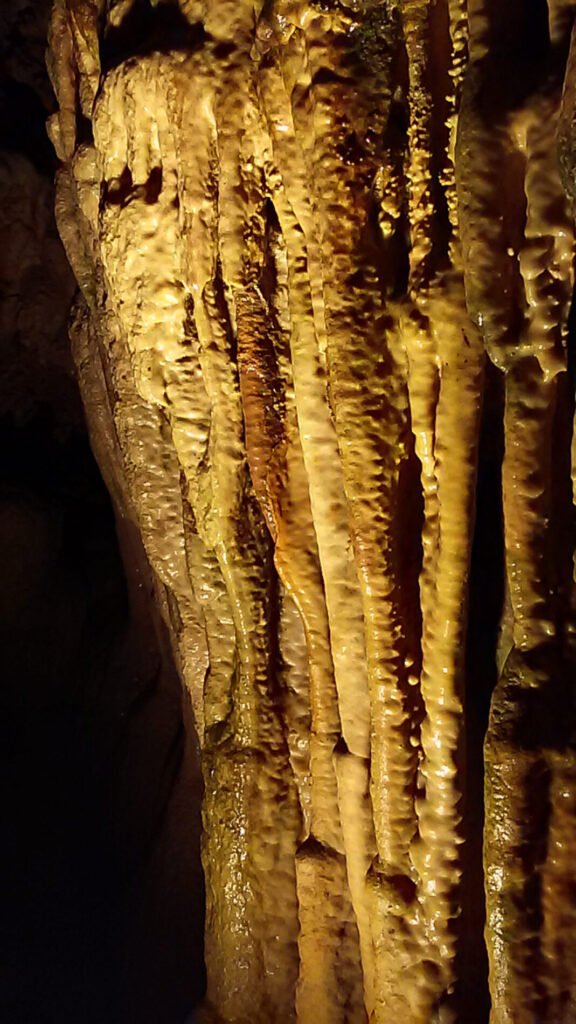
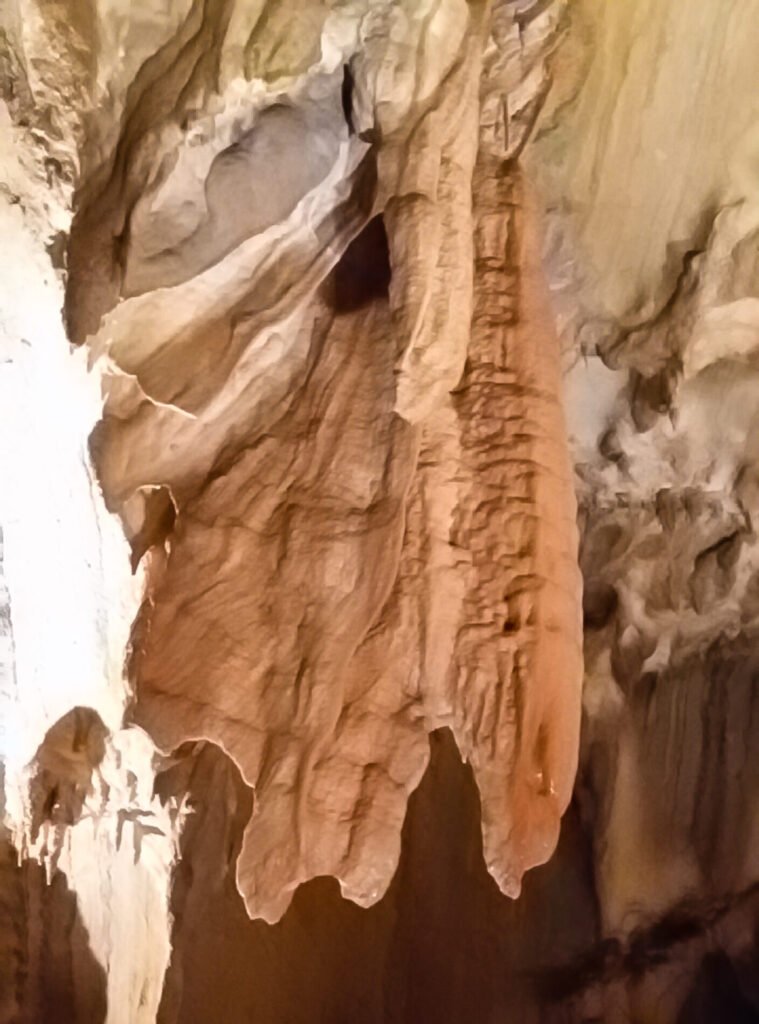
This is called a slab bacon formation. It looked a little bit like bacon:
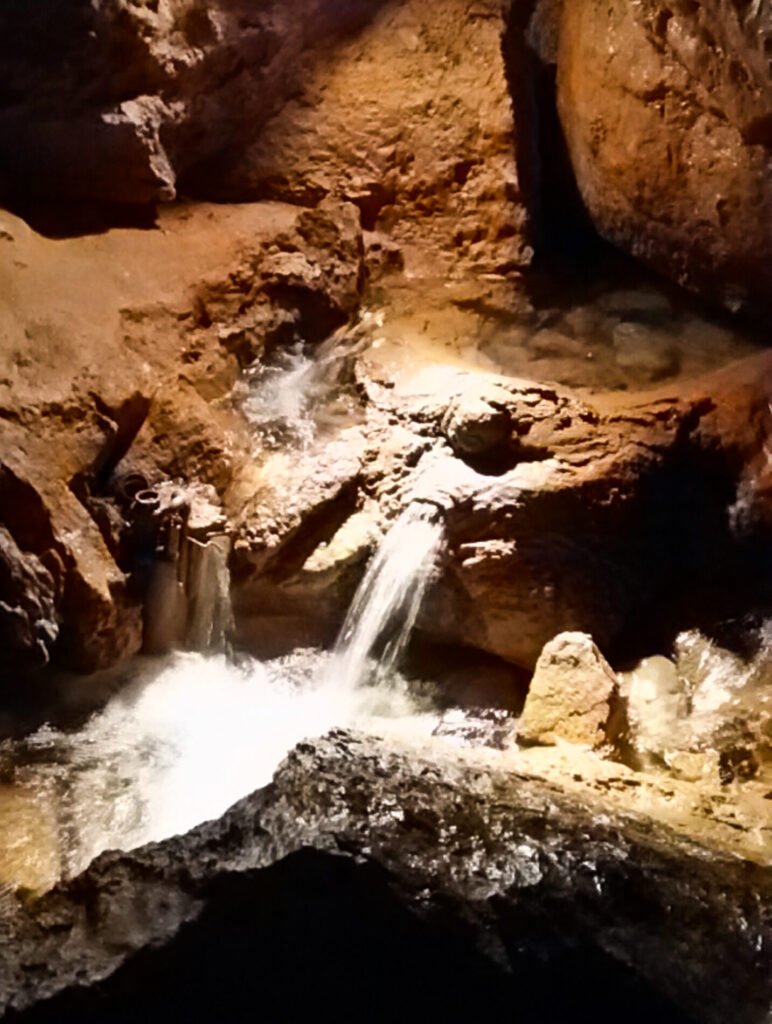
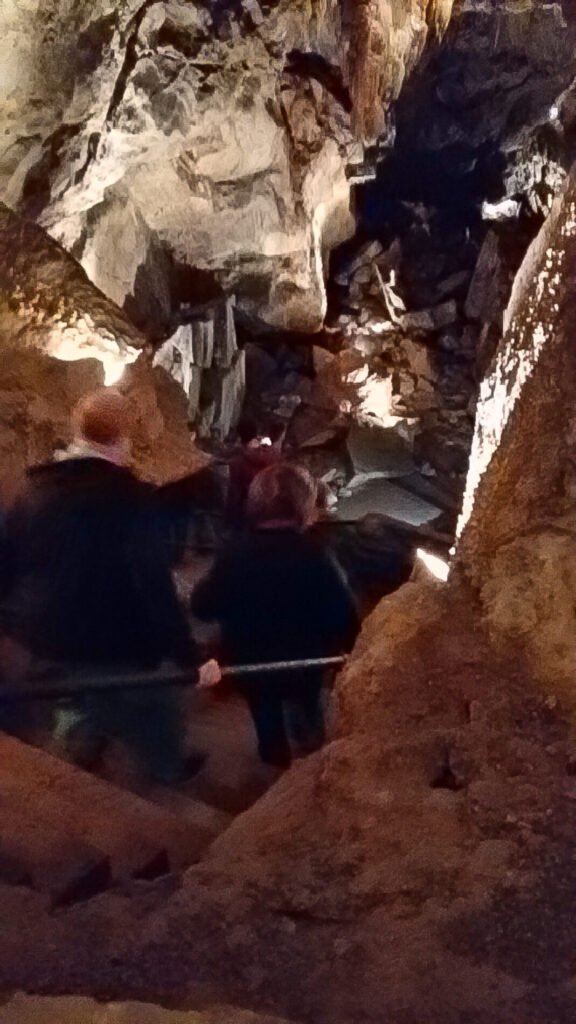
We descended a series of stairways until we were about 200 feet underground and found the river.
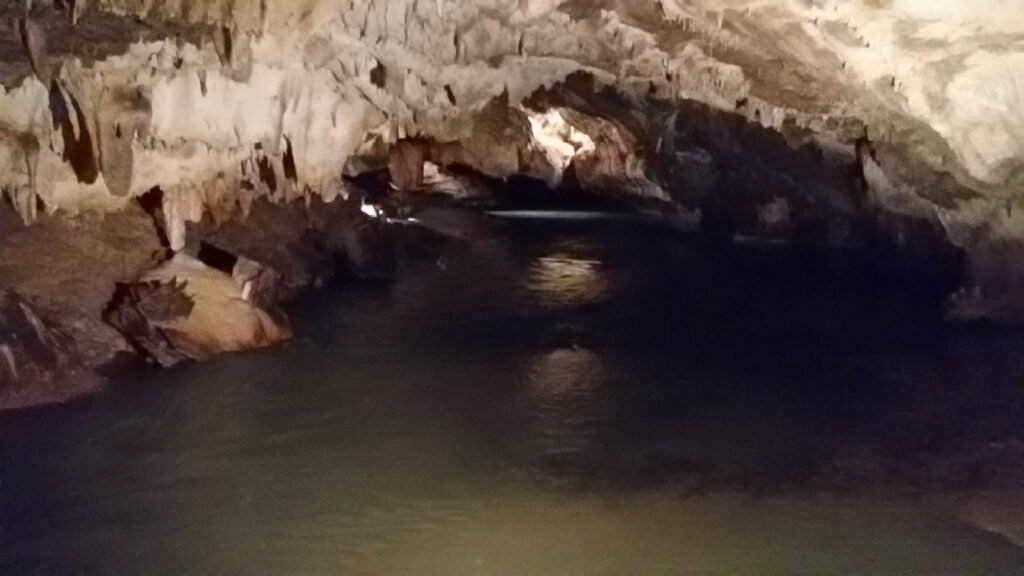
It starts and ends outside of the caverns and apparently can be used to travel through. The water was murky from the recent rain but flowed quietly.
There were no cave paintings or any evidence of habitation. The guide told us that the caverns weren’t ever used as living space. We could only explore a third of the accessible rooms; there were plans to expand the tourist area but not enough money (so the guide said) to do so.
After the tour ended, we went to The Mad Greek in Bristol for lunch and ended up bringing home some of their delicious desserts. Thanks for reading!