Last week I wrote a short story about a koi and an otter. I think it would be fun to illustrate it and put it on the blog. I already have a few ideas in my head about what I want the pictures to look like. But how do I get those ideas out of my head and onto the page?
So far, it’s taking a few steps. I’ll start at the beginning.
Recently, I took an online workshop called Sketchbook Revival, which introduced me to children’s book illustrator Nina Rycroft. She has classes on Skillshare, and since I already have a Skillshare subscription, off I went to explore.
The first class I took was about drawing a self portrait. It was super helpful. She talks about locating proportions on a face and steps you through how to draw your own portrait. I used my webcam to take a picture of myself and worked from that.
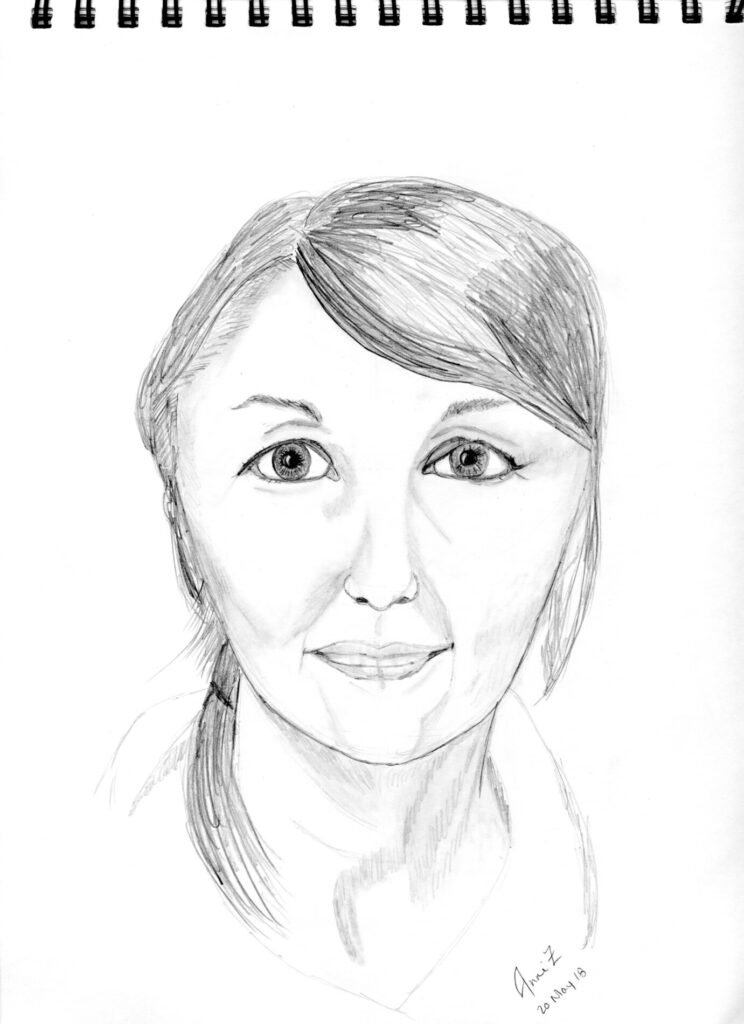
This was the first time I’ve ever tried drawing myself. I can see a lot of room for improvement, but I’m pretty happy with the result. However, I don’t think it helps much with illustrating an animal character. Fish faces and mammal muzzles have very different ideas about proportion.
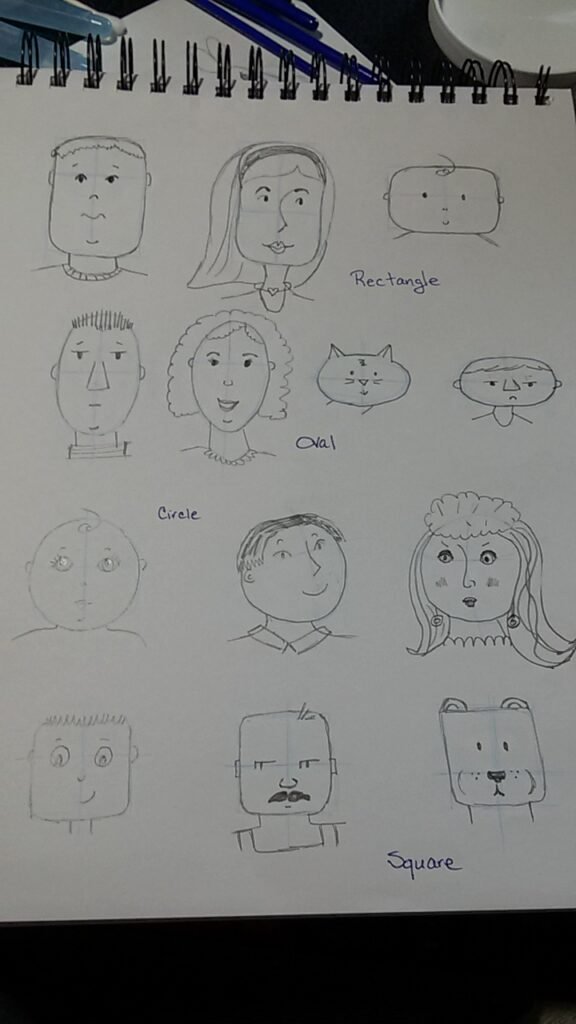
The next class was more helpful for what I’m trying to do. It focuses on creating faces from simple shapes. I drew people and a couple of animals, and I can see how changing the shape and alignment of facial features creates different impressions. A round face feels different from a triangle. Move the eyes or change the mouth, and suddenly the character has a different personality.
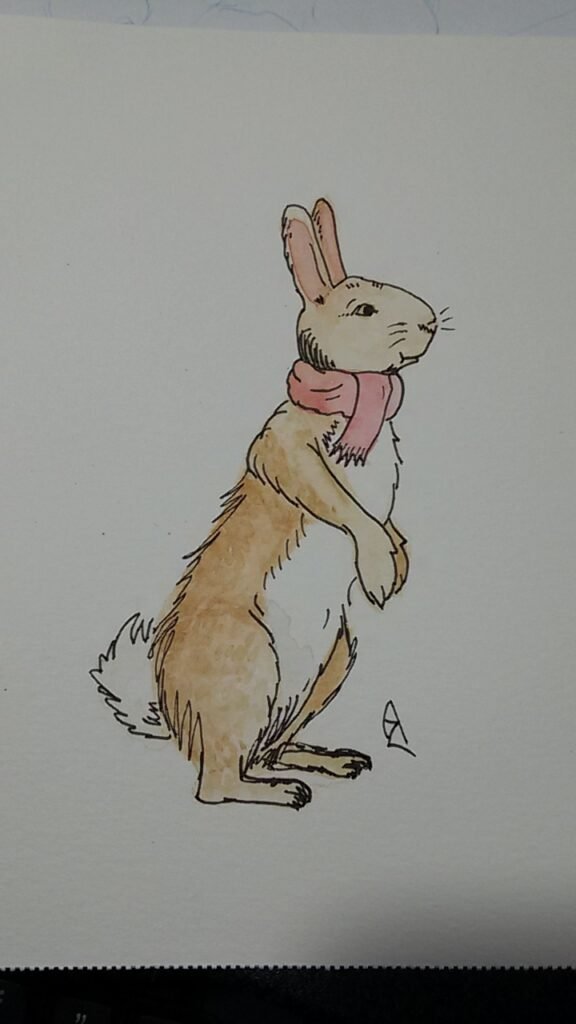
Now, as if that isn’t more fun than a barrel of monkeys, today I chose a class about illustrating bunnies.
We started by using reference photos to learn the bunny’s shape. Then we moved on to adding color. I’m following the technique, but I also want to point out something else: materials.
It used to frustrate me to find tutorials with a list of supplies ten miles long. Maybe not actually ten miles, but close enough that a person should pack snacks. If I’m trying a tutorial for coloring a butterfly, do I really need fourteen markers, a paintbrush, and half a dozen paints?
It makes sense for the artist to list everything they use. That’s helpful. But what if I don’t have those things? What if I want to do the tutorial now?
I improvise.
And I think improvising helps me develop my own style. If I use the exact same materials in the exact same way, I’m mostly copying someone else’s result. That’s fine for learning, especially as a beginner. But when I substitute materials, I have to make choices. Those choices become part of the work.
For this bunny class, I don’t have the same watercolor materials Nina uses. So I use what I have: Faber-Castell Aquarelle pencils, Pentel Aquash water brushes, one inexpensive size 6 paintbrush, and cold-pressed watercolor paper.
First, I traced the drawing I made from the photograph onto watercolor paper using a brown pencil. I love using my monitor as a light box. It works much better than a window for me, especially on an overcast day.
Next, I colored the bunny. At first I tried making a puddle of water and coloring into it with the watercolor pencil, but the wash was too light. Then I tried touching the wet brush directly to the tip of the pencil, using it almost like a hard cake of watercolor paint. That worked much better. I used the size 6 brush to push the colored water around on the paper.
The final step was to outline the bunny with my Sakura Micron 03, which is the smallest liner I have.
This is where it helps to know what the class is really teaching. If I’m taking a class specifically about watercolor technique, then substituting materials might not work very well. The medium would be the lesson. But this class is about illustrating bunnies, so the important thing is learning how to turn an animal into a character.
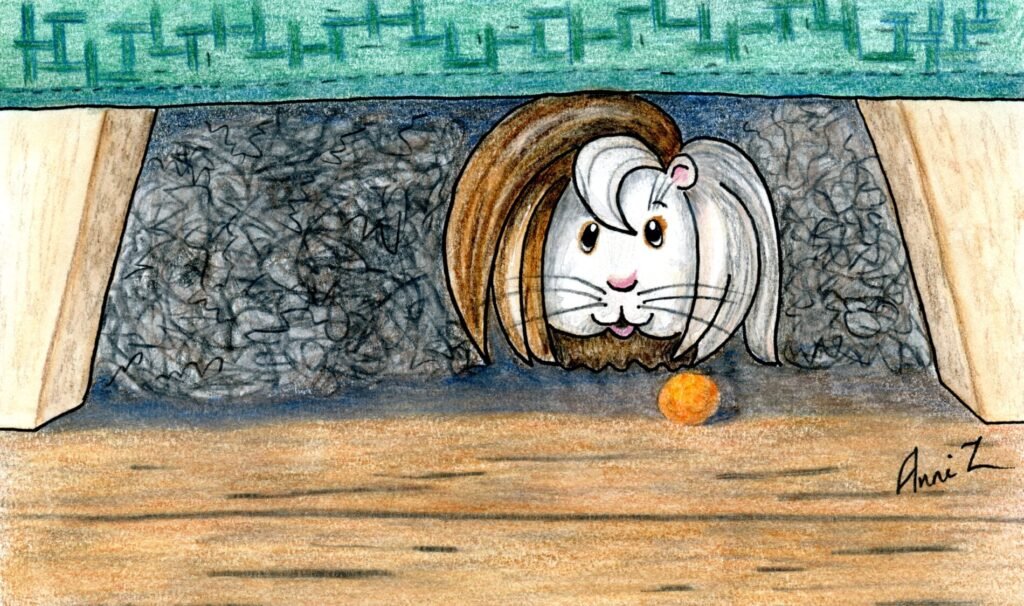
I’m also playing with illustration prompts. One prompt was “guinea pig.” My first decision was whether to draw something realistic or whimsical. Since I’m working on character illustration, whimsical seems more useful.
I looked up reference photos of guinea pigs. I’ve always thought of them as rather large hamsters, though I’ve never owned either. I imagine them as shy, continuously hungry, and cute. If my guinea pig has a human personality, I think it might be reserved, busy, and always looking for something to eat. Too busy to care much about appearances, so the cuteness comes from being a little messy.
Another prompt was “green.” How do you illustrate a color?
At first I think of nature: trees, grass, shamrocks. Then I think of recycling, ecology, and conservation. But none of those ideas make me want to draw.
Then a song floated into my head.
“It’s not easy being green.”
Yep. Kermit the Frog. Now I can’t get it out of my head.
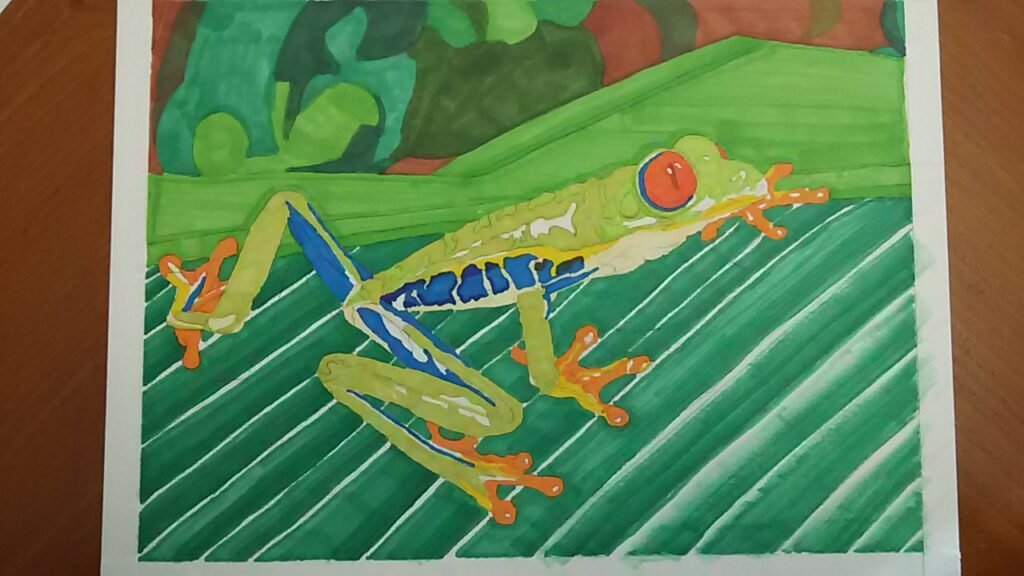
So I decided to draw a frog. I liked the idea of a frog who is having difficulties being green and decides to paint himself other colors. Maybe he’s also a poster child for conservation. I like this idea.
For this one, graphite and charcoal won’t work because the image needs color. Watercolor won’t give me the intensity I want, and colored pencil alone will take too long. So I decide to use marker for the main color and colored pencil for the details.
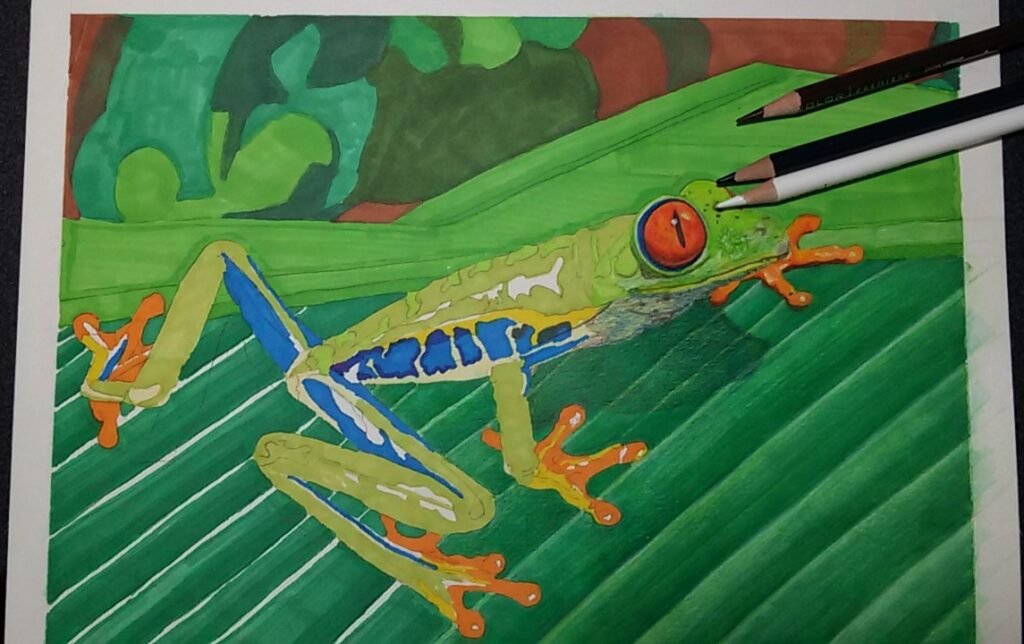
All of these little experiments are helping me understand illustration as a series of decisions. What shape suggests the character? What expression fits the story? What materials do I have? What can I simplify? What can I exaggerate?
After the bunny class, I tried drawing my otter character. It took three attempts, but I finally came up with one I kind of like.
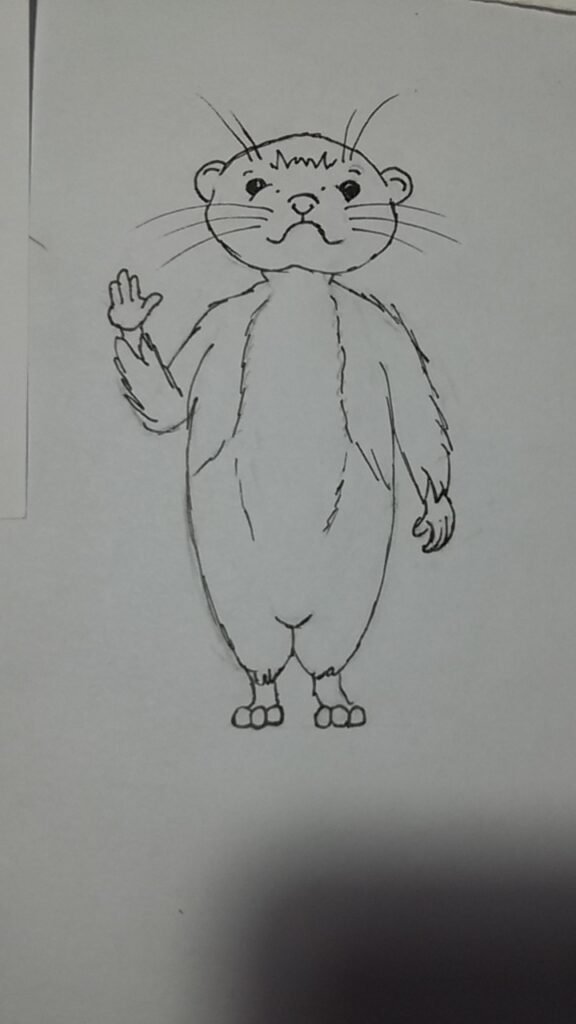
I think I’m going to keep working with him and see where he goes.
originally posted at annettezimmerman.com