Happy Holidays!
I hope you are having a lovely holiday season. Mine has been absolutely wonderful. My family is happy and healthy, and lately I am full of gratitude for this time with them.
My son presented me with a couple of great gifts yesterday, and I am so impressed with their quality that I would like to share. So today I’m going to give a review on the Derwent SuperPoint Manual pencil sharpener.
I never would’ve thought I could get so excited about a pencil sharpener. I’ve heard all kinds of reviews about this one and others, but I figured a sharpener is a sharpener. As long as you had a nice point on the pencil, who cares how it got there?
Little did I know.
Let’s start with how the device sits on your desk. It comes with an adjustable clamp that easily tightens onto a desk or table top.
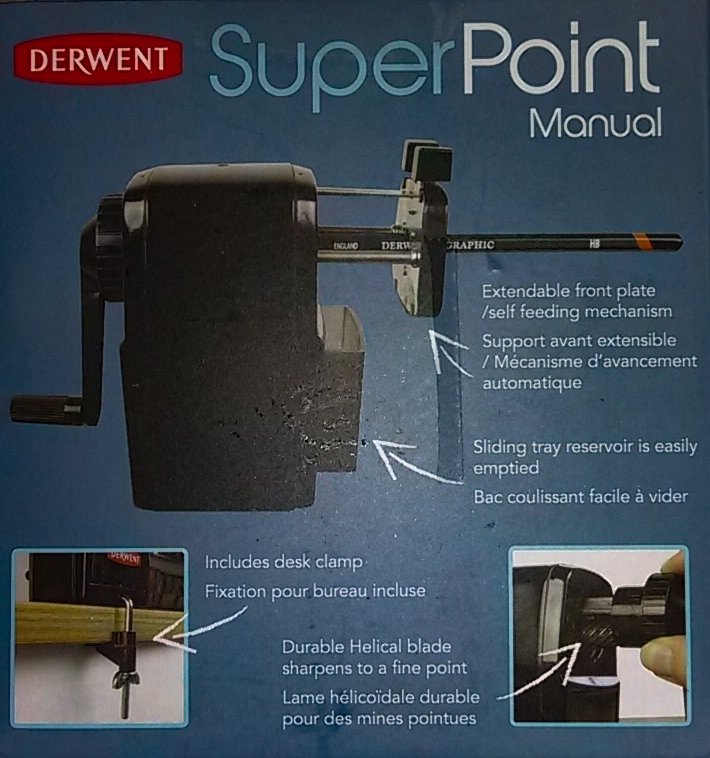
In comparison, an old-fashioned manual sharpener that I previously owned had to be screwed to a surface to stay in place. Thus, it wasn’t practical for today’s laminate and hard plastic surfaces, and trying to hold it with one hand while sharpening with another was a real challenge. At one point I screwed it into a wall, but it left some pretty ugly marks when we moved out of that house! Recently, I’ve been using a small hand-held sharpener that was provided with some General charcoal pencils. It sharpened colored pencils very nicely, but the points were nothing like what this Derwent sharpener produces!
So here’s how this one operates: open the pencil clamp by squeezing two finger levers together. Insert your pencil and adjust the distance between the holder and the sharpener’s entry to about 1”.
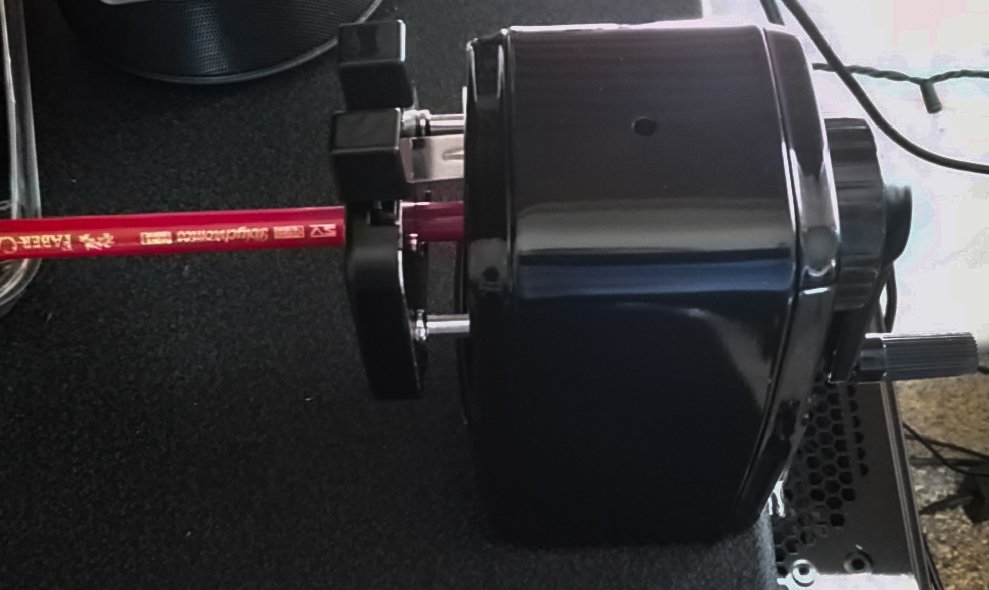
I’ve found out through much trial and error on my hand sharpener that holding a pencil out too far from the sharpener makes the lead break in the sharpener. I think it’s because there are lever-type forces at work (instead of just one direct input force) on the pencil when it’s held too far from the sharpener. So it’s really important to keep the pencil in a correct horizontal position when sharpening. The Derwent sharpener takes this effort out of the equation for you!
Turn the handle until you don’t feel or hear any more friction. The pencil will stop moving into the sharpener when it’s fully sharpened. And voila!
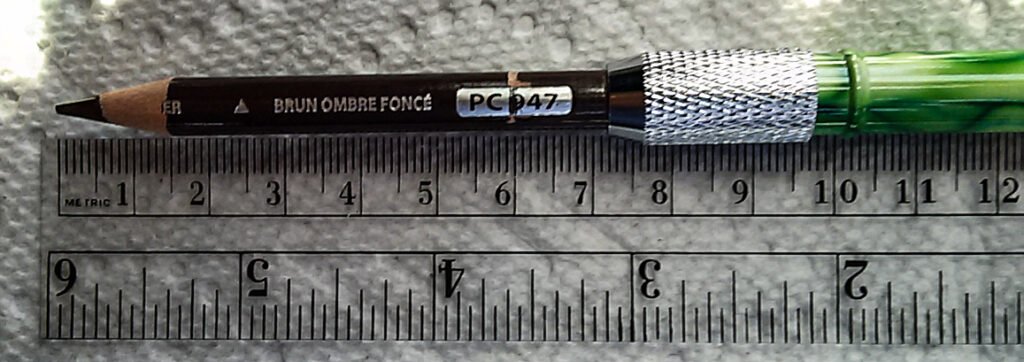
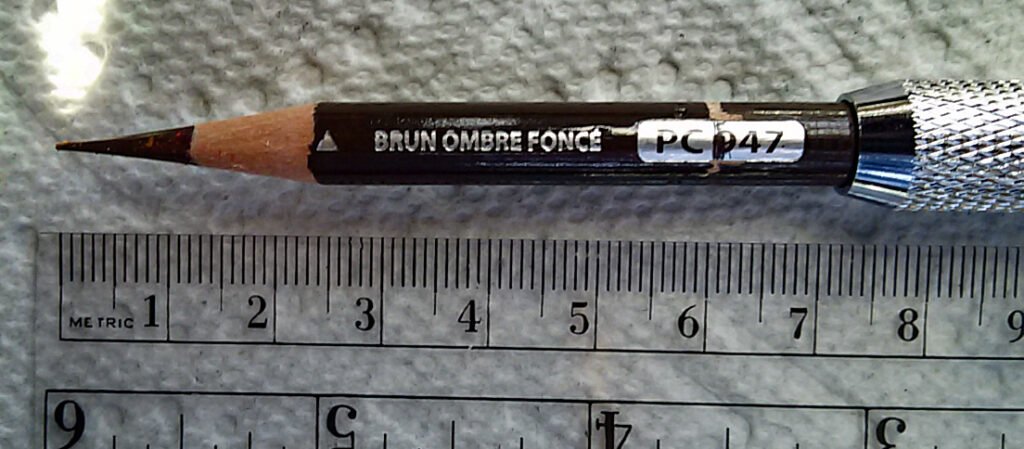
I can’t wait to try my newly sharpened pencils on a real drawing.
Here’s another great benefit of this sharpener: it sharpens down to very small pieces of the pencil! This was my Prismacolor Burnt Umber. It’s one of the pencils I use the most, and up until today I’ve had it in a Koh-I-Noor pencil extender. (I’ll be reviewing pencil extenders in another post)
I was just about consigned to throwing it out and have already ordered a replacement. Now, Prismacolors aren’t expensive, but it seems to me like I should be able to get more out of a pencil. They start off at just over 7” long. Then you sharpen it and, if you’re lucky, the lead doesn’t break and you have 6” left. If you’re unlucky (or, like me, about 50% of the time) the lead will break and you’ll have to continue sharpening. Sometimes I go through one whole Prisma pencil on one 8” drawing. Sharpening is definitely an issue, because if I’m quickly reduced to 4” I need to use an extender. With less length than that and I must use a hand held sharpener.
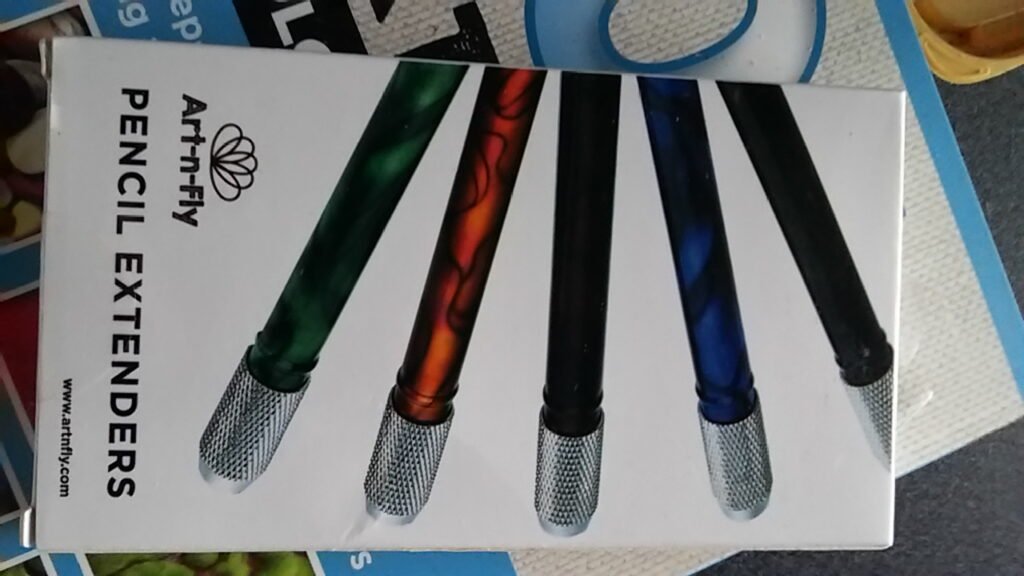
But look at this little baby with a Derwent super point! It’s all due to my new pencil extender, another gift from my son 🙂 I think I’ll be able to get this puppy down within an inch of it’s life.
Last, but not least, is the sharpener’s convenient tray for pencil shavings. No longer is it necessary to detach the casing from the helix blade. So this sharpener wont make nearly as big a mess as my old manual did.
How cool is that? I love this sharpener!
originally posted at annettezimmerman.com