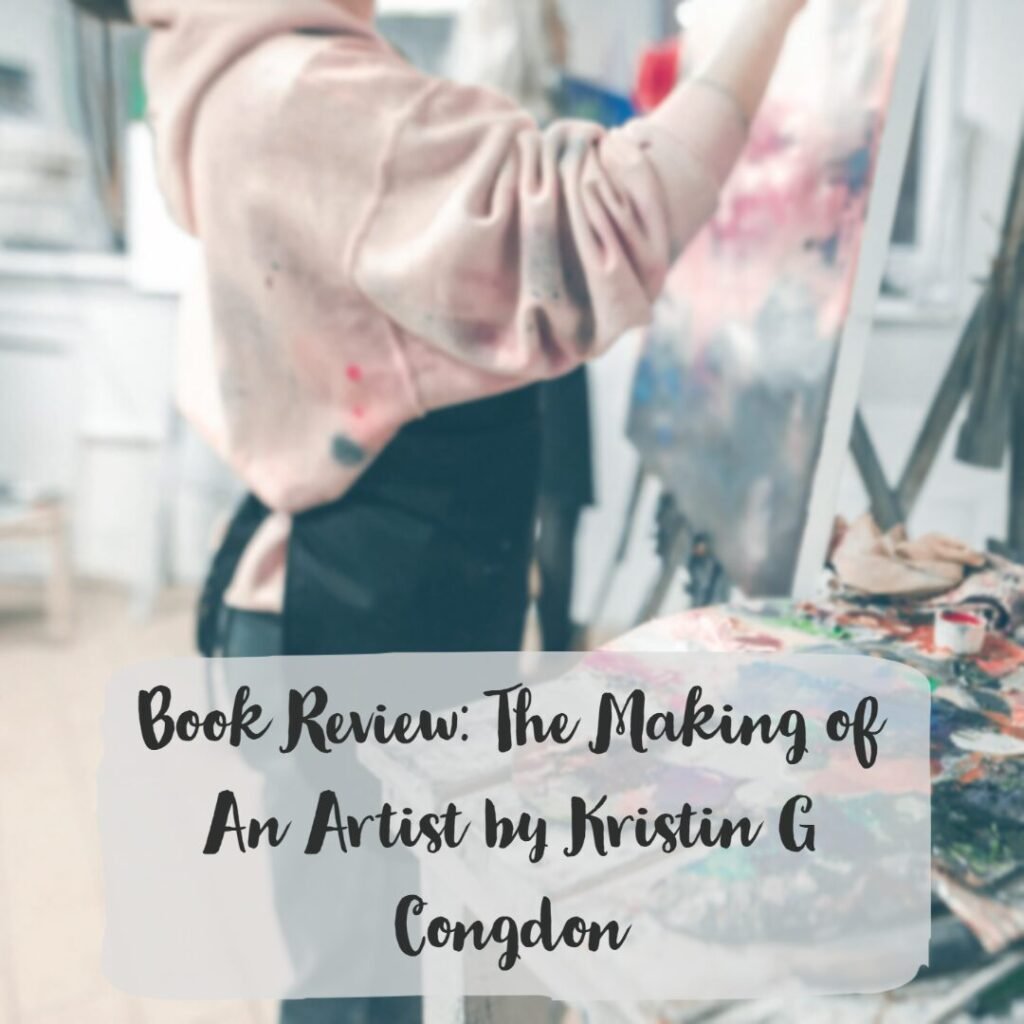
I saw The Making of an Artist: Desire, Courage and Commitment by Kristin G. Congdon on Scribd and was immediately intrigued by the title. What does it take to make an artist? Is it really a matter of being born with talent? Or is there something else needed in order to “be an artist”? She also promised to examine how an artist can best be taught, which certainly aligns with my project goal of helping creatives find creativity.
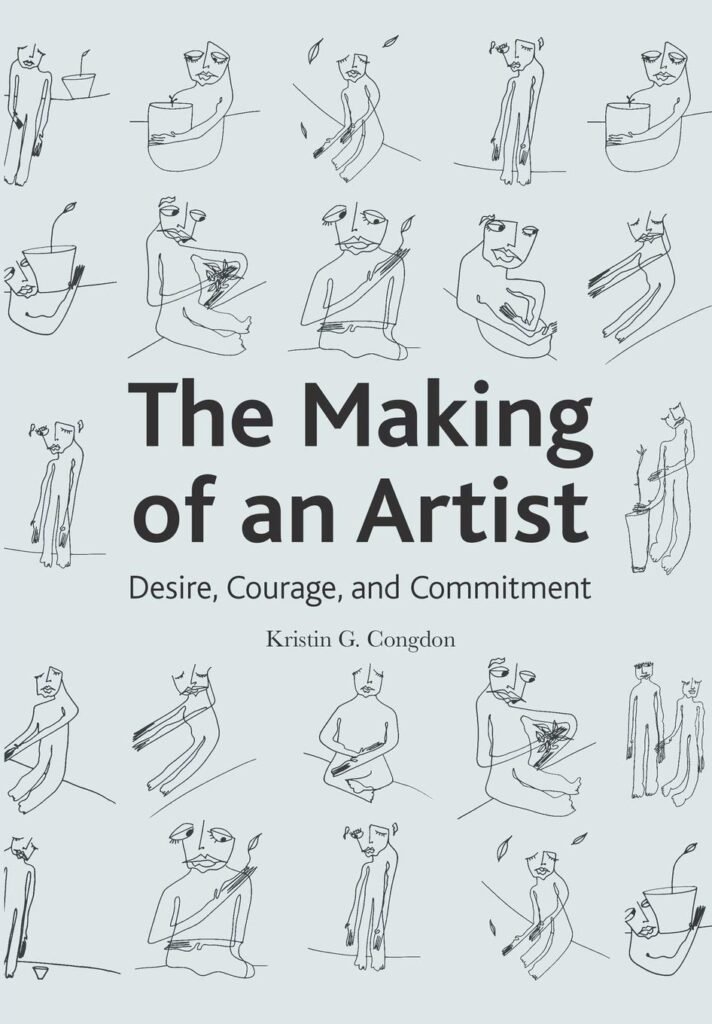
I’ll start right off by saying I was a little disappointed after I read it. But it deserves a decent review, so here goes!
First, let’s make sure Ms. Congdon is really qualified to write about artists and education, and that she’s not simply writing an opinion. In her Introduction, she talks about her career as a scholar and as a teacher with a Ph.D in art education. According to Wikipedia, she is a Professor Emerita of Philosophy and Humanities at the University of Central Florida, a founding director of the Cultural Heritage Alliance, and has written and/or contributed to several books about art and artists. Her education was at the University of Oregon. Her credentials appear sound.
But does the book investigate what it takes to make an artist? Does it only require desire, courage and commitment? And, if so, how should art teachers be addressing this?
She dives right into the education questions with a chapter that addresses the need for formal education in art. Quotes and examples illustrate that wannabe artists primarily educate themselves because they enjoy the process of learning, and generally approach their self-education from a wider variety of topics with processes developed from experience rather than using imposed academic rules or strictures to solve problems.
Numerous examples of such artists, both historical and contemporary, are given. In addition, Congdon talks about creativity that can be expressed from an inner place of “not knowing”. She shows that schools can help art students, but that most of their learning is done through personal experiences outside of the classroom. For example, art school can introduce a student to a variety of artists and works that the student may not have been exposed to otherwise, but they are still learning independently through their practice.
This leads to the fact that today’s graduates struggle to get jobs while artists who don’t have a formal education in art can be highly successful. Congdon uses this argument to state that the failure of academia is due to their lack of focus on the personal characteristics that make an artist succeed, namely desire, courage and commitment.
The remainder of the book addresses each of these qualities in turn by describing personal stories of artists who had such qualities and succeeded in making a name for themselves (albeit some of them did so posthumously). Their success qualifies the observed characteristic as an essential quality of the creative. In the chapter that examines the motivation of desire she concludes
“…desire mimics breathing. Exhaling…produces artwork. But (having exhaled), they become empty; therefore they must inhale to be full again…The journey is never finalized – it only has movement.”
When addressing courage, she notes that “failure is a constant part of artists’ lives” and “successful artists learn from their failures, and experiencing failure does not deter them from creating.” Numerous examples are included within the the content on addictions and religions that provide specifics. She writes
“Listing artists’ failures would be something like telling a story about every artist who has ever lived.”
and so we must wade through selected stories to discover for ourselves what failures have prompted risk taking in other artists.
The chapter on commitment dives right into quotes from artists who believe that a strong work ethic produces more growth than inspiration. “Creativity and imagination alone are not going to get you there.” Congdon observes that “…attention and reflection…builds artistic skills.” and that an artist must learn from what they do and be able to apply that knowledge in innovative ways. She also points out that the insight needed for innovation is not obtained in the same way.
“Creative work demands attentiveness, but innovative insights do not usually happen with intense focus. For eureka moments, a relaxed mind functions better; insight generally arrives when you stop seeking it.”
This was the most interesting part of the book for me. A wonderful quote from Twyla Tharp particularly resonated with me:
“Every…(experience) feeds into my creativity. But without proper preparation, I cannot see it, retain it, and use it.”
The final chapter of the book addresses recommendations for teaching art. Some conclusions discussed in regards to curriculum include needs such as
- focusing on learning to be creative as opposed to learning how to make art that sells while stressing a strong work ethic
- providing for alternative activities that enhance creativity, including essential rest periods and deliberate practice methods that include setting goals, experimentation, and observing results (note that walking is an excellent activity that enhances creativity, as I wrote about in this post)
- emphasizing that art comes from experience, particularly suffering experiences, therefore awareness of the artist’s internal and external environments is critical
- stressing that all artists are “more or less self-taught”, and providing instruction flexible enough so students can work on what interests them rather than producing rote product
Furthermore, Congdon provides guidelines for teachers that recommend utilizing diversity when building working groups, including mixing extroverts with introverts as well as cultural and economic diversity;
encouraging risk taking and allowing students to fail; teaching students about the complexity of procrastination and the advantages of taking the time to formulate good ideas; recognizing that all art is “political” in that it communicates the artist’s thoughts in a contextual frame of their political place in the world
She concludes that desire, courage and commitment are not only characteristics of artists but also traits that are learned by audiences viewing the artwork.
My conclusion is that the book is very well researched and has many good points and advice. However, the writing style that Congdon uses is a form similar to the scientific method. The first part of a chapter contains an observation with questions about that observation while the majority of the chapter contains examples taken from other works by researchers or observations from the art culture. The end of the chapter is typically a paragraph with her conclusions (when she has them). This made it a dry read for me, as my eyes often glazed over from the sheer volume of quoted or paraphrased material included. But the subject was interesting enough to keep me going.
In the end, however, I was convinced of two facts. First, that a formal education in art is not only unnecessary for success, but also, at least in contemporary times, disadvantageous in terms of focusing students on the desire, courage and commitment needed for success. Secondly, creativity does depend on motivational desire, the courage to take risks and fail, and a commitment to persevere through hard work and mindfulness.
I don’t recommend this book to everyone. I think it takes a particular type of personality to enjoy a thesis document if one doesn’t have an interest in the conclusions provided. But for those interested in what drives creativity, The Making of an Artist provides a fascinating, in-depth review that includes hundreds of convincing examples of how desire, courage and commitment impact success.
originally posted at annettezimmerman.com