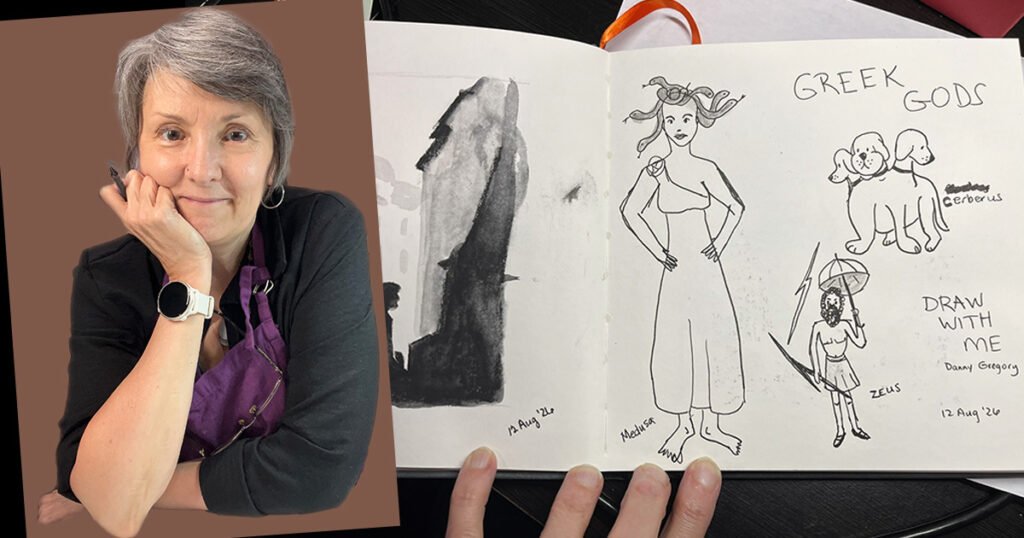
I was listening to one of Danny Gregory’s video essays recently, and it sent me backward in time. Not just to a particular memory, but to a feeling: the feeling of being completely absorbed in making something, without wondering whether it was good enough, useful enough, or likely to lead anywhere.
I first found that feeling when I was fourteen, when I was in ninth grade at a school in Grove City, Pennsylvania. I attended that school only for a few months—from August until November—but during that brief time, I felt as if I were growing into myself.
I had a boyfriend. I joined clubs. I was getting to know people outside the small circle of friends I’d had before. I was in theater for the first time, which I loved immediately. I felt as though I were becoming popular, or at least becoming someone people noticed.
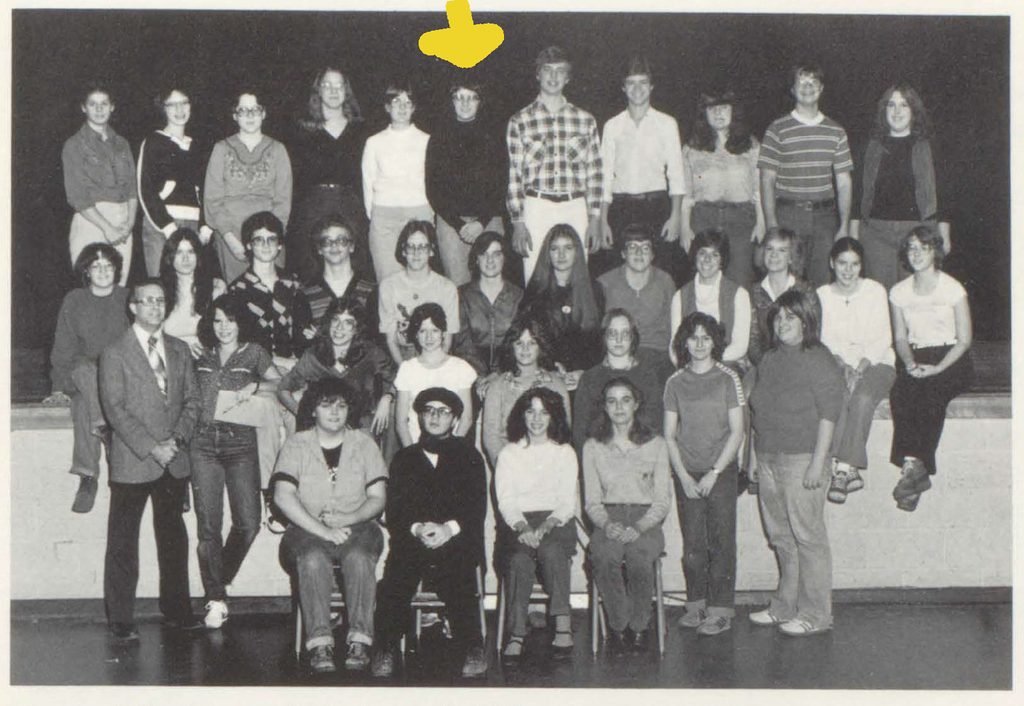
I also enrolled in an art class. That may not sound remarkable, but it was unlike any art class I’d had before. The schools I attended in seventh and eighth grade focused mostly on practical, vocational skills: cooking, sewing, typing, woodworking, metal shop. From first through sixth grade, an art teacher came into our classroom once a week with crayons, construction paper, and a project for us to complete. Those classes weren’t really about learning to draw or paint, they were about making things.
But my ninth-grade art teacher began differently. He asked questions. What is drawing? What are you doing when you look at something and put a pencil or pen to paper? Then, after the first couple of weeks, he gave each of us a drawing board, a stack of manila paper, and a pencil. For an hour twice a week, we could go anywhere we wanted in the school or on the school grounds and draw whatever was in front of us.
That freedom changed everything. I felt like an artist.
When I came home, I drew whenever I wasn’t doing homework. I bought my first sketchbook. I checked books out of the library and copied pictures from them. I drew dogs from a book of dog breeds. I drew horses and other things I found interesting.
I wasn’t thinking about becoming a professional artist. I wasn’t thinking about selling anything. I wasn’t trying to build a platform or develop a recognizable style. I was just drawing. And it made me happy.
The business of being creative
When I retired in 2017, I wanted that happiness back. Unfortunately, I misunderstood what had made me happy in the first place.
I thought I wanted to do art. I wanted to get good at it. I thought that if I followed the same path as the successful internet artists I watched, I could make money. Lots of it, preferably. I took online classes, studied books, watched YouTube videos, and eventually decided to build a business.
I planned projects. I made things. I looked for places where I could sell locally. I opened an online store. All the while, a small, increasingly irritated voice in the back of my mind kept asking, “Why aren’t you enjoying this?”
I blamed my responsibilities. I blamed the lack of independence that comes with being part of a family. I blamed isolation and being out of touch with a creative community. Some of those things probably did contribute. But they weren’t the whole problem.
The larger problem was that I had quietly attached a job description to something that had once been a source of joy. I discovered that I hated what I came to think of as assembly-line art: printing, laminating, cutting, packaging, and doing it all again. I had to do those things to make stickers and other products, but I put them off as long as possible. When I finally did them, I made large batches because I didn’t want to have to go through the process again anytime soon.
The work took time away from the parts of art I actually enjoyed. And, eventually, I began to resent it. Artwork became scheduled work that had to be fitted into the limited time available after my part-time job, household responsibilities, and family obligations. The studio, which was supposed to be a place of creative possibility, became associated with deadlines and unfinished tasks.
For months, I couldn’t even think about going into the studio without anxiety taking over. I hated that. I hated myself for having turned something I loved into something I dreaded. I had admitted, at least out loud, that I enjoyed the creative process.
But somewhere underneath that claim was another condition: the process had to be worthwhile.
It had to prove that the supplies and materials were worth the money. It had to prove that the time was worth taking away from my home and family. It had to produce something that other people admired, bought, or recognized as valuable.
I had internalized messages from family members, influencers, and the general atmosphere around creative work. Art was supposed to become a business. If it was only a hobby, then why did it cost so much? Why did it take so much time?
“It’s just a hobby.” That phrase is often spoken as though the word hobby is an accusation.
I began to feel that if I couldn’t justify my art financially, I was being irresponsible. I didn’t realize how much that belief had affected me. Or perhaps I realized it and kept insisting that it wasn’t a problem because I wanted to believe I was making art for the joy of it.
But I wasn’t. Not entirely.
Finding my way back
Eventually, I started watching Danny Gregory and Koosje Koene again. I already knew who they were. They’re among the most influential urban sketchers working today, and I had encountered their work years ago. But I had dismissed it.
Their drawings didn’t look like the kind of art I thought I was supposed to make. Even though I enjoy looking at illustrative styles, deep down inside I thought my work should be more realistic and less ‘childish’. I wanted it to look more polished, more mature, more like the work of someone who had earned the right to call herself an artist.
I hadn’t really been seeing what Danny and Koosje were doing. I was judging their work according to the rules I had absorbed, rules from people I cared about as well as educators and marketers. When I finally paid attention, I recognized something I had been missing.
They were enjoying themselves. They reminded me that the joy wasn’t in creating beautiful, carefully curated sketchbooks with perfect themes and correct color choices. The joy was in looking closely at the world and putting something down on paper.
So I bought a cheap Pentalic sketchbook at Walmart. The paper is thin, but there’s a lot of it. I tucked it into my purse with a ballpoint pen. I didn’t use it every day. I drew in it when I remembered. It didn’t matter if I made a mess because the sketchbook was inexpensive, and ballpoint pens are cheap. I purposely made ‘bad’ drawings.
And I liked it. I liked being able to focus intensely on whatever I was looking at, even when the drawing turned out wonky. The drawings didn’t look as good as the ones I remembered making in ninth grade. But I made them anyway.
Proudly. I wasn’t proud because the drawings were impressive. I was proud because I had returned to making them for the sake of drawing.
A few weeks ago, while we were camping, I drew my coffee cup. It wasn’t a particularly beautiful coffee cup. It wasn’t an especially interesting coffee cup. It was simply the cup I use in the morning, sitting on the table in our trailer in a national park. But when I began drawing it, I wasn’t thinking,
“I have this sketchbook, and I need to use it more often, so this is as good a subject as anything.”
I was thinking,
“This is me in the morning, no matter where I am. I want to capture that.”
That was the difference. I no longer felt as though the drawing had to look like something. I wanted to remember what that coffee cup meant in that particular place and moment.
The joy had come back.
Two kinds of making
I still make artwork that I hope other people will buy. I still feel a little pressure around it. When I make a small batch of prints, I want them to sell. When a check comes in the mail, I’m delighted—and immediately curious about what sold. What connected with someone strongly enough that they paid money for it and took it home? That still feels good to me. But I’ve separated that work from the work I do for myself.
My sketchbook is for joy. I might photograph something from it and include it in a blog post, but I wouldn’t dream of turning those drawings into products. They aren’t made for an audience and they don’t have to be useful, beautiful, finished, or marketable. They’re mine.
I think that’s an important distinction. I enjoy making things that are intended for sale because I’m thinking about what other people might like. But when I think, “What would I like to make?” the answer belongs in my sketchbook. I don’t try to turn it into what other people consider ‘art’. I draw or paint it and let it be what it is and I don’t mind being selfish about that.
What does it mean to be an artist?
I guess my definition of an artist has changed.
Artists don’t have to make money from their art. They don’t have to be called artists by anyone else. They don’t have to build a business, develop a following, or produce work that can be displayed, sold, or admired. They make things. That’s the definition everyone seems to agree with, at least in theory. We’re told to enjoy the process. It sounds good. It’s like saying, “I enjoy sunshine.” Of course we do. It’s what we’re supposed to say.
But do we really?
If you dig down inside and ask why you’re drawing, painting, writing, sewing, building, or making anything at all, is it because you want to do that no matter how it turns out? Or is there an expectation attached? Expectations like
- I enjoy the process, but I want people to understand what I’m doing.
- I enjoy the process, but I need people to buy it.
- I enjoy the process, but I have to put it on the internet or no one will ever see it, and then it’s a waste.
- I enjoy the process, but if I can’t justify its existence, then it’s worthless.
For me, an artist is someone who enjoys making art regardless of what happens to it afterward. That doesn’t mean every moment is fun. Drawing can be frustrating. Painting can be difficult. Sometimes the process involves boredom, confusion, or a long conversation with an eraser that neither you nor the eraser enjoys.
It means the act of making still feels worthwhile even when the result is awkward, unfinished, private, or completely useless to anyone else. The coffee cup doesn’t have to become a print. The sketchbook doesn’t have to become a product line. The drawing doesn’t have to prove that I’m talented, disciplined, or financially sensible. It only has to exist. Really.
If you’re struggling with resistance in your own creative work, it might be worth asking what you’re expecting it to do. Are you making it to make money? Earn admiration? Prove that your time wasn’t wasted? Justify the money you spent on supplies? Those expectations may be the reason the joy has gone missing. And if that’s the case, you may have to keep looking until you figure out what’s standing between you and the pleasure of making.
Try cheap paper. Use a ballpoint pen. Draw something ordinary. Make a bad drawing on purpose. You might discover that the joy was still there, waiting, hiding under all the things you had asked art to accomplish.
Mine was waiting in a cheap sketchbook, beside a coffee cup, in a camp trailer in a national park. I’m happy to welcome it back.