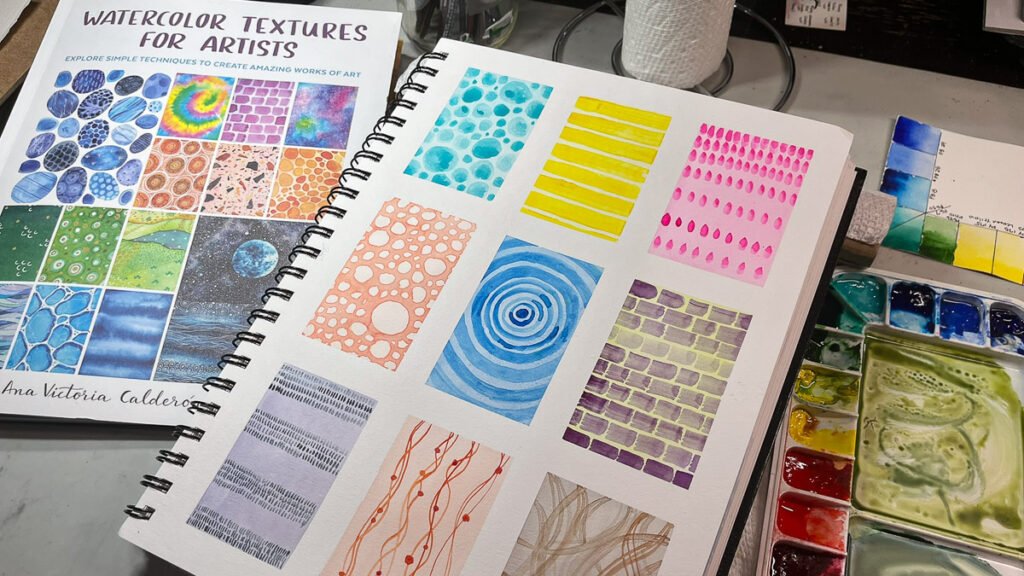
When I first opened Ana Calderón’s book and saw the watercolor texture exercises, I wasn’t thinking, I could make trading cards out of these. I was thinking, Hmm. This looks mindless but oddly satisfying.
That was enough reason to try it.
One of the first exercises recommended dividing a sheet of paper into nine sections and practicing a different texture in each one. As I worked through them, I realized the sections were just about the right size for artist trading cards. So I made some on cards.
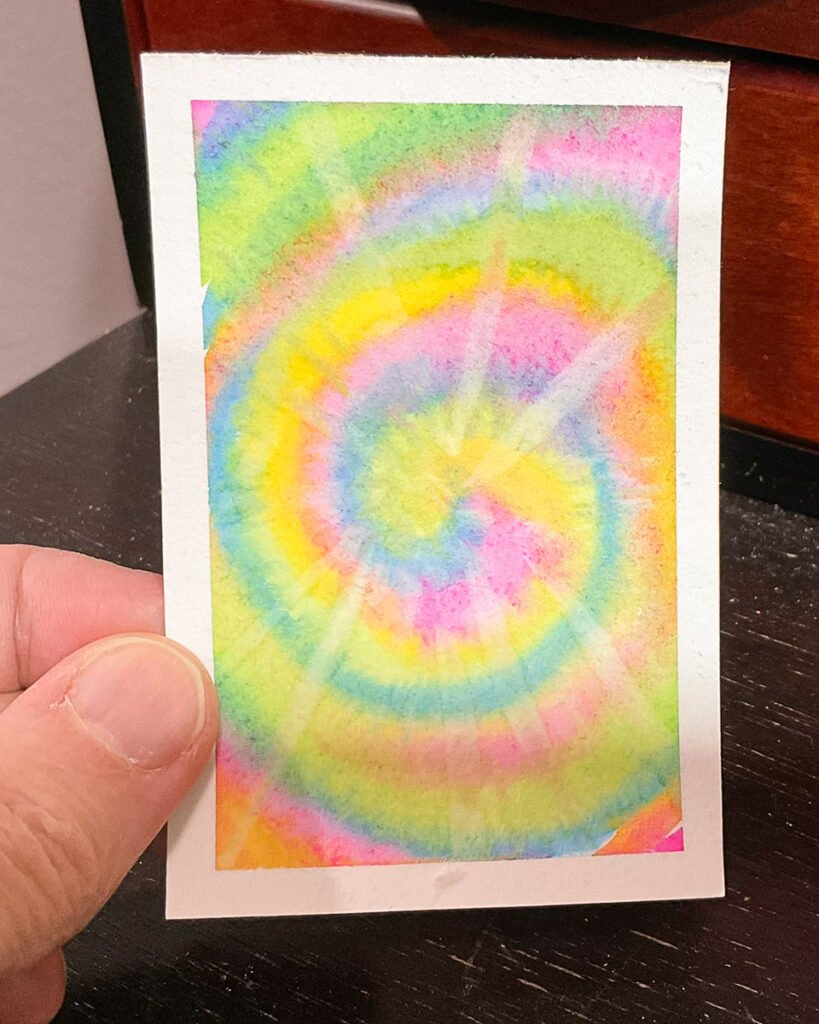
The textures were pretty, but I couldn’t imagine trading them as they were. They felt more like backgrounds waiting for something to happen. The tie-dyed textures especially seemed to want black ink over them. But what could I draw?
At the same time, another small problem had been rattling around in the back of my mind. I needed to visit the Jonesborough Visitor Center and restock the little shop display where I sell some of my work. It makes a couple of sales a month, which isn’t much, but I hadn’t checked on it since February and was beginning to feel guilty.
The trouble was that I didn’t only want to restock it. I wanted to add something new.
I wasn’t in the mood to go through the whole process of designing and making another batch of stickers. I didn’t want to invest the time in larger artwork, either. Zines haven’t sold especially well there. So I did what any sensible creative person does when none of the available choices are appealing.
Nothing.
Then, while I was looking at those little watercolor textures, two unrelated thoughts finally bumped into each other. Last year, I began a series called Catch a Story, inspired by Jonesborough’s connection to storytelling. What if I continued that idea, but instead of making more stickers, I turned these backgrounds into tiny original artworks?
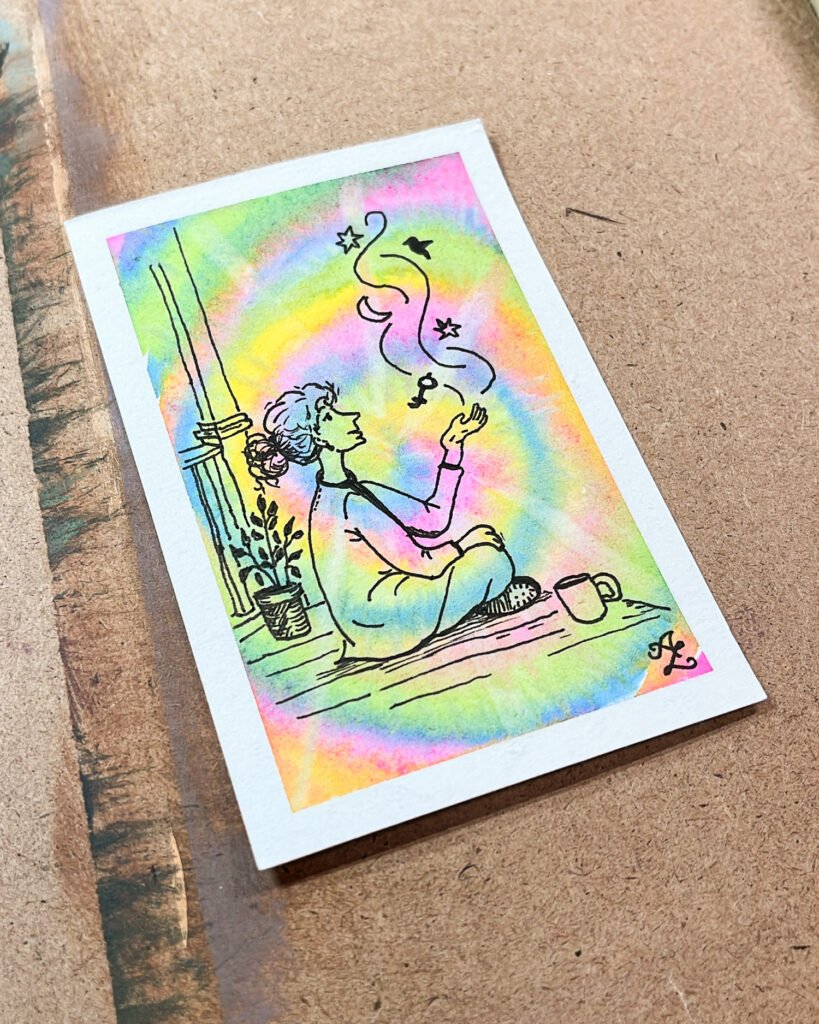
The cards could feature storytellers, stories emerging from hands, moonlit tales, and other storytelling-related images. The small Jonesborough reference will make each one a miniature souvenir of someone’s visit.
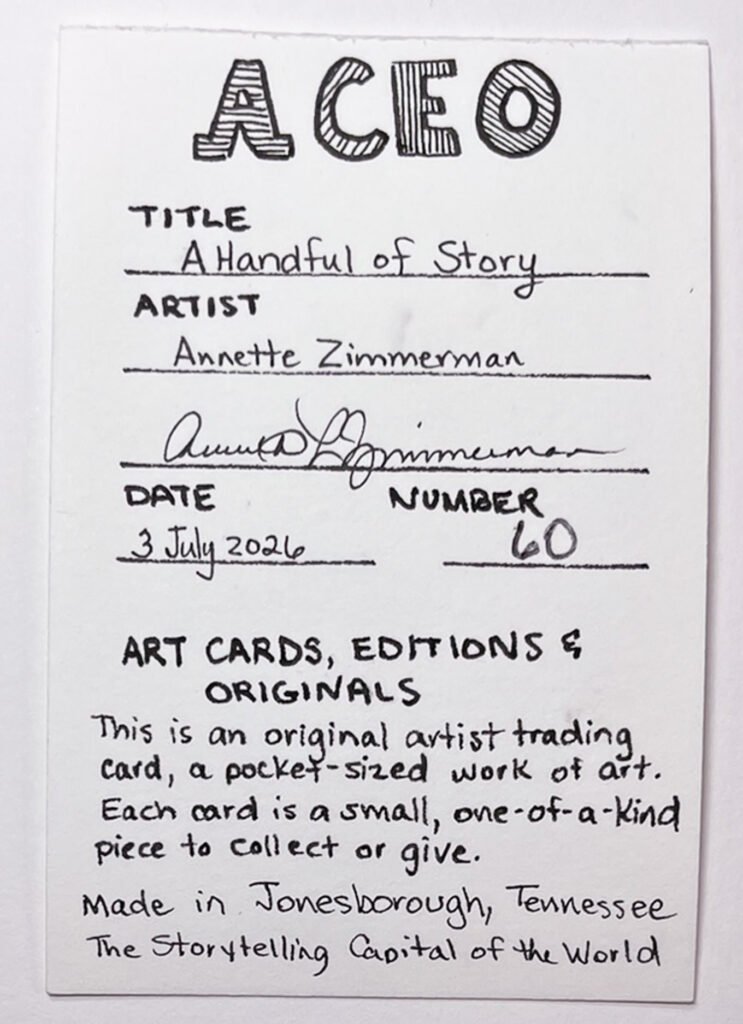
And just like that, the texture exercises became ACEOs: small original artworks measuring roughly 2½ by 3½ inches, the same size as traditional trading cards.
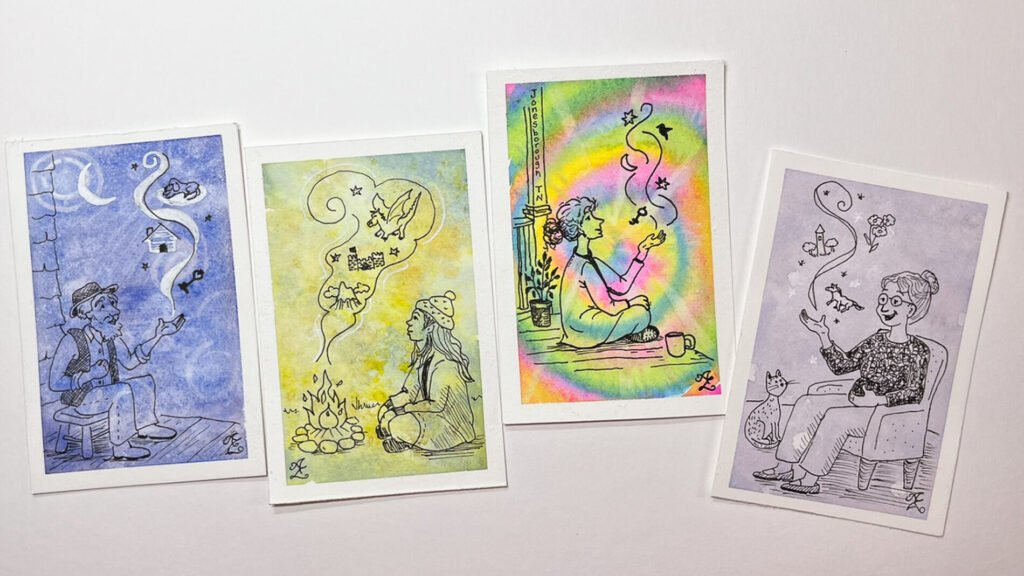
The watercolor background suggests the image, and then I try to find the person or story that completes it.
I honestly don’t care if they make any money. Each one takes well over an hour to make and I’ll probably price them at $3 each, including the store’s commission fee. But I like the idea that someone might carry home a tiny piece of art from Jonesborough, tuck it onto a shelf or into a journal, and have it brighten an ordinary day.
That seems like a perfectly good job for a little card.
Have you ever started a low-stakes exercise and discovered that it was quietly turning into an entirely different project?